
Product Feed Optimisation for Ecommerce Performance and Agentic AI Discovery
Product feed optimisation is no longer just about structuring data for Google Shopping or marketplaces. It now plays a central role in how products are discovered across search engines, marketplaces, and AI-driven platforms like ChatGPT and Perplexity.
At Optidan, we go beyond feed formatting and enrichment. We transform product feeds into high-performing assets that improve visibility, increase click-through rates, and drive conversions across every discovery channel.
Incomplete or inconsistent content doesn’t just hurt SEO, it also makes on-site search and discovery tools less effective. That’s why fixing visibility gaps improves every discovery touchpoint on your site and off.
Why Traditional Product Feed Optimisation Falls Short
Most product feed optimisation solutions focus on structure, attributes, and distribution. While this ensures feeds are technically compliant, it does little to improve how products actually perform in search or convert once discovered.
Retailers relying on supplier feeds or PIM systems often face:
> Duplicated content across competitors
> Generic product descriptions that fail to rank
> Limited visibility in organic search and AI-driven platforms
> Low engagement and conversion rates
Product feeds are being optimised for systems, not for customers or discovery.
From Feed Management to Feed Performance
Traditional feed optimisation focuses on getting products into channels. Optidan focuses on making those products perform once they are there.
We optimise across four layers:
Data Layer
Structured attributes such as titles, categories, and identifiers aligned with platform requirements.
Content Layer
Unique, keyword-rich product descriptions and metadata designed for search visibility and customer engagement.
Discovery Layer
Optimisation for Google, marketplaces, and emerging AI-driven platforms where product discovery is shifting.
Performance Layer
Continuous improvement based on visibility, click-through rates, and conversion outcomes.
Performance at scale
> 69% increase in peak-season click-through for a national retailer
> 43% lift in click-through on optimised category and product pages
> Up to 30% revenue uplift driven by AI-led content optimisation
> 100,000+ product pages optimised at scale
> Page 60 to page 1 improvements within weeks
*Results delivered across multi-brand and marketplace retailers.
Why product content breaks at scale
What teams experience
- Supplier-led product content duplication
- Missing or inconsistent product attributes
- SEO decisions based on legacy rules
- Content backlogs during launches and peak periods
- Manual workflows that do not scale
What this causes
- Products not surfaced in search results
- AI platforms skipping or misreading catalogues
- Lost visibility during promotions and peak trading
- Internal bottlenecks and team frustration
- Revenue left on the table

A new way forward
Traditional approach
- Identify content and SEO issues manually
- Create tickets, briefs, and workflows
- Write and rewrite content by hand
- Review, upload, and publish changes
- Repeat for every product and update
Optidan approach
- Identify issues across the catalogue at scale
- Optimise product content automatically
- Apply SEO and brand rules consistently
- Sync updates back into existing systems
- Run continuously in the background
*Designed to improve outcomes without increasing operational load.
Transform & Run
Transform
Fix the underlying content and data issues that limit visibility and performance. Product content is aligned, optimised, and standardised across the catalogue to create a strong foundation.Run
Maintain performance over time as products, availability, and search behaviour change. Optimisation continues in the background without manual effort, new workflows, or additional resourcing.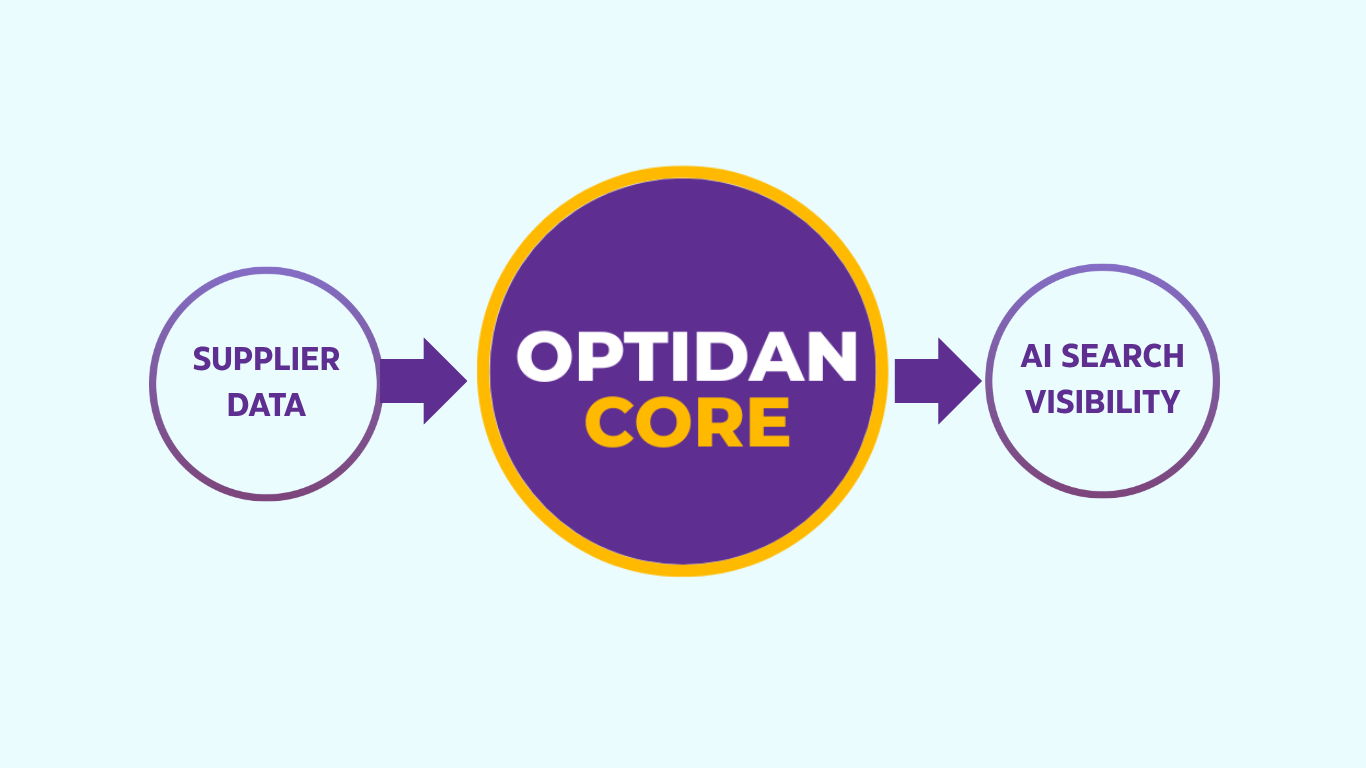
Designed to fit your existing stack
- Shopify and Shopify Plus
- Salesforce, Magento, BigCommerce
- Enterprise CMS platforms
- Custom ecommerce builds
- Marketplace and multi-brand architectures
Performance tracking and reporting are available within Optidan, without requiring ongoing operational input from internal teams.
Who this is for?
This works well for
- Retailers with large or fast-growing product catalogues
- Teams relying on supplier-led or duplicated product content
- Businesses preparing for AI-driven search and discovery
- Teams looking to improve operational efficiency across content workflows.
- Retailers looking to improve visibility without adding headcount
This may not be a fit if
- You manage a small number of products
- You want to manually control every product page
- You are looking for a DIY SEO tool or dashboard
- Your priority is short-term tactics rather than scalable systems
- This may not be a fit if you’re comfortable maintaining the status quo.
Why retailers choose Optidan
- Proven performance across large and complex product catalogues
- Improved visibility without increasing operational complexity
- Designed to run quietly alongside existing teams and systems
- Founder-led oversight combined with AI-driven scale
- Built for long-term search performance, not short-term tactics
Hear from our clients
A successful outcome on a challenging project.

Is this right for you?
You manage a large Range or complex product catalogue
Supplier-led content is limiting search engine visibility
You need to move faster without adding operational overhead
You’re preparing for AI-driven search and discovery Channels
Let’s talk through your content challenges
If you’re dealing with content bottlenecks, duplicated product data, or visibility issues across modern search and AI platforms, we’re happy to share some initial insights.
No commitment. No sales pitch. Just a practical conversation about whether this approach makes sense for your business.
Optidan’s approach to AI-led commerce optimisation has been discussed with industry leaders, including a recent conversation on agentic commerce and AI search readiness with Anna Samkova.
Frequently Asked Questions
Product feed management is the process of structuring, enriching, and maintaining product data across large catalogues so it performs consistently across search engines, AI platforms, and on-site discovery.
AI platforms rely on clean, structured product data to understand relevance, relationships, and intent. Product feed management ensures your catalogue is readable, indexable, and usable by AI-driven search and shopping systems.
Yes. Supplier feeds often create duplicated product pages across retailers. Product feed management replaces reused supplier copy with structured, brand-led content that improves uniqueness and visibility.
No. Product feed management complements existing systems like Shopify, Magento, PIMs, and ERPs by improving how product data is structured, enriched, and deployed for search and discovery.
By improving product titles, metadata, taxonomy, and content quality, product feed management helps search engines index pages correctly and rank them more consistently across product, category, and brand pages.
Product feed management delivers the most value at scale, especially for retailers managing thousands of SKUs across multiple categories, brands, and markets where manual processes no longer work.
Implementation timelines depend on catalogue size and data complexity, but structured workflows allow large volumes of product data to be optimised far faster than traditional manual approaches.
It reduces manual workload for ecommerce, SEO, digital, and merchandising teams by automating repetitive data and content tasks while maintaining control, governance, and consistency.
