

An AI paragraph rewriter is a tool that uses artificial intelligence to rephrase text, creating a new version while keeping the original meaning intact. For Australian retailers, this is the key to breaking free from generic supplier content and creating optimised, on-brand product descriptions at scale.
The Shift From Manual Edits to AI-Powered Retail Content
If you're an ecommerce manager, you know the pain of manually rewriting product descriptions from supplier feeds. It's a massive content bottleneck that eats up countless hours and holds back new product launches. This slow, manual process doesn’t just drain resources; it leaves your SEO strategy wide open to penalties from duplicated supplier content.
This old way of working just isn't sustainable anymore. The sheer volume of SKUs makes it impossible for even the sharpest teams to write unique, optimised copy for every single product. The result? Generic, uninspired descriptions that don't connect with customers or rank in search, ultimately hurting your digital shelf performance.
Embracing Automation for Scalable SEO Solutions
Moving from this tedious manual grind to a modern, AI-driven workflow is a fundamental shift in retail content strategy. An AI paragraph rewriter is what unlocks this new level of efficiency. It's not just about spinning sentences; it's about building a scalable system for product data enrichment.
This technology lets you fix duplicated supplier content across thousands of pages in days, not months. By implementing automated content workflows, you can ensure every product page has a unique, high-quality description that strengthens your brand voice and ticks all the SEO boxes.
This shift is the move from manual SEO to AI SEO. It’s about turning a slow, resource-heavy chore into a real strategic advantage, getting your content ready for the next wave of agentic search optimisation.
A Strategic Advantage in a Crowded Market
Using AI-powered tools is about more than just speed. It’s a core piece of a forward-thinking retail strategy that solves several critical problems at once. You can learn more about the broader applications of artificial intelligence in e-commerce in our detailed guide. By automating the grunt work, your team can focus on higher-value activities while the AI handles the heavy lifting of optimising product feeds efficiently.
This powerful human + AI collaboration in SEO makes true SKU-level SEO possible, where every single product contributes to your overall search visibility. It’s the foundation for achieving superior digital shelf performance and staying ahead in an increasingly automated retail world.
How AI Paragraph Rewriters Work for Ecommerce
At its core, an AI paragraph rewriter is a highly specialised tool built for one thing: scale. Don't think of it as a simple synonym swapper. It's much closer to a skilled content strategist that understands context, tone, and commercial goals across thousands of products at once.
Let's skip the technical jargon. Imagine your content team as a group of skilled chefs, each carefully preparing a meal one by one. An AI paragraph rewriter is like a master chef who has designed an automated, high-end kitchen. This kitchen can produce thousands of unique, gourmet-quality meals every hour, all while sticking to the same core recipes and brand standards.
The Technology Driving Retail Efficiency
This impressive capability is powered by Natural Language Processing (NLP), the field of AI that gives machines the ability to read, understand, and generate human-like language. When applied to ecommerce, a proper AI paragraph rewriter doesn't just shuffle words around. It starts by analysing the core meaning and key attributes buried in a generic supplier product feed.
From there, the AI builds a completely new paragraph from the ground up. It weaves in your unique brand voice, targets specific keywords, and highlights essential product details. This process ensures the final copy is not only original but also strategically aligned with your AI SEO goals.
From Raw Data to Optimised Content
The workflow is surprisingly straightforward yet incredibly powerful. It transforms what is often a major retail content bottleneck into a streamlined, performance-driving asset. Here’s how it usually works:
- Ingestion: The system pulls in raw supplier product feeds, which are often filled with generic, duplicated, and frankly uninspiring copy.
- Analysis: Using NLP, the AI deconstructs the text to understand the key features, benefits, and specifications, much like a human merchandiser would.
- Rewriting and Enrichment: It generates completely new, unique paragraphs. During this stage, it enriches the content with vital keywords for SKU-level SEO and prepares it for agentic search optimisation.
- QA and Deployment: A final, human-led quality check ensures everything aligns with your brand before the optimised content is rolled out across thousands of pages.
This transformation from generic data to enriched, unique content is fundamental for improving your digital shelf performance. The rapid growth of this technology highlights just how important it is; the AI text generator market in Australia and the broader Asia Pacific region was valued at around USD 0.57 billion in 2024 and is projected to expand significantly.
For retailers looking to explore the wider world of AI content solutions, there are a variety of Top AI content generation tools available to help with different marketing needs.
Solving Supplier Content Duplication at Scale
Using the same product description as every other retailer is one of the fastest ways to kill your search rankings. It’s a huge problem known as supplier content duplication, and it tells search engines your product pages offer nothing unique. The result? Poor visibility and weak digital shelf performance.
For any retailer with more than a handful of products, manually rewriting this content is impossible. It just doesn’t scale.
This is where an AI paragraph rewriter comes in. It’s the only practical way to solve this chronic issue at the scale modern retail demands. This technology shifts retailers from a slow, manual SEO process to a proactive, automated one, a cornerstone of any serious AI SEO strategy that needs to handle tens of thousands of SKUs.
The Automated Workflow for Unique Content
So, how do you turn those generic supplier feeds into original, optimised content that actually performs? The process is a core part of modern retail content automation, designed to systematically stamp out duplication and build a foundation for better search rankings.
It works like this:
- Step 1 Data Ingestion: The system first pulls in the raw supplier product feeds. These are often filled with thousands of identical descriptions that your competitors are also using.
- Step 2 AI Rewriting: Next, the AI gets to work. It analyses the core meaning of each description and then generates multiple unique variations that stay on-brand. It also intelligently weaves in keywords for specific categories, like fashion SEO optimisation or electronics SEO optimisation.
- Step 3 Human-Led QA: This is a crucial final check. A human-led AI content QA step ensures every output perfectly matches your brand voice and quality standards before it ever goes live.
This structured workflow is the key to getting a permanent duplicate content SEO fix. You can dive deeper into specific strategies for avoiding supplier product feed duplication with the right tools in our dedicated guide.
The infographic below shows how these automated workflows are powered, transforming your content strategy from a liability into an asset.
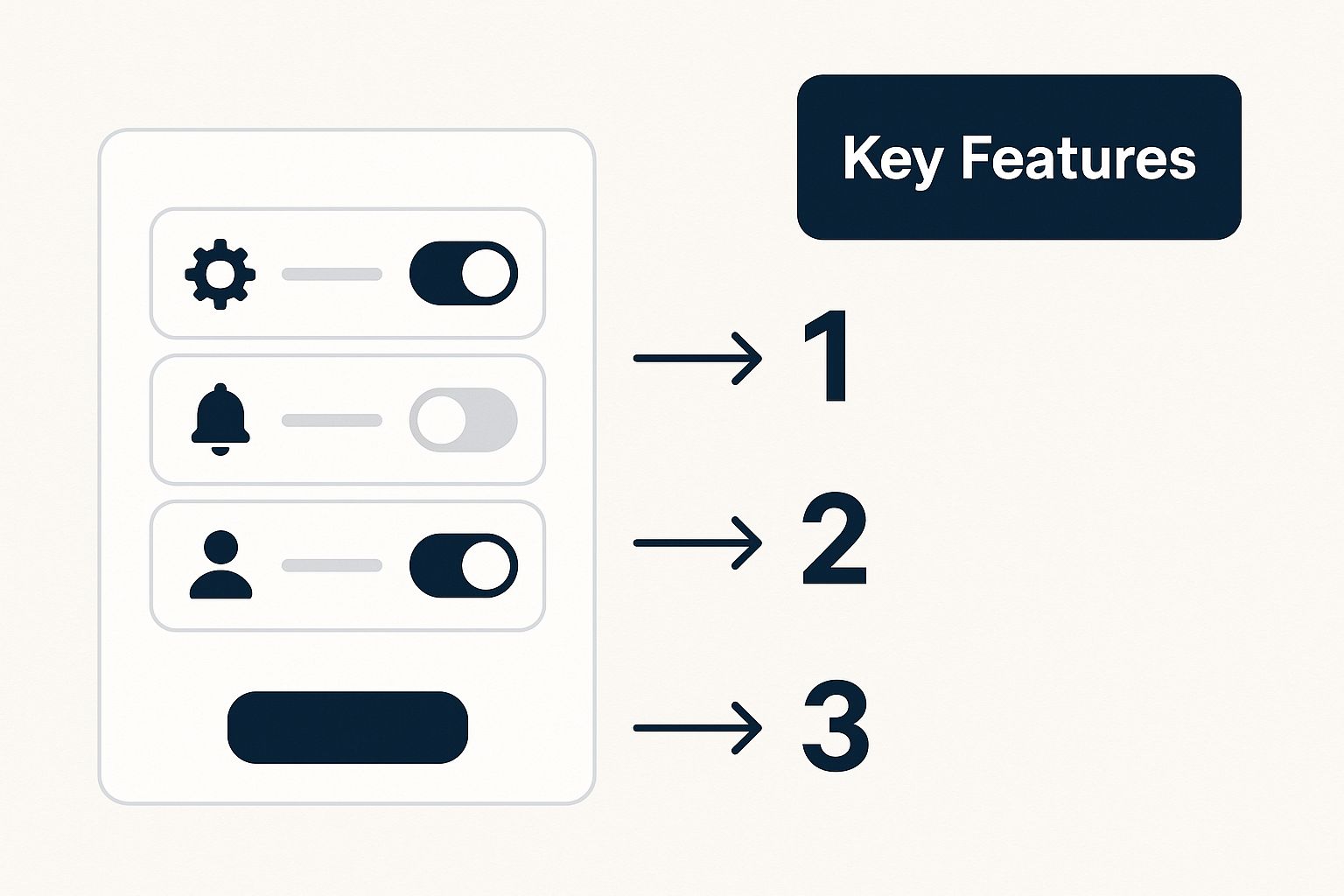
This visualises how all the features work together, creating a smooth path from generic data to optimised, unique product descriptions at scale.
To really appreciate the difference this makes, let's compare the old way of doing things with a modern, AI-powered approach.
Manual SEO vs AI-Powered Content Workflow for Retailers
| Metric | Traditional Manual SEO Team | AI Paragraph Rewriter Workflow |
|---|---|---|
| Speed to Market | Slow. Months to rewrite a few hundred SKUs. | Fast. Thousands of SKUs rewritten in days or weeks. |
| Scalability | Very low. Limited by headcount and human writing speed. | Extremely high. Scales to hundreds of thousands of SKUs easily. |
| Content Quality | Inconsistent. Varies by writer, leading to off-brand copy. | Consistent. Maintains a single brand voice across the site. |
| Cost Per Product | High. Labour-intensive and expensive. | Low. Dramatically reduces the cost of content creation. |
| Digital Shelf Impact | Minimal and slow. Can't keep up with new product launches. | Immediate and sitewide. Lifts performance across the entire catalogue. |
The contrast is clear. A manual approach simply can't compete with the speed, scale, and consistency that an AI-driven workflow delivers for fixing duplicate content.
When tackling supplier content duplication, using AI for large-scale content generation is a game-changer. For a look at different methods, see how you might approach bulk content creation with tools like ChatGPT for other marketing channels. This approach is quickly becoming standard practice in Australia, where the AI writing tool market is forecast to grow from USD 0.39 billion in 2023 to USD 1.22 billion by 2031. This explosive growth shows just how urgent the need is for automated, scalable content solutions in a crowded digital marketplace.
Building an AI-Powered Product Data Workflow
Bringing an AI paragraph rewriter into your business isn’t about replacing your team, it's about supercharging them. The real goal is to build a smart, automated content workflow that smashes through bottlenecks and drives your digital shelf performance. This roadmap shows you how to weave this technology into your retail operations, creating a powerhouse for product data enrichment.
Think of it as building a seamless pipeline that takes raw supplier data at one end and pushes out fully optimised, customer-ready content at the other. This workflow plugs directly into your existing Product Information Management (PIM) systems, creating a single, cohesive ecosystem for managing and improving product information at a scale you couldn't manage before.
From Product Feeds to Automated Content
First things first, you need to get your product data feeds ready for the AI. This means making sure your supplier feeds are clean, structured, and packed with all the essential details, think materials, dimensions, and core features. The better the data you feed the machine, the richer and more compelling the descriptions it creates will be.
Once the data is prepped, the automated content workflows kick in. This is where the magic of SEO at scale really happens. The system can ingest thousands of SKUs at once, rewriting the generic supplier content to kill off duplication issues and enriching it with targeted keywords for specialised areas like fashion SEO optimisation or furniture SEO services.
This whole process marks a huge shift away from slow, manual SEO to a faster, smarter AI SEO model. It’s a foundational piece of retail content automation, built to handle the sheer volume and speed of modern ecommerce without ever sacrificing quality or brand voice.
Integrating AI Image Recognition
A truly robust product data enrichment strategy doesn’t stop at text. Adding AI image recognition and tagging to your workflow creates another powerful layer of optimisation. For visual categories like fashion or furniture, this is an absolute game-changer.
Here’s how it all connects:
- Automated Tagging: The AI scans your product images and instantly generates descriptive tags like "linen blend," "V-neck," or "oak finish."
- Content Enrichment: These tags are then fed straight into the AI paragraph rewriter, which seamlessly weaves these specific, high-value details into the product descriptions.
- Enhanced SEO: This process creates far richer, more relevant content for both shoppers and search engines, giving your SKU-level SEO a massive boost and getting your content ready for the future of retail search.
The Human-in-the-Loop QA Process
Automation doesn't mean you can just set it and forget it. The most successful retailers embrace a human + AI collaboration in SEO model. This is where a human-led quality assurance (QA) process is absolutely essential.
Your team’s job evolves. Instead of writing every single word, they become brand guardians, reviewing and approving the AI's output. They ensure the tone, style, and accuracy of every description is pitch-perfect with your brand standards before it ever goes live. This final check guarantees ecommerce content quality assurance while letting the AI handle 90% of the heavy lifting.
By formalising this step, you can build effective AI-driven action plans for your team that lock in consistency and efficiency. This powerful blend of human oversight and AI speed is at the very heart of the future of work in retail.
Key Benefits for Australian Retail Leaders

Let's move beyond the tech jargon. An AI paragraph rewriter isn’t just a shiny new tool; it’s a strategic move that delivers real-world results for Australian retailers. Adopting these AI-powered content workflows is about gaining a serious competitive edge through measurable gains in speed, search visibility, and cost savings.
The benefits aren't abstract. They directly solve the headaches that come with managing huge product catalogues. For businesses in fast-moving sectors like Australian fashion or furniture, this translates to getting new collections to market faster, dominating the digital shelf with better search rankings, and slashing the costs of content creation.
Unlocking Unprecedented Efficiency Gains
The first and most obvious win is a massive boost in operational speed. Retail content automation, powered by a smart AI rewriter, completely demolishes the content bottlenecks that stall product launches. Instead of taking months for your team to manually rewrite thousands of product descriptions, you can get it done in a matter of days.
This is what optimising product feeds efficiently actually looks like in practice. It pulls your skilled marketing and merchandising teams out of the weeds of repetitive writing, freeing them up to focus on the high-level strategy that actually moves the needle.
This shift is a core part of the future of work in retail, where human + AI collaboration in SEO becomes the new standard. The AI handles the sheer scale of the work, while your team provides the crucial strategic direction and brand oversight.
Driving Superior SEO Impact
From an SEO perspective, the difference is night and day. By systematically wiping out supplier content duplication, an AI rewriter creates the unique, high-quality content that search engines love to reward. This is how you achieve true SKU-level SEO, turning every single product page into an asset that actively builds your site’s authority and rankings.
The knock-on effect on your bottom line is direct. Better rankings across your entire catalogue lead to stronger digital shelf performance, which means more organic traffic and, ultimately, more sales. This is also vital for agentic search optimisation, making sure your products are easily found by the next wave of AI shopping agents.
Strategic Future-Proofing for Your Business
Bringing an AI paragraph rewriter into your workflow is a forward-thinking move that sets your business up for whatever comes next. The growth of this technology in our region is undeniable; the AI writing assistant software market is set to expand significantly, and tools like these are at the heart of it. You can learn more about the growth of AI writing assistants from Global Growth Insights.
By building automated content workflows today, you’re laying a scalable foundation for future growth. It positions your brand as a leader in AI SEO and prepares you for the future of retail search, a future where structured, unique, and optimised content isn't just a nice-to-have, but an absolute requirement for survival and success.
Preparing Your Content for the Future of Agentic Search
The way customers discover and buy products is changing right under our noses. We’re moving fast into an era of agentic search, where AI assistants like ChatGPT, Google’s AI Overviews, and Amazon’s Rufus do the heavy lifting, researching products on behalf of shoppers.
For your products to even be considered by these AI agents, your content needs to be structured, unique, and packed with meaning. Generic supplier content just won't cut it anymore; it's thin, duplicated, and lacks the detail needed for SEO for AI agents. This is where an AI paragraph rewriter becomes a crucial tool, helping you create the AI-compatible SEO content that this new world demands.
Making Your Content AI-Ready
This isn't just about working more efficiently. It's a strategic move to get ahead of agentic search optimisation. An AI paragraph rewriter takes basic, often duplicated, supplier descriptions and turns them into the kind of detailed, high-quality content that AI agents need to make a confident recommendation. Think of it as the engine for product data enrichment on a massive scale.
This process is all about:
- Unique Descriptions: Wiping out supplier content duplication ensures every single product page is seen as an original, valuable source of information.
- Structured Data: Organising your content in a way that AI agents can easily read and understand key product features and benefits.
- Semantic Richness: Loading your descriptions with specifics, use cases, and answers to the complex questions that real people will ask their AI assistants.
The shift from manual SEO to AI SEO isn't just a trend; it's a survival imperative for the agentic commerce future. Retailers who drag their feet on this risk becoming invisible to a new wave of shoppers who trust AI to guide their buying decisions.
By using an AI paragraph rewriter to create optimised content, you're making sure your products stay visible and competitive in this next chapter of ecommerce. To get a better handle on this, you can explore some frequently asked questions about agentic AI SEO content optimisation in our guide. It’s a strategic move that prepares your brand for the future of retail search.
Frequently Asked Questions
Here are the most common questions Australian retail leaders ask about using an AI paragraph rewriter for their ecommerce operations.
How Do I Maintain Brand Voice Consistency?
A good AI paragraph rewriter doesn't just spin words; it learns your brand. The system is trained on your specific brand guidelines, tone, and style from the very beginning.
This is fine-tuned through an ongoing, human-led AI content QA process. Your team’s feedback teaches the system to generate descriptions that sound like they came directly from your in-house experts, keeping your unique brand identity consistent across thousands of SKUs.
What Does the Quality Assurance Process Look Like?
Think of it as a smart partnership between your team and the AI. The AI does the heavy lifting, rewriting and optimising at a scale that would be impossible manually.
Your team then acts as the final checkpoint. They review batches of the AI-generated content, make small tweaks, and provide feedback. This not only ensures total brand alignment but also makes the AI smarter over time, all without the grind of writing from scratch. It's a classic example of human + AI collaboration in SEO.
How Difficult Is It to Integrate This Technology?
Integrating an AI rewriter is designed to be a smooth, low-friction process. It usually just involves connecting your existing product feed or PIM system via an API.
The initial setup is all about establishing your brand voice and content rules. Once that’s done, automated content workflows take over, turning what was once a massive content bottleneck into one of your most effective retail efficiency tools.
Ready to eliminate content bottlenecks and get your product catalogue ready for the future of search? Optidan AI provides scalable SEO solutions that turn messy supplier feeds into optimised, unique product descriptions in days, not months.
Discover how Optidan AI can elevate your digital shelf performance
