

Staring down a catalogue of ten thousand products can feel impossible. How on earth do you apply the basics of search engine optimisation effectively across every single item? This guide is designed to move past the generic definitions and frame SEO as what it truly is: a scalable, strategic business function that�s essential for your digital shelf performance and your readiness for the future of retail search.
Moving Beyond Manual SEO in Australian Retail
For too long, Australian retail leaders have treated SEO as a painful, manual task. The old-school approach of optimising one page at a time just doesn't work when you're managing thousands of SKUs. It's an outdated model that creates massive content bottlenecks, leaving product pages full of generic, duplicated supplier content that tanks your search rankings and washes out your brand voice.
The reality is, effective SEO for a modern ecommerce business is all about achieving optimisation at scale. It�s about building smart, automated content workflows that can overhaul an entire product catalogue in days, not years. Making this shift is non-negotiable for improving your digital shelf performance and actually getting seen in a crowded market.
From Slow Processes to Scalable Solutions
The future of work in retail is changing, and your SEO strategy has to change with it. The move from manual SEO to AI-powered SEO isn't some far-off concept anymore, it's a necessity, right now. This means using AI-driven retail transformation to automate the jobs that were once impossibly time-consuming.
Imagine a system that can:
- Automatically enrich raw supplier feeds, turning basic data into optimised product content.
- Fix duplicated supplier content across your entire catalogue to build a unique brand voice.
- Use AI image recognition to generate descriptive tags for thousands of fashion or furniture items in an instant.
This is what scalable SEO solutions are all about. By embracing retail content automation, you get rid of the manual grind and free up your team to focus on high-level strategy and quality control. This human + AI collaboration in SEO is the real key to unlocking new levels of efficiency. To get a better handle on this operational shift, you can explore the journey from manual to automated AI SEO software and its impact on retail.
Preparing for an Agentic Commerce Future
The next big thing is agentic search optimisation. AI shopping agents, like Google�s AI Overviews, are already changing how customers find products. To stay visible, your product pages have to be structured and optimised for these AI agents. This means solid product data enrichment and unique, high-quality descriptions are more critical than ever before.
Agentic shopping isn't just a trend, it's the next evolution of ecommerce. Retailers who build their SEO foundation on scalable, AI-compatible content today will be the ones who lead in the agentic commerce future tomorrow.
This guide gives you the foundational knowledge of search engine optimisation basics, framed specifically for the challenges and opportunities Australian retailers are facing. We'll dive into how to ditch the outdated practices for a forward-thinking strategy built on speed, scale, and intelligent automation.
The Three Pillars of Modern Retail SEO
A strong retail SEO strategy is built on three core pillars. Get these right, and you've got a solid foundation for everything else. Each one solves a specific challenge for your ecommerce store, and understanding how they work together is the key to mastering search.
Think of it like building a physical shop.
First, you have Technical SEO. This is your store's architecture and infrastructure, including the plumbing, wiring, and a solid foundation. It makes sure the doors are open and the aisles are clear so search engine crawlers (and now, AI agents) can get in and look around easily. Without a technically sound site, even the best products will be invisible.
Next is On-Page SEO, which is like your visual merchandising and in-store layout. This is all about optimising each product's 'digital shelf space' with rich product data, compelling descriptions, and the right metadata. It�s how you make every single one of your SKUs discoverable and appealing to a shopper.
Finally, there's Off-Page SEO. This is your store's reputation around town. It�s built through high-quality links from other respected websites, positive reviews, and brand mentions that signal to search engines that you're a trustworthy place to shop.
The infographic below shows how these pillars stack up. You can't focus on the fancy stuff at the top without getting the basics at the bottom right first.
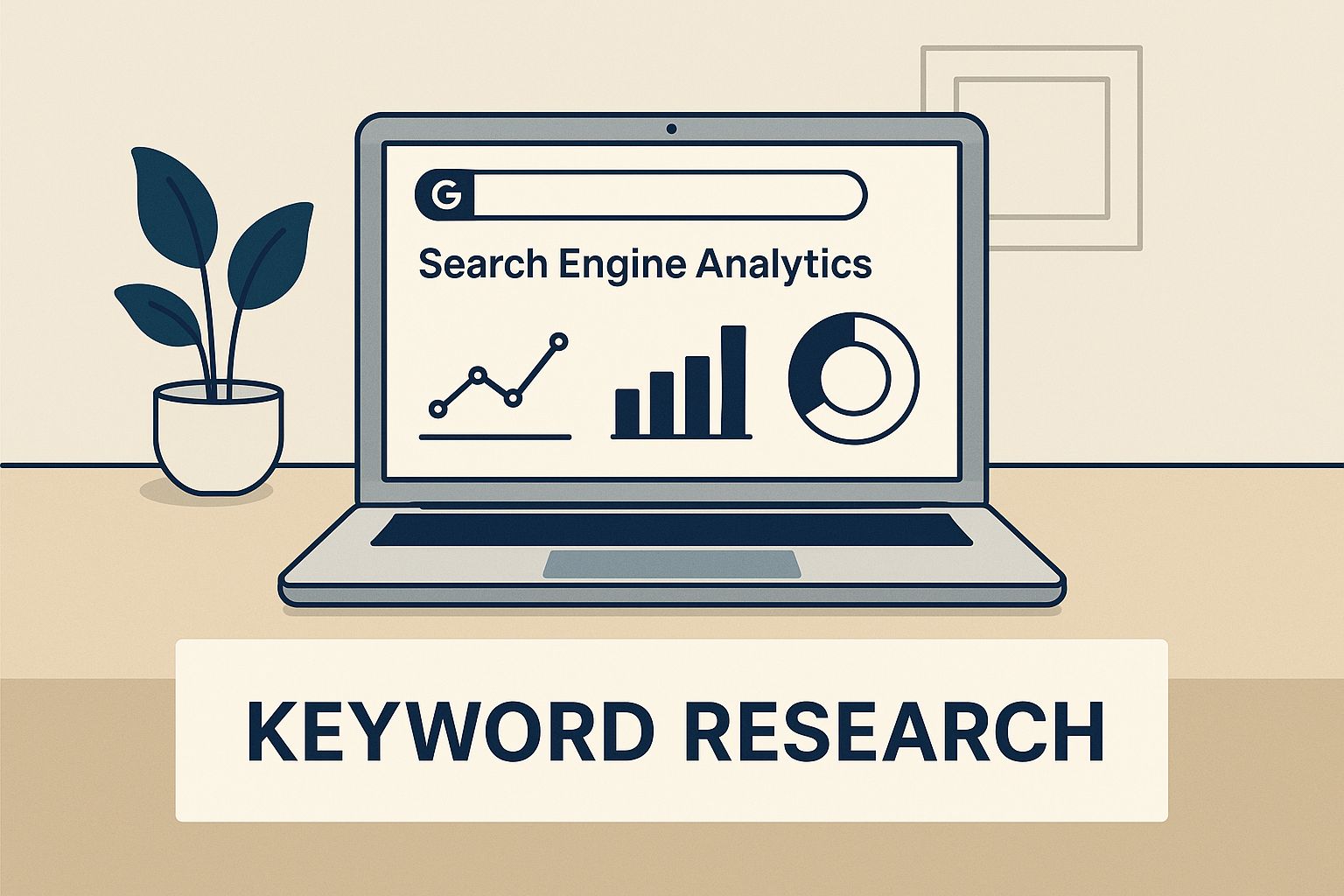
As you can see, foundational elements like making your site accessible to crawlers are non-negotiable. Only then can you start worrying about creating great content and earning authority.
Technical SEO: The Unseen Foundation
Technical SEO covers all the behind-the-scenes work that helps search engines find, crawl, and index your website. For a retailer with thousands of product pages, this isn't just important, it's essential.
This includes things like optimising your site speed, making sure it works perfectly on mobile, and creating a clean XML sitemap. That sitemap acts like a directory, telling crawlers exactly where to find every product in your catalogue.
A huge part of this now is preparing your site for agentic search optimisation. AI shopping agents need clean, structured data to understand what you're selling. A technically sound site is the first step toward creating AI-compatible content that future shopping assistants can easily find and recommend.
On-Page SEO: Optimising the Digital Shelf
On-Page SEO is where you get hands-on with your product pages to influence how they're seen by both customers and search engines. For retailers, this is where you win or lose on the digital shelf, and it goes way beyond just stuffing keywords in.
The real job here is turning basic, boring supplier feeds into rich, unique content that actually sells.
This means focusing on:
- Product Data Enrichment: Transforming sparse supplier data into detailed attributes that answer customer questions before they're even asked. Think materials, dimensions, care instructions, the details that target those super-specific, long-tail searches.
- Unique Product Descriptions: Ditching the duplicated supplier content that everyone else is using. Creating your own unique voice avoids search penalties and actually builds a brand people remember.
- Ecommerce Image SEO: Using descriptive file names and alt tags for all your product images. This is crucial for visual categories like fashion, furniture, and electronics.
For Australian retailers, getting On-Page SEO right is non-negotiable. With over 89% of Australians starting their shopping journey on Google, your product pages are the frontline. Your on-page strategy is what determines whether those searchers find you or your competitors.
Off-Page SEO: Building Authority and Trust
Off-Page SEO covers everything you do away from your website to build its authority and credibility. This pillar is all about showing search engines that your brand is a trusted player in your industry. It�s about building a solid reputation that translates directly into higher rankings.
For retailers, this often means getting backlinks from industry blogs, product review sites, and online magazines. A single positive mention of your new fashion line on a popular style blog can act as a powerful vote of confidence.
This is all about quality over quantity. One link from a highly respected source is worth more than hundreds of links from spammy, low-quality sites. You can learn more by exploring these essential SEO for ecommerce tactics that build on these foundational pillars.
Solving the Duplicate Supplier Content Dilemma
One of the biggest hurdles in retail SEO is the ocean of generic supplier descriptions flooding your product pages. It's a classic copy-and-paste shortcut that feels efficient at the time, but it's actively hurting your search rankings and stripping your brand of a unique voice.
Search engines see this duplicated content for exactly what it is: unoriginal and low-value.
This problem hits your digital shelf performance hard. When dozens of retailers are using the exact same text, search engines can't figure out which page is the real authority. Your products end up lost in the noise, failing to rank for competitive searches and losing out to competitors who've actually invested in unique content.
This creates a massive content bottleneck for retail teams. Manually rewriting thousands of descriptions is an impossible mountain to climb, leading to stalled SEO progress and a brand identity that feels borrowed instead of built.
Why Search Engines Penalise Duplication
At their core, search engines want to give users the best, most helpful results for their query. When multiple pages serve up the exact same content, it creates a frustrating experience. Imagine searching for a new camera and clicking on five different results, only to read the same description on every single one. It adds zero value and makes it impossible to decide where to buy.
To fix this, their algorithms are built to filter out or down-rank pages with duplicate content. It's not always a formal "penalty," but it acts like one. Search engines will consolidate similar pages and only show one version, and it might not be yours.
This is a fundamental concept in search engine optimisation basics. Originality isn�t just a nice-to-have for branding; it�s a technical must-have for visibility.
From Bottleneck to Automated Workflow
The answer isn't to work harder; it's to work smarter by shifting from manual grunt work to AI-powered content workflows. Instead of seeing your massive product catalogue as an unconquerable problem, you can treat it as a dataset just waiting to be transformed.
Automated content workflows can take thousands of generic supplier descriptions and rewrite them into unique, on-brand, and SEO-optimised content in a matter of days, not years.
This is the key to achieving SEO at scale. It�s about using AI agents for retail efficiency to do the heavy lifting, turning a huge retail content bottleneck into a smooth, repeatable process.
The goal here is to move past one-off duplication fixes and build a system for ongoing ecommerce content quality assurance. AI makes this possible by delivering the speed and scale needed to maintain a unique voice across your entire product range, ensuring you stand out in a crowded market.
By automating this critical task, your team can finally shift from tedious writing to strategic oversight. This human + AI collaboration in SEO ensures the final content is not only unique but also high-quality and perfectly aligned with your brand�s messaging.
The Strategic Value of a Unique Voice
Fixing supplier content duplication is about so much more than just dodging SEO penalties. It's a strategic move to build a distinct brand identity, right down to the individual SKU. Unique product descriptions let you:
- Weave in Niche Keywords: You can incorporate sector-specific terms relevant to your vertical, whether that's fashion SEO optimisation or furniture SEO services, to capture highly specific search intent.
- Tell a Brand Story: Infuse your brand's personality into every product page. This creates a far more engaging and memorable shopping experience.
- Boost Conversion Rates: Well-written, persuasive descriptions answer customer questions upfront, build trust, and give them the confidence to click "add to cart."
For any retailer looking to get this right, understanding the best practices for avoiding supplier product feed duplication is the essential first step. It's the foundation you need to build a retail content automation strategy that drives both traffic and sales.
Ultimately, fixing duplicate content is the first major step in turning your product pages from generic placeholders into powerful conversion assets.
Turning Product Data Into a Competitive Advantage
Once you�ve sorted out the basics like duplicate content, you can start unlocking a serious competitive advantage hiding in plain sight: your product data. Most retailers are still using basic, uninspiring supplier feeds. But by focusing on product data enrichment, you can transform that raw information into highly structured, optimised content that both your customers and search engines will love.
This isn�t about just sprinkling in a few keywords. It�s a fundamental shift in how you present your products. Real ecommerce content optimisation means turning a simple product listing into a comprehensive resource. It should answer every question a potential customer might have, from materials and dimensions to compatibility and care instructions.
To get this right, you need a plan. Developing a comprehensive ecommerce content strategy is crucial because it ensures every piece of enriched data has a clear purpose: to attract and convert shoppers.
The Power of SKU-Level SEO
The most impactful work in retail SEO happens right down at the individual product level. This is what we call SKU-level SEO, the art of optimising each product page to rank for super-specific, high-intent search queries. This is where you connect with shoppers who know exactly what they�re looking for.
Think about it. A customer isn't just searching for a "sofa." They're searching for a "three-seater grey linen sofa with oak legs." By enriching your product data with specific attributes like colour, material, style, and dimensions, you create pages that are a perfect match for these long-tail searches. This dramatically improves your digital shelf performance.
It�s a detailed process, no doubt, but the payoff is massive. Optimising at the SKU level is a core part of any serious retail SEO automation strategy.
Automating Visual Search with AI Image Recognition
In categories like fashion, furniture, or electronics, the images do most of the talking. But so many retailers miss a huge opportunity by ignoring image metadata. This is where AI image recognition SEO comes in as a scalable solution.
This technology analyses your product images and automatically generates descriptive, keyword-rich alt tags and file names. Instead of a generic tag like "dress.jpg," the AI can create something like "blue floral print midi wrap dress with short sleeves."
The benefits here are twofold:
- Improves Accessibility: It makes your site far more usable for visually impaired customers who depend on screen readers.
- Boosts Image Search Rankings: It helps your products show up in Google Images, which is a massive source of traffic for ecommerce.
This is a perfect example of how AI agents for retail efficiency can tackle complex metadata optimisation at scale. A task that would take a human team months to get through for a large catalogue can be knocked over in a matter of hours, making sure every single image is pulling its weight for your SEO.
A robust product feed is the backbone of modern retail. It's no longer just a list of items for your website; it's a strategic asset that fuels your SEO, your multi-channel marketing, and your readiness for the future of agentic commerce.
Building an Optimised Foundation for the Future
Enriching your product data isn't just about boosting today's rankings. It�s about laying the groundwork for the future of retail search. As AI shopping SEO becomes more and more common, AI agents will rely on structured, detailed product information to make their recommendations.
A well-optimised product feed, packed with attributes and unique content, becomes a powerful, AI-compatible asset. This strategic approach to product feed optimisation ensures your brand stays visible as search continues to evolve. To go a bit deeper, you can learn more about how to optimise and scale your ecommerce strategy with product feed management and get ready for what's coming next.
Preparing for the Next Wave: AI and Agentic Search
The game is changing right under our feet. While the core ideas of SEO still matter, the way people find and buy products online is being completely rewritten. We're moving away from a world of typing keywords and clicking blue links into an era of agentic commerce, run by smart AI shopping assistants.
This new reality is being built by tools like Google�s AI Overviews, ChatGPT, and Amazon's Rufus. Think of them as personal shoppers for everyone. Instead of just listing websites, they pull information from all over the web to give you direct answers and product suggestions. This is the start of the future of work in retail, and success now depends on a whole new way of thinking about SEO.
Understanding Agentic Search Optimisation
The next big thing for retailers to get right is Agentic Search Optimisation (ASO). This isn�t about throwing out your old SEO playbook. It's a new, essential layer you build on top of it. ASO is all about structuring your product information and content so that AI agents can easily understand it, trust it, and recommend your products to shoppers.
Picture an AI agent as the world's most thorough personal shopper. For it to confidently recommend your "eco-friendly bamboo cot sheets," it needs to find crystal-clear, organised data on your product page that confirms the material, certifications, size, and what other customers think. Vague marketing fluff just won't cut it anymore.
Getting this right is non-negotiable, especially when you consider Google's grip on the local market. The search engine still dominates Australia, holding around 91.4% of the market as of August 2025. As Google weaves more AI into its results, optimising for its systems is the only way forward for Australian retailers.
Creating AI-Compatible SEO Content
To come out on top in this new environment, your product pages have to become what we call AI-compatible SEO content. This means moving beyond a simple description and building a data-rich, highly organised page that an AI can read with total confidence.
Here�s what that looks like in practice:
- Deep Product Data Enrichment: Every single detail matters. Material, country of origin, compatibility, dimensions, it all needs to be clearly defined.
- Structured Data Markup: This is like adding labels to your information. Using schemas tells AI agents exactly what each piece of data represents, leaving no room for guesswork.
- Unique, Factual Descriptions: Ditch the fluffy marketing jargon. Instead, use clear, descriptive language that directly answers the questions your customers are asking.
- Authoritative Signals: Build trust with the AI by showcasing customer reviews, expert endorsements, and clear sourcing for your claims.
Agentic Search Optimisation is the bridge between today's SEO basics and tomorrow's AI-driven shopping world. It�s about making your product information so clear, structured, and trustworthy that AI agents have no choice but to recommend you.
Making this shift from manual SEO to AI-ready SEO is no longer optional. It demands a serious focus on retail content automation and building automated content workflows to enrich product data across your entire catalogue. The aim is to get every single one of your SKUs perfectly primed for the future of retail search. You can see more on how AI for SEO is reshaping the industry and what it means for your strategy.
The sweet spot will be found in human + AI collaboration in SEO. AI can do the heavy lifting, structuring data and generating content, but human oversight is crucial for maintaining brand voice, ensuring accuracy, and guiding the overall strategy. To make sure your retail business is ready, a solid AI SEO checklist is a great place to start. This is how the leading retailers will protect their digital shelf performance in an increasingly automated world.
Your Framework for Putting SEO into Action at Scale
Knowing the theory is one thing, but turning those ideas into a real-world roadmap is where the results happen. For anyone leading an ecommerce business, this framework is your practical, step-by-step guide to building an SEO strategy that actually scales and makes a difference on your digital shelf. The aim here isn't just to tweak a few pages; it's to create automated content workflows that can enrich thousands of them in days, not months.
It all starts with a proper audit. Before you can build anything new, you need a clear picture of where you are right now. That means digging into your product feeds to find the two biggest issues holding back your retail SEO: rampant supplier content duplication and huge gaps in your product data.

Setting Up Your Automated Workflow
Once you've got your audit done, the next step is picking the right tools for the job. Modern AI SEO services are built for this exact challenge, offering retail content automation that turns slow, manual tasks into a smooth, efficient operation. These platforms are the engine that drives product feed optimisation.
The process usually breaks down like this:
- Product Feed Ingestion: First, you connect your raw supplier feeds to the AI platform. This gives it the foundational data it needs to start enriching your content.
- AI-Powered Optimisation: Then, the system gets to work. It automatically rewrites duplicate descriptions, fills in missing attributes, and even uses AI image recognition to generate alt tags for your fashion or furniture catalogues.
- Human-Led AI Content QA: Finally, you set up a quality assurance step where your team reviews and tweaks the AI-generated content. This makes sure everything aligns perfectly with your brand voice and quality standards. This human and AI partnership is absolutely crucial for success.
This structured approach ties together everything we've talked about, from product feed optimisation to being ready for agentic search, into one single, scalable strategy.
Committing to a Scalable Future
Let's be clear: implementing this kind of framework requires investment. It's a trend we're seeing across the local market, too. Australian businesses are seriously boosting their SEO efforts, with spending projected to hit AUD 1.5 billion in 2025. This isn't just a number; it shows a real understanding that a strong digital presence demands a forward-thinking strategy and ongoing investment in scalable solutions. You can dig into more local SEO statistics in Australia to see just how competitive things are getting.
By adopting an automated, AI-powered framework, you aren't just fixing today's SEO problems. You're building a resilient, future-proof system that gets your business ready for the next wave of agentic commerce and AI-driven retail.
Making this strategic shift from manual SEO to AI-driven workflows is the only real answer to achieving optimisation at scale. It smashes through content bottlenecks and empowers your team to drive meaningful growth in rankings, traffic, and sales across your entire product catalogue.
Frequently Asked Questions About Retail SEO
Diving into a modern SEO strategy always brings up good questions, especially for Aussie retail leaders. Here are some clear, straight-to-the-point answers to help you move forward and get the basics of search engine optimisation right.
What Is the Biggest Difference Between Traditional and AI SEO?
The simplest way to think about it is scale and efficiency. Traditional SEO means a human manually optimising one page at a time. It�s a painstaking process that just doesn't work when you have a massive product catalogue.
On the other hand, AI SEO uses smart, automated workflows to do the heavy lifting. It can enrich your product data, rewrite thousands of duplicated supplier descriptions, and optimise your entire site at once. What used to take months of manual work can now be done in just a matter of days.
Where Do I Start with Fixing Duplicated Descriptions?
First things first, you need to know how big the problem is. Kick off with a full audit to see just how much duplicated content is lurking in your product feeds.
Once you have the full picture, don't try to boil the ocean. Prioritise your highest-value or best-selling product categories and start there. Use an AI-powered content tool to rewrite the descriptions for that initial group, but make sure you have a solid human-led quality check in place. Once you�re happy with the output, you can scale it across your entire catalogue.
It's crucial to measure the return on your investment when you're using scalable SEO solutions. Keep a close eye on key metrics like improved organic search rankings, a clear lift in organic traffic to product pages, and, most importantly, higher conversion rates from those visitors.
How Should I Prepare for AI-Powered Shopping?
Getting ready for agentic search all comes down to one thing: structured data. Your product pages need to be packed with rich, detailed, and accurate information that AI agents can easily understand and, more importantly, trust.
This means a serious focus on product data enrichment and creating AI-compatible SEO content. We�re talking factual, descriptive information, not just fluffy marketing copy. Getting this foundation right is what ensures your products actually get seen and recommended in this new world of AI-driven commerce. If you want to dig deeper into the core principles, this comprehensive beginner's guide to search engine optimization is a great place to start.
Ready to move beyond manual SEO and unlock scalable growth for your retail business? Discover how Optidan AI can transform your product catalogue into an engine for traffic and sales. Visit Optidan to learn more.
