


For Australian retailers managing thousands of products, the old way of writing content is completely broken. Manually creating unique descriptions, optimising metadata, and fixing duplicated supplier content is a slow, costly bottleneck that kills any chance of scaling up. This is where content automation for retailers comes in. It’s the strategic jump from those outdated manual processes to intelligent, AI-driven workflows that prepare you for the future of work in retail.
The End of Manual Retail Content Management
The pressure on ecommerce teams has never been higher. You're expected to manage ever-expanding product catalogues, maintain a unique brand voice, and dominate the digital shelf. But relying on manual content creation is like trying to fill an Olympic-sized pool with a bucket; the task is just too big for the tools you have. This is where AI SEO software is reshaping online retail and introducing a fundamental change.
AI workflow automation for retail isn’t just about churning out product descriptions faster. It’s a complete operational overhaul that gets to the heart of real retail challenges:
- Correcting Duplicated Supplier Content: It systematically rewrites generic supplier text, which eliminates SEO penalties and helps you build a brand identity that’s actually yours.
- Product Data Enrichment: AI takes basic, often messy, supplier feeds and turns them into structured, optimised, and consumer-friendly product content.
- Optimised at Scale: It gives teams the power to create or update over 10,000+ SEO-ready product pages in a matter of days, not months.
This infographic lays out the stark difference in efficiency between slogging through it manually and using automated content workflows.
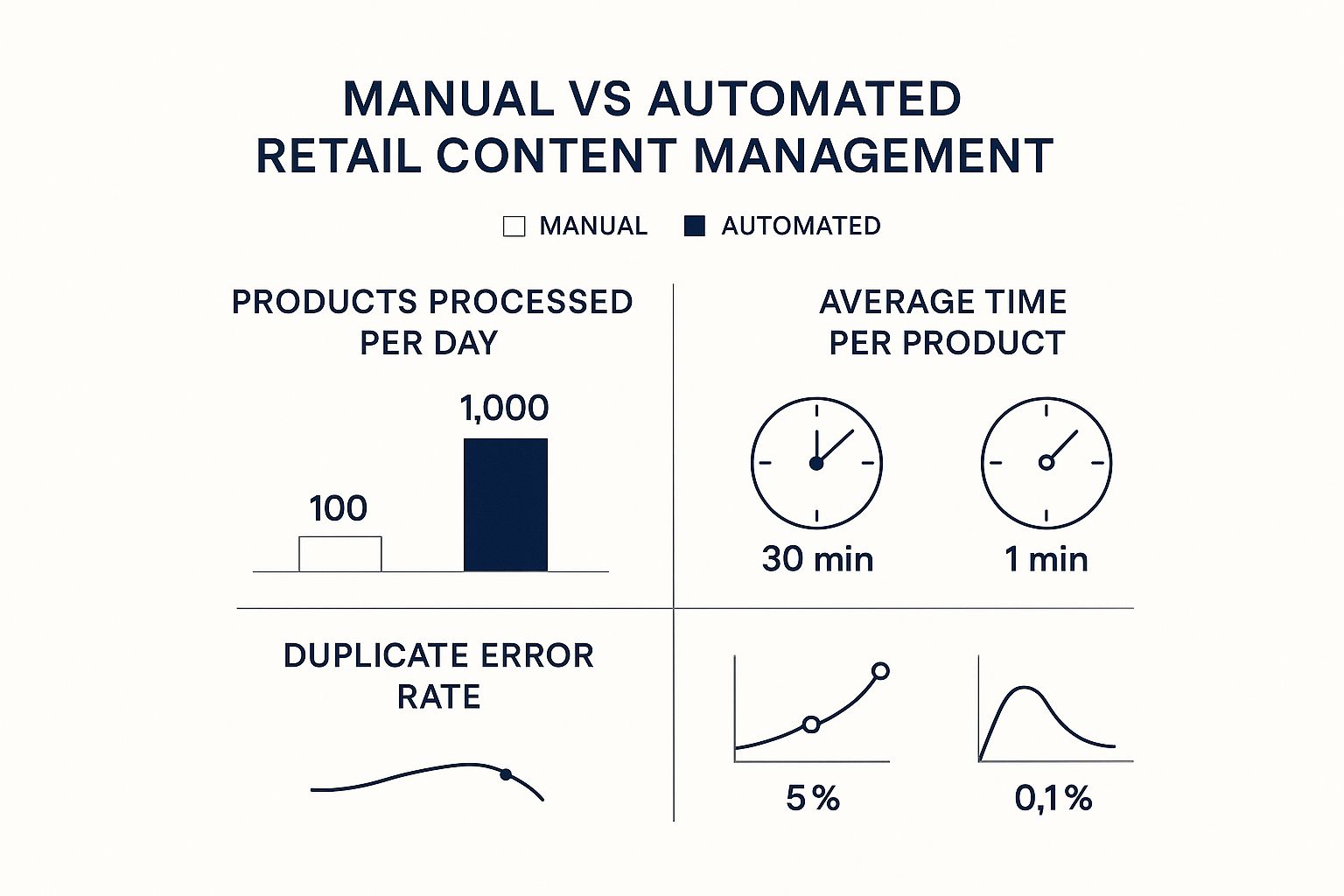
The data makes it crystal clear: automation delivers a massive leap in output and a dramatic drop in errors, freeing up your team for more strategic work. This move from manual SEO to AI SEO is also critical for getting your business ready for the future of agentic search, where AI shopping agents will depend on highly structured data to recommend products.
Adopting AI-powered retail transformation isn't just an upgrade anymore; it’s essential for survival and growth.
How AI Content Automation Works for Retail
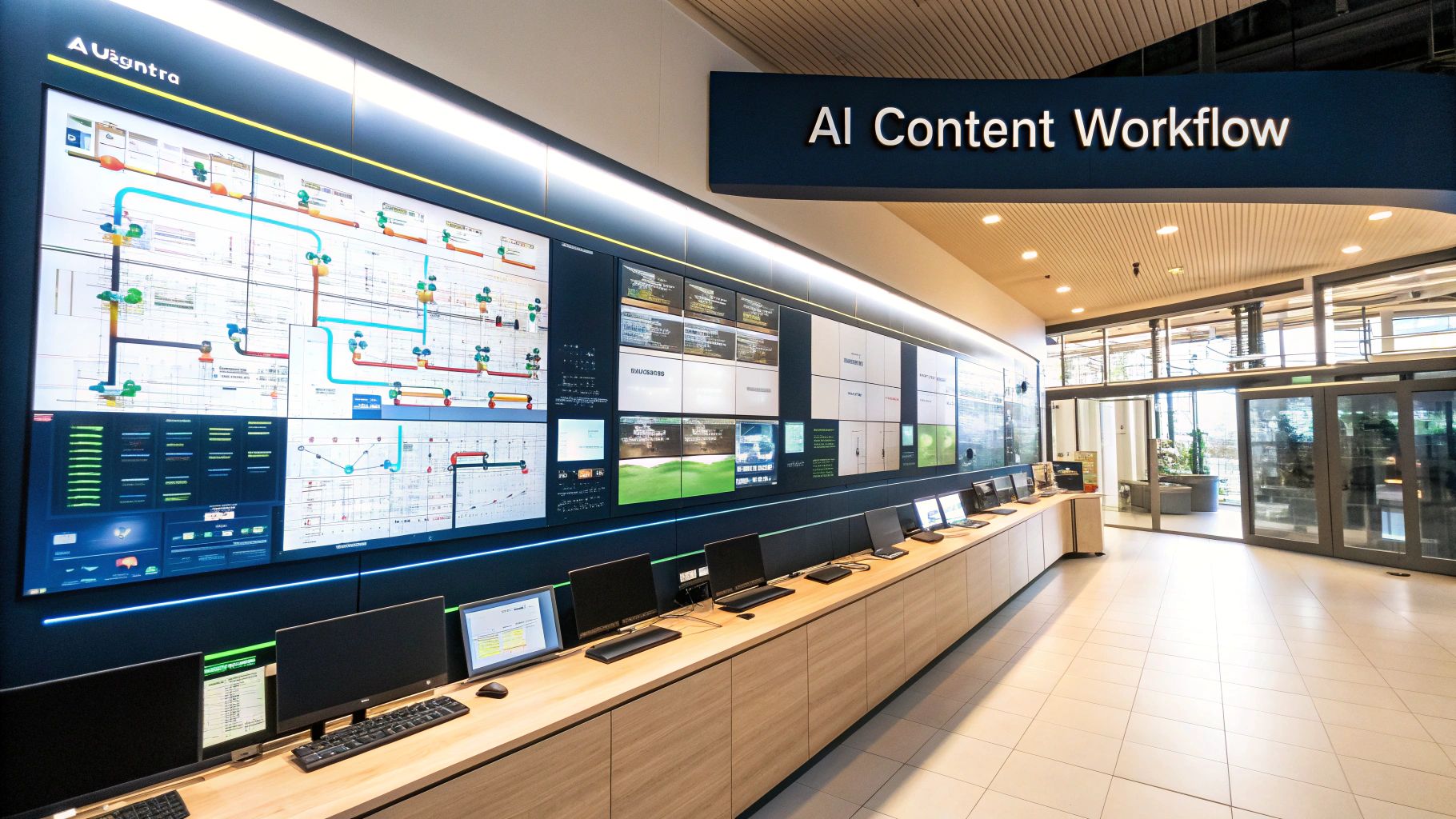
At its heart, content automation for retailers is about shifting from manual, one-off tasks to an intelligent production line for your digital shelf. Instead of a small team handcrafting every single product page, you have a system that takes raw materials, your supplier product feeds, and turns them into thousands of perfectly optimised, customer-ready listings. It’s a move from artisanal effort to industrial-scale precision, a core component of scalable SEO solutions.
The process kicks off when the AI platform hooks into your product information management (PIM) system or pulls in supplier data files directly. This raw data is usually a mess, often inconsistent, incomplete, and duplicated across thousands of SKUs. The first job of the AI workflow is to clean, standardise, and structure this information, creating a solid foundation for optimising product feeds efficiently.
This move to automated systems isn't just a niche trend; it's rapidly becoming the standard. The Australian retail automation market hit USD 548.80 million in 2024 and is expected to nearly triple by 2033. This growth is all about the need for greater retail efficiency tools and a much better online customer experience.
From Raw Data to Enriched Content
Once the data is clean, the real magic begins. The system uses generative AI to create entirely new, unique content from the structured information it just organised. For any retail leader, understanding what generative AI is is crucial because it’s the engine powering this transformation. From there, the system runs several key jobs at once across your entire product catalogue SEO strategy.
These core functions work in harmony to build a powerful, scalable content engine:
- Product Data Enrichment: The AI smartly identifies and fills in the blanks in your data. It can figure out missing details like colour, material, or style from the information it already has, ensuring every product page is complete.
- Unique Product Descriptions: Guided by your brand’s specific tone of voice, the AI writes unique, engaging, and SEO-friendly descriptions for every single item. This instantly solves the toxic problem of supplier content duplication. Our guide on the AI product description generator dives deeper into automating product descriptions.
- AI Image Recognition and Tagging: This is a game-changer for industries like fashion or furniture. The AI looks at product photos and automatically creates descriptive alt text and product tags (e.g., "v-neck," "oak finish," "leather strap"), which boosts both accessibility and image SEO for ecommerce.
- Metadata Optimisation: SEO titles and meta descriptions are generated at scale, each one tailored to a specific product and category. The goal is simple: maximise your visibility in search results and improve digital shelf performance.
To put it into perspective, here’s a quick comparison of the old way versus the new.
Comparing Manual vs AI Content Workflows
| Aspect | Manual Content Management | AI Content Automation |
|---|---|---|
| Speed | Slow and resource-intensive, often taking months for large catalogues. | Extremely fast, capable of optimising thousands of pages in days. |
| Scale | Limited by team size; impossible to keep up with large or dynamic catalogues. | Virtually unlimited scale, handling any number of SKUs simultaneously. |
| Consistency | Prone to human error, with variations in tone, style, and quality. | Ensures 100% consistency in brand voice, formatting, and SEO rules. |
| Strategic Impact | Reactive; teams are always playing catch-up with basic updates. | Proactive; frees up teams to focus on strategy, analysis, and growth. |
This table highlights the fundamental shift. It’s not just about doing things faster; it's about building a completely different operational capability.
By automating these interconnected tasks, retailers can move from a reactive content strategy to a proactive one that drives digital shelf performance. This is the core of building a truly scalable SEO solution that prepares you for the future of agentic commerce.
Wiping Out Duplicate Supplier Content

For most Australian retailers, supplier product feeds are both a lifeline and a liability. They're essential for populating your online store, but they come with one of the most stubborn SEO headaches out there: supplier content duplication.
When hundreds of retailers are using the exact same generic descriptions, search engines see it all as low-value, repetitive noise. This can seriously tank your rankings and completely wash out your brand identity. It's a huge problem that requires a duplicate content SEO fix.
This is where content automation for retailers steps in with a direct, powerful fix. Instead of attempting manual rewrites, which is impossible at scale, AI-powered content workflows can systematically solve this problem across your entire product catalogue.
The system takes the standard supplier information and uses it as a jumping-off point to generate thousands of completely unique, brand-aligned, and SEO-optimised product descriptions. It ensures every single product page on your site has its own distinct voice and value, guaranteeing unique product descriptions for SEO.
It's the difference between being just another echo in a crowded market and standing out as a clear, authoritative voice. If you want to dive deeper into this critical issue, you can explore detailed strategies for avoiding supplier product feed duplication with best practices and tools to protect your performance.
From Generic Data to Compelling Narratives
The real magic of this automated approach is its ability to do more than just reword things. Modern AI workflows can dig through raw data to find and highlight key features that were previously buried in dry technical specs.
This supplier feed enrichment process turns bland, copy-pasted supplier text into engaging, benefit-driven content that actually speaks to your customers.
Think about these real-world examples of retail SEO automation in action:
- Fashion SEO Optimisation: An AI system spots "100% organic cotton" in a data sheet and automatically expands on its benefits, like breathability and sustainability. It can even use AI image recognition to identify a "pleated midi skirt" and then write a description suggesting how to style it for work or a weekend outing, adding value way beyond the basic facts.
- Electronics SEO Optimisation: For a new TV, the automation can take a simple feature like "HDMI 2.1 port" and explain that this makes it perfect for next-gen gaming consoles, delivering a smoother, high-frame-rate experience your customers will love.
This intelligent rewriting is a core part of next-gen SEO for retailers. It’s not just about dodging duplicate content penalties; it’s about seizing the opportunity to tell a better story for every single product you sell. This creates a richer customer experience and drives conversions at scale.
This is exactly how leading retailers are reducing retail content bottlenecks and building a serious competitive edge.
Enriching Product Data and Images with AI
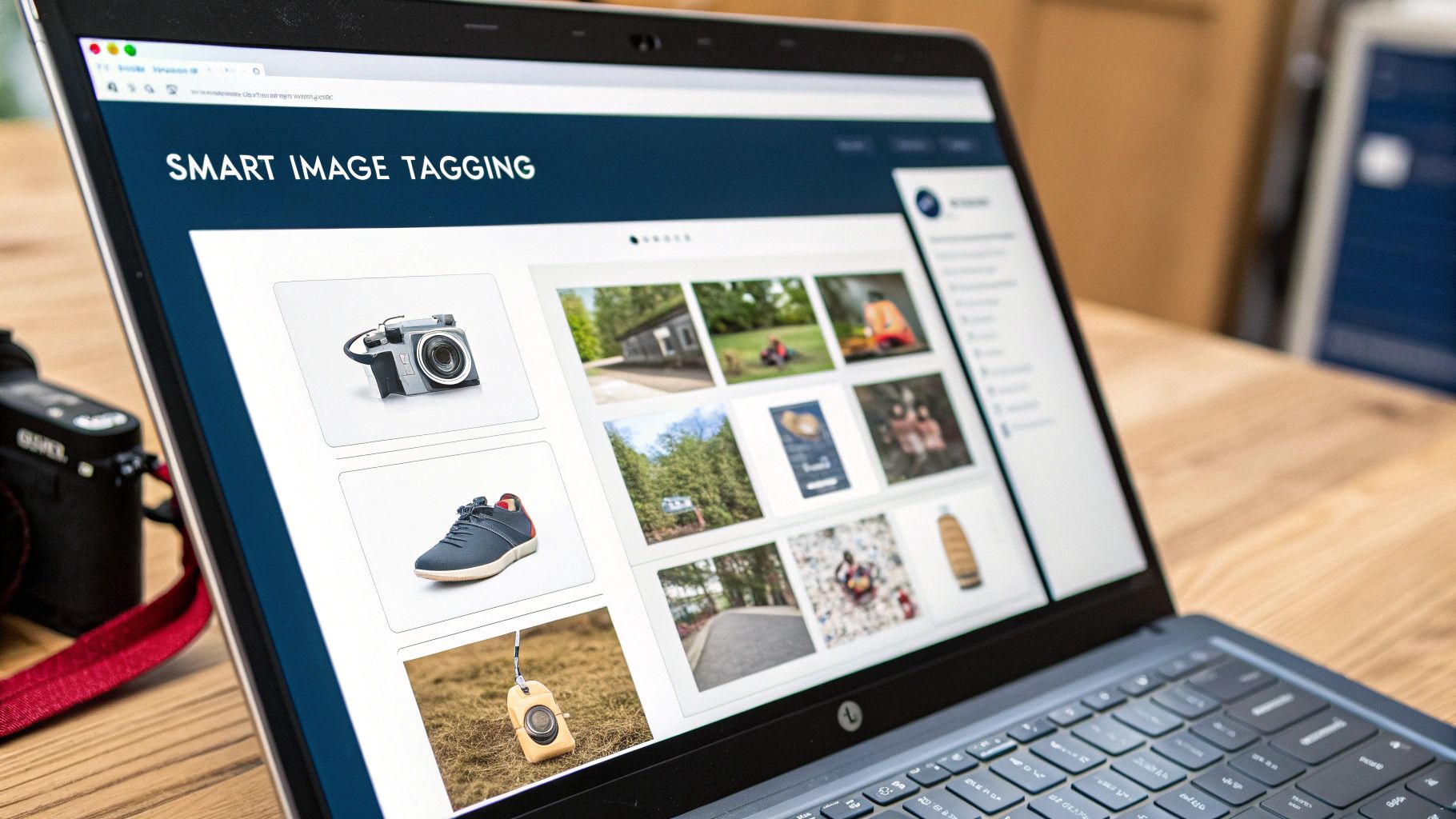
Great product data is the engine behind a solid customer experience and strong search visibility. But let’s be honest, the raw supplier feeds you get are rarely ready for prime time. They’re often messy, incomplete, and inconsistent, which is a fast way to sink your digital shelf performance. This is where automated product data enrichment turns a major headache into a real advantage.
AI-driven workflows can take that messy information and automatically clean, structure, and standardise it across your entire catalogue. But the real magic is how it intelligently fills in the gaps. For instance, an AI can look at a dress with a certain cut and pattern and tag it as "bohemian," or a sofa with tapered legs and label it "mid-century modern." This adds rich, searchable details that were never in the original feed. This process is a cornerstone of modern retail SEO automation. You can dig deeper into how this all works in our guide on the benefits of product data enrichment.
And it's not just about the customer-facing side. Over 60% of Australian retailers are now using AI to get smarter with their supply chain and inventory management. This shift is creating more efficient retail operations from the warehouse all the way to the website.
Automating Visuals with AI Image Recognition
For retailers in fashion, furniture, or beauty, product images are just as vital as the text. AI is a game-changer here, too, thanks to image recognition and tagging.
This technology looks at your product photos and automatically identifies and tags the important visual details. It's a massive efficiency boost that pays off for both your SEO and the user's experience on your site.
- Alt Tag Optimisation for Retail: AI can generate descriptive alt text for every single image at scale. This makes your site more accessible and gives search engines the context they need to rank you in image searches.
- Fashion Product Image SEO: It can spot a "V-neck silk blouse" or "leather ankle boots" from an image alone, creating tags that make your internal search and filtering so much better for shoppers.
- Furniture Image Tagging SEO: For a piece of furniture, it might tag attributes like "solid oak construction" or "velvet upholstery," adding the kind of specific details that help customers make a buying decision.
This level of granular, SKU-level SEO detail is simply not possible to achieve manually. It also gets your content ready for the next wave of agentic search, where AI shopping assistants will depend on this structured data to make their recommendations.
This shift from manual data entry to smart automation defines next-gen SEO. For a practical look at how to get your visuals up to scratch, you can also learn about creating stunning digital product images using AI generators. By automating both your text and image enrichment, you’re building a powerful asset that lifts your entire ecommerce strategy.
Winning the Future with Agentic SEO
The way customers find and buy products is about to fundamentally change. The old playbook of keyword stuffing and manual SEO tweaks is rapidly becoming obsolete. We're now entering the era of Agentic SEO, a completely new approach focused on making your product content perfectly readable for AI shopping agents like ChatGPT, Perplexity, and Amazon's Rufus.
Instead of scrolling through endless search results, a customer will soon just ask their AI agent, "Find me a durable, waterproof hiking boot under $300 available in a size 10." That agent will then scan the web in an instant, analyse product data, and present only the best options.
If your retail site has messy, unstructured, or generic supplier content, you’ll be completely invisible in these searches.
This isn't just a minor shift; it's a strategic reset. Success in this new world of agentic commerce hinges entirely on the quality and structure of your product data. The only retailers who will show up are those who have already automated their product data enrichment and eliminated supplier content duplication. They're the only ones with the machine-readable catalogues these AI agents for retail efficiency need to make recommendations.
Preparing for an Agentic Commerce Future
To win here, you need to stop thinking about optimising for human eyeballs and start structuring content for machine intelligence. That’s the real core of AI SEO. It's all about creating AI-compatible SEO content, a rich, detailed, and accurate product information layer that AI agents can easily understand and, more importantly, trust.
This preparation is already happening across Australia. By 2025, an estimated 70% of small retail businesses will have adopted AI tools for tasks like marketing and content creation. While retail still lags behind other sectors in AI adoption, the trend is clear. You can find more insights into how Australian retail businesses are adapting to AI on bizcover.com.au.
So, what does agentic search optimisation actually look like in practice? It comes down to a few key elements:
- SKU-Level SEO: Getting hyper-specific with detailed and unique information for every single product variation, not just the parent product.
- Structured Data: Using schemas and standardised formats that machines can parse without any guesswork.
- Attribute Tagging: Going deep with tags for everything from material and colour to style and specific features, often powered by AI image recognition.
The future of work in retail isn't about AI replacing people. It's about human + AI collaboration in SEO. Your SEO strategists will be the ones guiding the AI, setting the brand rules, and analysing performance. The AI will then execute the monumental task of optimising tens of thousands of product pages for this new, automated customer journey.
This collaborative model is the only way to achieve SEO at scale and the precision needed for the future of retail search. By embracing AI workflows for ecommerce, you aren't just tweaking your current SEO. You're building the foundation to thrive in the next generation of online shopping. To get a better handle on this shift, check out our detailed guide on agentic AI for retail and its impact.
Getting Your AI Content Workflow Up and Running
Switching from manual content creation to an automated workflow isn't just about installing new software; it’s a strategic project. By mapping out a clear path, you can ensure the transition is smooth and delivers results you can see right away. The trick is to think of it not as a tech-only job, but as a genuine partnership between AI power and your team's know-how.
First things first, you need to do an honest audit of where your content process gets stuck. Where are the biggest hold-ups? Is it writing thousands of unique product descriptions, optimising all your metadata, or trying to clean up messy supplier feeds? Pinpointing these headaches is what will define the goals for your AI workflow automation for retail.
Once you have those goals locked in, you can move on to picking the right platform and planning how it all fits together.
Building Your Human + AI Team
The best way forward is what we call a human + AI collaboration model. This setup lets the technology do all the heavy lifting, the repetitive, time-consuming tasks, while your team steps in to provide the final strategic eye. This ensures every bit of content is on-brand and up to scratch. This is how you build truly scalable SEO solutions.
The roadmap to get there usually looks something like this:
- Platform Integration: The first step is to connect the AI platform to your existing systems, whether that's a PIM, ERP, or your ecommerce platform like Shopify or Magento (now Adobe Commerce). This creates a direct line for product data to flow through, so you can stop manually transferring files and the AI always has the latest info to work with.
- Brand Voice Training: Next, you teach the AI your brand. This means feeding it your specific brand guidelines, tone of voice, and stylistic rules. You'll show it examples of your best-performing content so it learns what a 'win' actually looks like for your business.
- Workflow Configuration: Now you set the rules of the game. You'll define templates for different product categories, establish the SEO parameters for titles and metadata, and configure rules for product data enrichment to get your whole catalogue standardised and consistent.
- Human-Led QA and Approval: This is the crucial final step. You put a review stage in place where your content or marketing teams give the final thumbs-up. The AI might handle 90% of the content creation, but that last human touch ensures everything is accurate, high-quality, and perfectly aligned with your brand before it ever goes live. This is human-led AI content QA in practice.
This structured approach takes the mystery out of adopting AI workflows for ecommerce. It's all about building an efficient, automated engine for content that stays firmly under your team's strategic control, setting you up for the new way of working in retail.
Common Questions About Retail Content Automation
When you're thinking about shifting to automated workflows, it’s natural to have questions. Getting clear on the real-world impact is the best way to build confidence, so let's tackle a few of the most common queries we hear from retail leaders.
How Does Automation Handle Complex Categories?
This is where content automation for retailers really shines. For nuanced categories like fashion or furniture, complexity is an advantage, not a hurdle.
Using advanced AI image recognition, the system can look at a product photo and identify specific, detailed attributes. Think a "boat neckline" on a shirt or "tapered oak legs" on a coffee table. That level of detail is almost impossible for a human team to capture consistently across thousands of products.
This data then becomes the raw material for product image tagging and gets woven into unique, detailed descriptions. It’s how fashion SEO optimisation or furniture SEO services can deliver SKU-level detail at a scale that manual teams simply can't match.
Will AI Content Damage Our Brand Voice?
Absolutely not, and this is a critical point. The goal isn't to replace your brand's personality with a generic, robotic one. Modern AI content platforms are built for human + AI collaboration.
The process starts by training the AI on your specific brand guidelines, tone of voice, and even your best-performing content. It generates an automated first draft, but your team always has the final say through a human-led quality assurance workflow. This gives you the speed of automation with the strategic oversight of your brand experts.
What Is the Difference Between AI SEO and Traditional SEO?
Traditional retail SEO is a manual slog. It involves painstaking keyword research, page-by-page optimisation, and link building, all geared towards human searchers. It’s labour-intensive and just doesn't scale well for large product catalogues. AI SEO vs traditional SEO is a comparison of scale and strategy.
AI SEO, on the other hand, automates these tasks at an incredible scale. Instead of optimising one page at a time, it focuses on enriching and optimising thousands of SKUs simultaneously. It makes your product data machine-readable and gets your content ready for agentic search optimisation. It’s a shift from doing the manual work to strategically directing a powerful, automated system.
Ready to eliminate content bottlenecks and prepare your business for the future of retail? Optidan AI provides the AI-powered workflows you need to enrich product data, create unique content at scale, and win on the digital shelf. Discover how we can transform your content strategy.
