

Everyone talks about "operational efficiency," but few retail leaders can describe what it actually looks like in practice for a large-scale ecommerce operation. True efficiency isn’t just about reducing cost. It’s about building systems that let you scale output without sacrificing quality or control, ensuring your brand can consistently dominate the digital shelf in the new era of AI-powered commerce.
The McDonald’s Model: What Operational Efficiency Really Means in Retail

McDonald’s doesn’t make the best burger in the world. But it makes the same burger, millions of times, in hundreds of countries, with predictable results. That’s operational efficiency. It’s not about flash, it’s about process, systems, and getting 99% of the work done right the first time.
This is the mindset that separates retailers struggling with messy digital workflows from those who dominate their category. Now, apply this to your own operation:
- How many retailers know exactly how long it takes to get a product from a supplier feed to a live, shoppable page?
- How many can see precisely where it’s blocked, whether it’s image approval, missing GTINs, or copy delays?
Without clear answers, you’re operating on guesswork, not a system. The journey a product takes from a supplier's spreadsheet to a customer-facing PDP is often a tangled mess of manual steps, disconnected tools, and endless delays. These are the retail content bottlenecks that are quietly killing your revenue and readiness for the future of retail search. Getting this right is the foundation for improving digital shelf performance and preparing your catalogue for agentic search, where AI agents for retail efficiency will rely on rich, structured data to make recommendations. For a deeper dive, see our guide on how retailers can win the digital shelf and outrank in agentic commerce.
Core Principles of Retail Operational Efficiency
To build a truly efficient machine, you need to focus on four measurable pillars. These are the diagnostics that reveal the health of your ecommerce operations and your capacity to scale.
1. Speed to Live
This is the ultimate health check: how fast can you get a product online and shoppable? Every day a product sits in a digital warehouse is a day of lost revenue. For retailers in fast-moving categories like fashion or electronics, slow speed to market for products means missed trend cycles and handing competitors a head start.
2. Data Accuracy
Is your product information clean, matched, and verified? Inaccurate data from messy supplier feeds leads to poor search results, confused customers, and high return rates. It also cripples your ability to perform in an agentic commerce future, where AI agents need perfect data. Turning raw supplier feeds into structured, optimised product content via product data enrichment is no longer optional.
3. Process Repeatability
Can your systems handle 10,000 new SKUs as easily as 1,000? If scaling up means hiring more people for manual checks, your process isn't repeatable, it's a bottleneck waiting to happen. True scalability comes from automated content workflows designed for volume, ensuring you can achieve SEO at scale without the system breaking. Learn more about designing such systems by understanding what lies beyond the PIM in building a living product data ecosystem.
4. Human + Tech Efficiency
Are your teams doing manual work that technology should handle? True AI-powered retail transformation isn’t about replacing humans, it’s about augmenting them. When technology handles tedious tasks like correcting duplicated supplier content or initial product image tagging, it frees your team for high-value strategic work, driving better human + AI collaboration in SEO.
Common Bottlenecks in Retail Operations
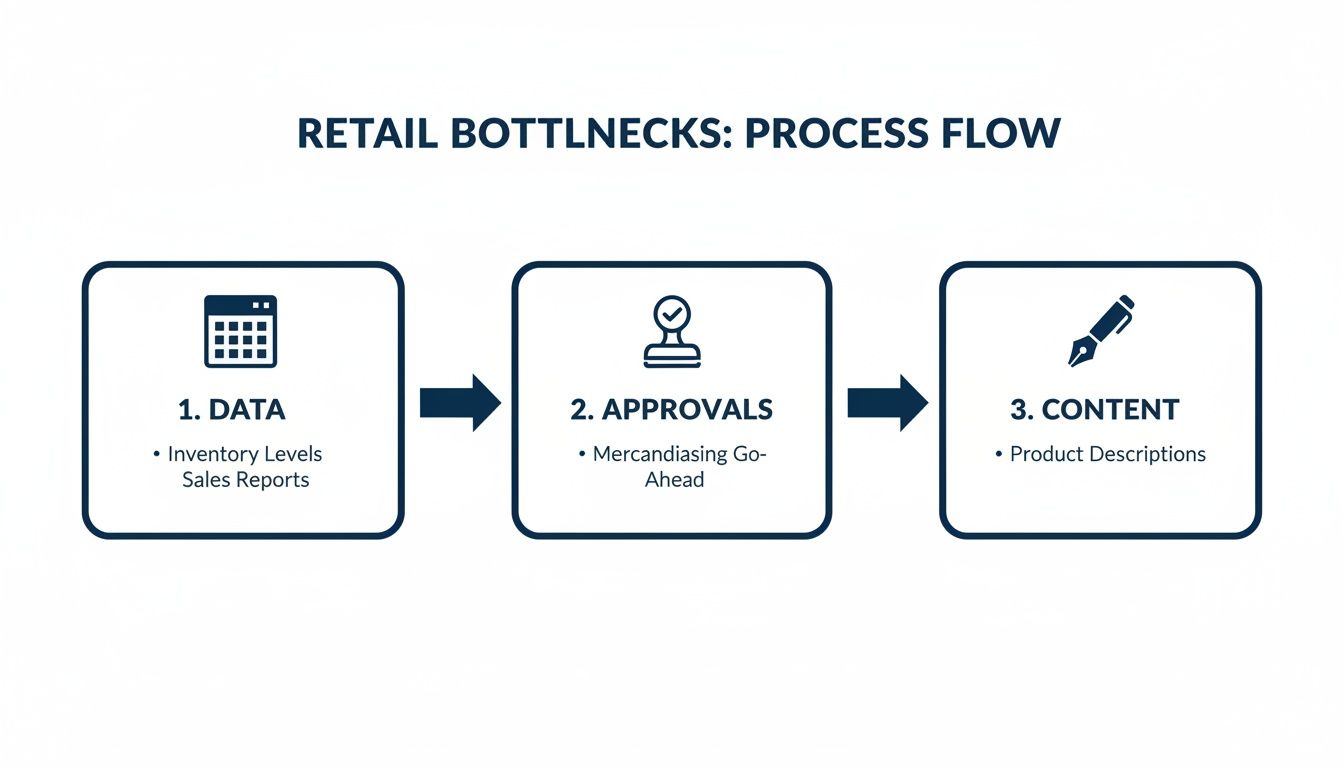
The first step to fixing a problem is spotting it. In retail, operational friction is often disguised as "the way we've always done things." These hidden bottlenecks are most common in the digital supply chain, where manual tasks and data gaps create costly delays.
Key examples include:
- Relying on manual product checks: Teams buried in spreadsheets verifying every detail from a supplier feed is slow, tedious, and prone to error.
- Delayed launches due to missing content: Products get stuck in limbo, unable to go live because critical data like GTINs or style codes is missing. Learn more about how supplier data is holding back retail performance.
- Time spent chasing suppliers for GTINs or style codes: The endless email chains and calls to track down essential data points is a massive drain on resources.
- CMS approvals and lack of automation: Clunky, multi-stage approval workflows that require sign-off from several departments add days, or even weeks, to a product’s go-live timeline.
Even with highly engaged staff, process bottlenecks will always limit productivity. While Australian retailers benefit from strong employee engagement, with Culture Amp's retail benchmark insights showing 69% of retail employees are engaged, these positive numbers are neutralised by inefficient systems. The problem isn't your people, it's the system they're forced to work within.
How Retailers Can Improve: A Practical Blueprint
Fixing these bottlenecks requires a repeatable system. To build a genuinely efficient retail operation, you need a blueprint that shifts you from reactive fixes to proactive system design.
1. Standardise Intake Processes
Just like McDonald’s has prep stations, your digital operation needs a standardised intake process for all product data. This is your single entry point where messy supplier feeds are cleaned, structured, and validated. This one change dramatically improves GTIN and style code visibility and builds the foundation for any retail automation you introduce.
2. Track Time per Product or Content Asset
You can't improve what you don't measure. Start tracking how long it takes to complete key tasks, like a factory line. How long does it take to enrich one product? To perform image recognition and tagging for a new collection? This data will expose your hidden inefficiencies with brutal honesty and build the business case for new retail efficiency tools.
3. Use Tools That Reduce Human Handling
The most powerful way to create scalable retail workflows is through automation. This includes using AI workflow automation for retail to handle tasks like:
- Automating product descriptions to fix duplicated supplier content at scale.
- Automating alt tag optimisation for retail via AI image recognition.
- Connecting your product feed and content in one unified place to eliminate errors. When your PIM, data enrichment, and content tools are separate, you create friction. A single platform acts as the source of truth.
You can learn more about how API-driven workflows are transforming retail data enrichment. This drive for efficiency is critical in the Australian market. The latest ABS retail trade report shows online sales for non-food retail have hit 19.0% of the total, a clear sign that streamlined digital operations are essential for handling growing volume. For more on boosting ecommerce results with smarter processes, see this guide on operational efficiency improvement.
What We’ve Seen: From Bottleneck to Competitive Edge
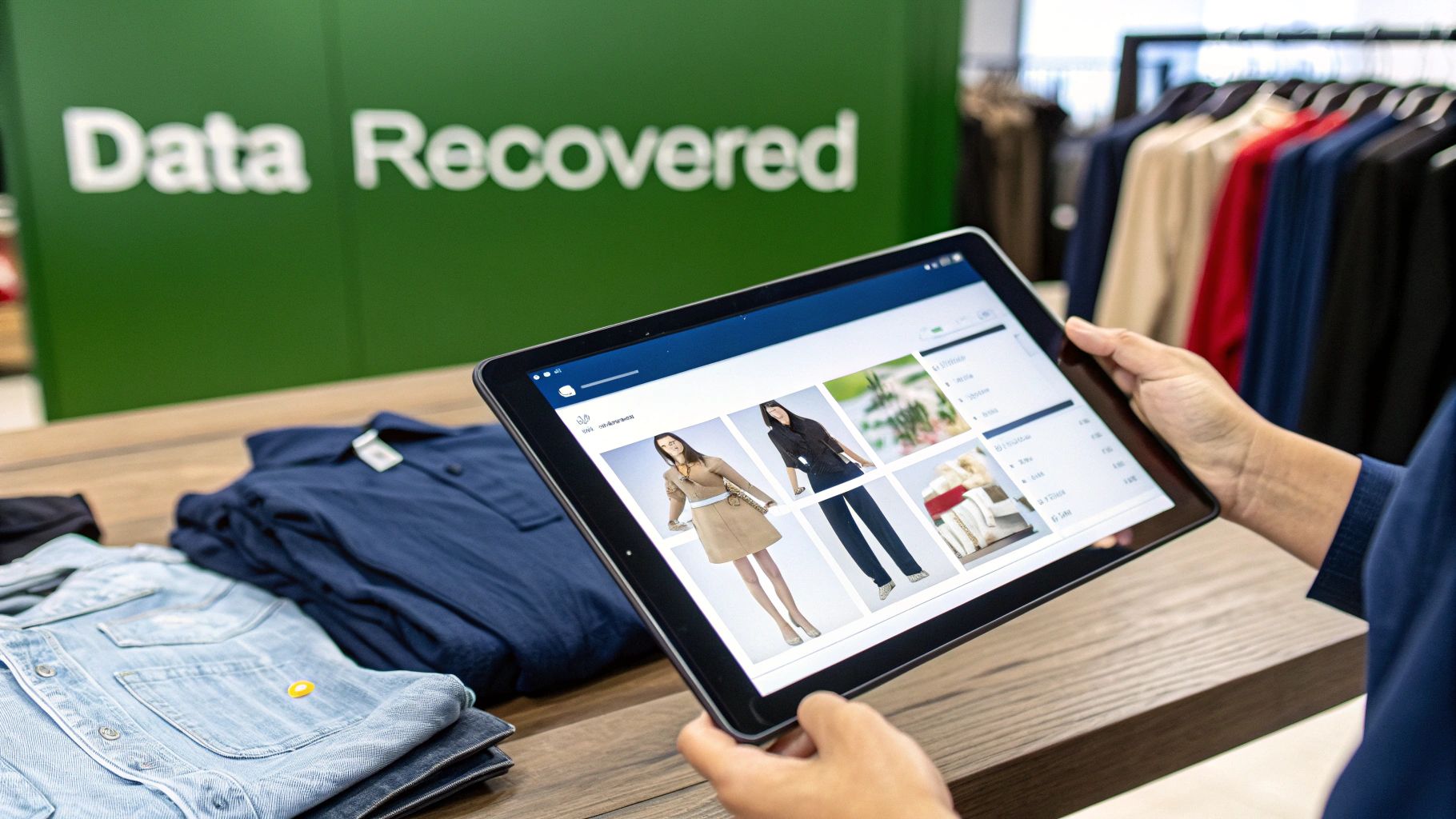
Theory is one thing, but seeing this transformation happen is where the value becomes clear. Recently, we helped a fashion retailer surface over 80% of missing product data (GTINs, style codes) that had blocked hundreds of products from going live. Their product launches were completely gridlocked, costing them sales daily.
The problem wasn't their people, it was their process. They didn’t need more people, they needed visibility and structured workflows. By implementing an automated product feed optimisation system, we turned a massive bottleneck in their ecommerce content operations into a streamlined engine for growth. The core issue wasn't a lack of effort, it was the absence of scalable SEO solutions designed to handle content at scale. This is a story playing out across the Australian retail landscape, where technology is key to managing costs and scaling output, a trend you can explore further in this retail industry report.
Common Questions We Hear on Retail Efficiency
Moving from manual processes to AI-powered ones brings up valid questions. Here are the straight answers we give retail leaders and ecommerce managers.
Is Operational Efficiency Just Another Term for Cost Cutting?
No. While efficiency saves money, its real purpose is to increase your capacity to grow. It’s about doing more, better, and faster as you scale. By using AI workflow automation, you free up your team from tedious tasks to focus on high-value work like merchandising and marketing. The goal isn’t shrinking expenses; it’s expanding revenue.
Our Systems Are a Mess. Where Do We Even Start?
The biggest and fastest win is almost always fixing your product intake and enrichment process. Map a single product's journey from supplier feed to live on site. You'll likely find the worst bottlenecks are in standardising data and creating unique content. Starting with a solution for product data enrichment and automating product descriptions delivers immediate improvements to your speed to market.
How Does This Get Us Ready for the Future of AI Search?
The future of work in retail is agentic. AI agents in ecommerce, like Google’s AI Overviews and Amazon's Rufus, need clean, structured, and complete data to answer shopper queries. If your processes are manual and messy, you can't provide the quality data they need. By systemising your product data and creating AI-compatible SEO content now, you ensure your catalogue is ready to be discovered by these new shopping agents, giving you a critical edge in the agentic commerce future.
Ready to turn your retail operations from a cost centre into a growth engine? Optidan AI builds the automated content workflows that smash bottlenecks, scale your output, and get your brand ready for the future of agentic search. Book a demo today and see how we can help you achieve true operational efficiency.
