

In an era where AI agents and agentic search are redefining the future of retail, a strong brand guide is no longer just a marketing asset, it is a core operational tool. For retail leaders and ecommerce managers, consistent branding across thousands of SKUs is paramount for digital shelf performance and achieving SEO at scale. A well-defined brand system is the foundation for efficient retail content automation, ensuring every touchpoint, from product pages to marketing campaigns, remains cohesive.
This article explores 10 world-class branding guide examples, breaking down not just their design principles, but how their strategic consistency prepares them for AI-powered retail transformation. We'll analyse how these frameworks enable content to be optimised at scale, help correct duplicated supplier content, and ensure every product description aligns with your unique brand voice. Understanding how these guidelines translate into a cohesive customer experience is further explored through essential fashion merchandising principles.
You will gain actionable insights into building a brand framework that supports human and AI collaboration, making your product catalogue ready for the future of work in retail and discoverability by AI shopping agents like ChatGPT and Rufus. Let's examine the systems that power the world's most recognisable brands.
1. Apple Brand Guidelines: The Power of Minimalist Consistency
Apple's brand guidelines are a masterclass in using minimalist consistency to build an unshakeable premium identity. While often kept confidential, the principles are evident across every product and marketing asset, creating one of the most powerful examples of unified branding. The guide enforces strict rules for logo usage, the proprietary San Francisco typeface, a limited colour palette, and generous white space. This disciplined approach ensures that whether a customer interacts with an iPhone box or a billboard, the experience is unmistakably Apple.
This framework offers a critical lesson for retailers in achieving SKU-level SEO precision and preparing for agentic search. By standardising every visual element, Apple creates highly structured and predictable data. This consistency makes its products instantly classifiable for AI image recognition algorithms, boosting digital shelf performance and ensuring AI agents like Rufus or Perplexity can accurately assess brand authority and product details. This is a prime example of AI SEO in practice, where structured data is optimised for machine interpretation.
Actionable Insights for Retailers
- Standardise Visual Data for AI: Implement strict guidelines for product imagery, including background colour, lighting, and angles. This consistency helps AI agents categorise your catalogue accurately and improves AI image recognition SEO.
- Enforce Typographic Hierarchy: Define a clear and limited set of fonts for headings, body copy, and prices to create a clean, scannable user experience that enhances readability for both humans and AI agents.
- Control Your Colour Palette: A limited colour scheme strengthens brand recognition and simplifies the visual information for AI-powered shopping assistants to process, a key aspect of agentic search optimisation.
2. Google Material Design System: A Universal Language for Digital Interfaces
Google's Material Design is more than a branding guide, it is an open-source design system that provides a unified framework for creating intuitive and consistent digital experiences. It offers comprehensive guidelines for components, colour, typography, and motion, establishing a clear visual language. This system is evident across Google’s ecosystem, from Gmail to Android apps, and has been adopted by companies like Spotify, creating a predictable and user-friendly standard for interface design.
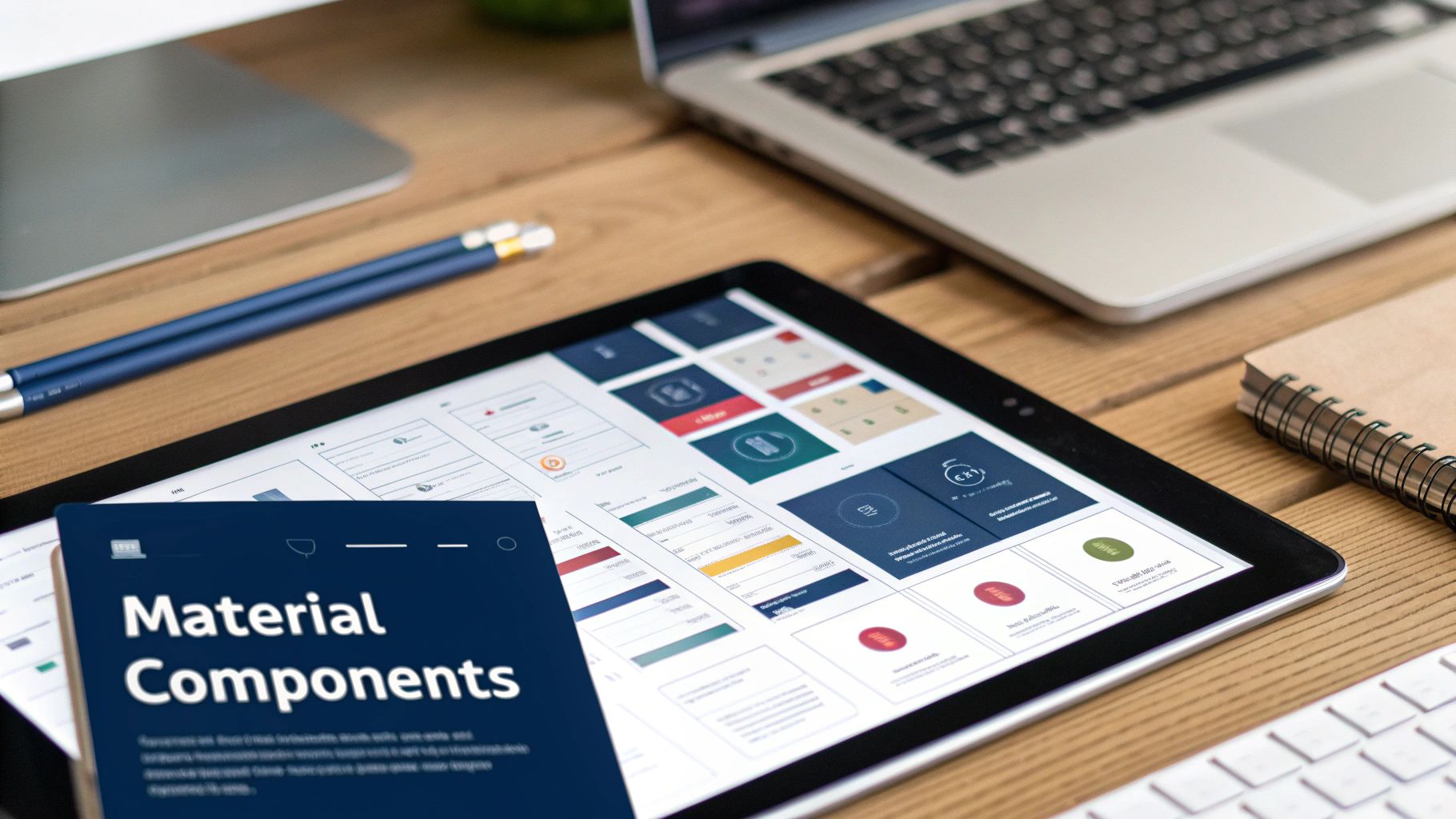
This systematic approach is fundamental for retailers aiming for scalable SEO and readiness for agentic search. Material Design’s component-based structure creates highly organised, predictable data that AI agents can easily parse and understand. The consistent use of elements like cards, buttons, and navigation patterns ensures that AI can accurately interpret page layouts, identify key product information, and evaluate user experience. This directly impacts digital shelf performance and brand authority in AI-driven shopping environments, reducing retail content bottlenecks through reusable components.
Actionable Insights for Retailers
- Adopt a Component-Based Structure: Organise your website using a system of reusable components, for example, product cards and banners. This standardises the underlying code, making your site’s structure more legible for AI agents and enabling automated content workflows.
- Implement a Grid System: Use a consistent grid, like the recommended 8-point system, to align all elements on your product and category pages. This creates visual harmony for users and structured data for AI.
- Define Interaction Patterns: Standardise how users interact with elements like filters and checkout buttons. Predictable micro-interactions improve user experience and provide clear signals for AI evaluating site usability and agentic commerce readiness.
3. Coca-Cola Brand Guidelines: The Power of Global Consistency
Coca-Cola's branding guide is a legendary example of how to maintain global consistency while allowing for regional flavour. It rigorously defines every core brand asset, from the iconic "Coca-Cola Red" (Pantone 484) and the proprietary Spencerian script logo to the use of its dynamic ribbon device. This comprehensive guide ensures that whether you see a can in Sydney or a billboard in Tokyo, the brand experience remains powerful, unified, and instantly recognisable.
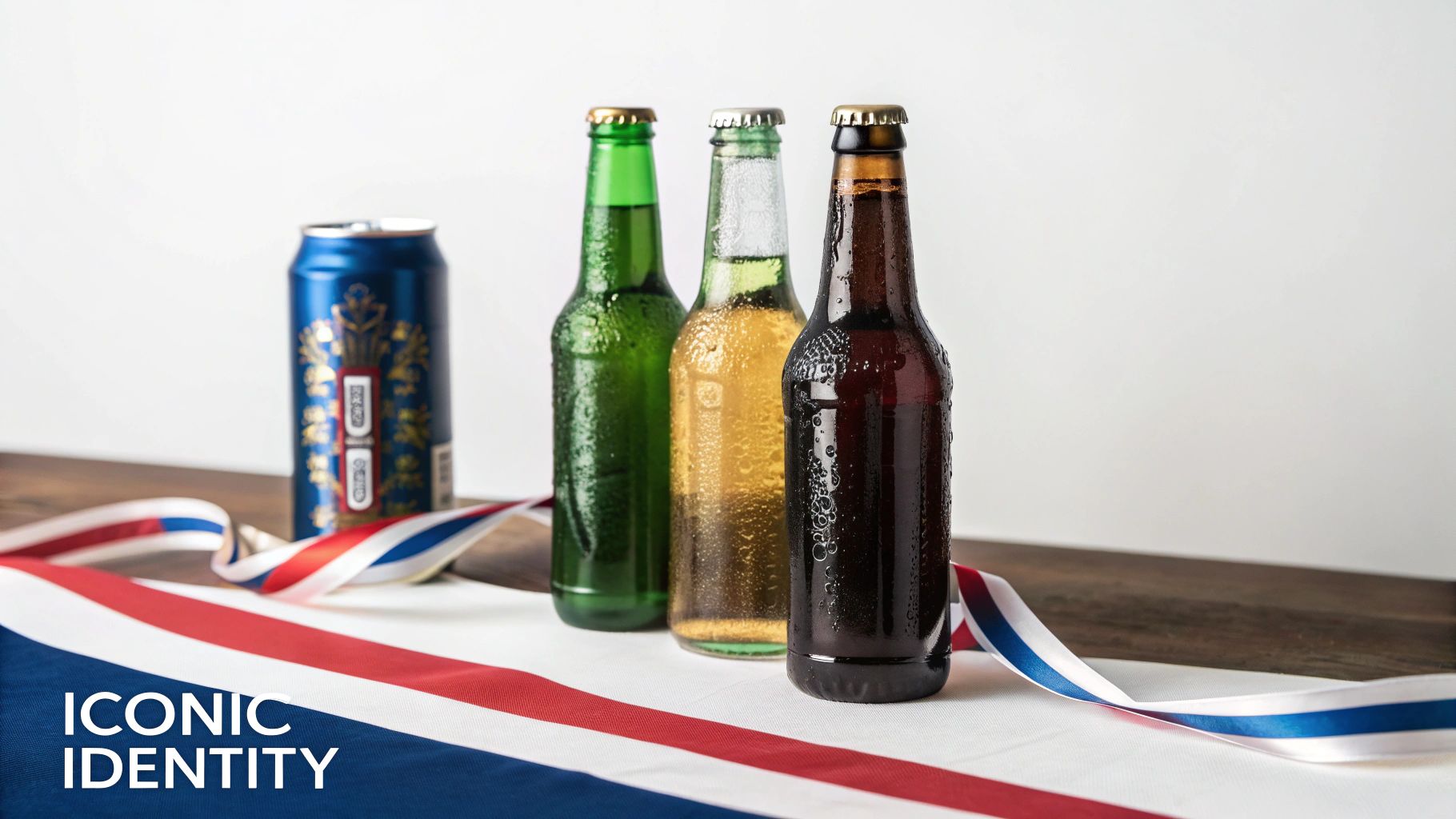
This level of detailed documentation provides an excellent framework for retailers looking to achieve agentic search readiness. The guide’s precision in colour, logo placement, and imagery style creates highly structured data that AI agents can easily parse and verify. By ensuring every digital asset aligns with these strict rules, Coca-Cola enhances its digital shelf performance, making its products more visible and authoritative to AI-powered shopping assistants and image recognition algorithms. This systematic approach is a cornerstone of scalable SEO solutions. You can find more detail by exploring these Coca-Cola Brand Guidelines and other examples.
Actionable Insights for Retailers
- Create Asset Usage Rules: Clearly define how your logo, colours, and key visual elements should be used across different channels and product lines to build structured brand data for AI SEO.
- Develop Photography Style Guides: Specify lighting, composition, and background requirements for all product imagery to ensure consistency that AI image recognition can easily process and categorise, crucial for furniture or fashion image tagging SEO.
- Establish a Digital Asset Hierarchy: Organise your brand assets with clear naming conventions and metadata, making them easily searchable and deployable for both human teams and automated AI workflows for retail efficiency.
4. IBM Brand Guidelines: Balancing Corporate Authority and Modern Accessibility
IBM's brand system is a powerful example of balancing enterprise-level trust with modern, open-source accessibility. Their guidelines meticulously detail the logo's usage, an expansive colour palette anchored by the iconic IBM Blue, and a specific photography style designed to convey innovation and human-centric expertise. A core component is the IBM Plex typeface, an open-source font family that ensures brand consistency across global communications while offering cost efficiency and flexibility. This guide demonstrates how a legacy brand can maintain authority while adapting to contemporary digital standards.
This sophisticated framework provides a blueprint for retailers aiming to establish credibility and prepare for agentic search. By documenting everything from colour codes to typographic rules, IBM creates highly structured data that AI agents can easily parse and verify. The use of an open-source font like Plex also simplifies integration for third-party tools and platforms, ensuring brand identity remains consistent across a fragmented digital ecosystem. This level of detail boosts digital shelf performance by projecting an organised, authoritative, and trustworthy brand persona that AI algorithms are programmed to favour. This illustrates the strategic shift from manual SEO to AI SEO.
Actionable Insights for Retailers
- Document All Brand Assets: Create a comprehensive guide that documents all colour codes (HEX, RGB, CMYK), font weights, and logo variations. This structured data is crucial for AI SEO and agentic search optimisation.
- Invest in Team Training: A brand guide is only effective if used correctly. Invest in training your marketing and content teams to ensure consistent implementation, a key step in human + AI collaboration in SEO.
- Create Department-Specific Guides: Adapt the master brand guide for different departments, such as social media, product listings, or email marketing, to provide clear, relevant instructions and streamline approval workflows, improving retail efficiency tools.
5. Airbnb Brand System (DLS – Design Language System)
Airbnb's Design Language System (DLS) is a benchmark for living, evolving brand guides designed for rapid, global scale. It prioritises emotional connection and community, using a warm colour palette, inclusive imagery, and a component-based system to ensure consistency across its web and mobile platforms. More than a static document, the DLS is a dynamic resource, publicly shared as thought leadership, demonstrating how brand systems can foster both coherence and innovation.
For retailers, Airbnb’s approach is a powerful lesson in creating a brand experience that feels human while being systematically structured. This structured-yet-flexible framework is ideal for preparing content for agentic search. By documenting the rationale behind design decisions and using a componentised system, Airbnb creates a predictable data environment. AI agents can easily interpret this consistency to understand product context, host authority, and the unique value proposition of "belonging," which strengthens digital shelf performance and brand trust in the future of retail search.
Actionable Insights for Retailers
- Create a Living Brand System: Document and version control your guidelines. This ensures teams are always aligned, even as your brand evolves, and provides a clear history for AI agents to process.
- Document Design Rationale: Explain the "why" behind your colour, typography, and imagery choices. This enriched metadata helps AI-powered shopping assistants understand brand intent and better match products to nuanced user queries.
- Use a Component-Based Approach: Develop reusable design components for product listings, banners, and call-to-actions. This modularity streamlines content creation and creates highly structured, AI-friendly data for optimised product feed enrichment.
6. Nike Brand Guidelines: Fuelling Aspiration with Dynamic Identity
Nike's brand guidelines are a powerful blueprint for building an identity rooted in aspiration, performance, and empowerment. More than just a logo manual, the guide dictates how to communicate a feeling of dynamic action and innovation. It provides meticulous detail on the construction of the iconic Swoosh, the specific use of its custom Futura-based typography, and a vibrant colour palette designed to evoke energy. This disciplined framework ensures every touchpoint, from a shoebox to a global marketing campaign, feels unmistakably Nike.
This approach offers a crucial lesson in preparing for the future of agentic search and achieving SKU-level SEO precision. By codifying its visual language, particularly in photography that captures athletic motion, Nike creates highly structured and predictable data. This consistency makes its product imagery instantly classifiable for AI image recognition algorithms, boosting digital shelf performance. An AI shopping agent can easily understand the context of "performance" and "sport," linking the brand's identity directly to product attributes and building unparalleled authority.
Actionable Insights for Retailers
- Codify Photography Styles: Create mood boards and technical guides for product photography that specify action shots, lighting, and athlete representation. This ensures AI agents can accurately interpret the product's use case and context.
- Enforce Logo Geometry: Provide detailed vector guides for your logo, including clear space and minimum size requirements. This guarantees consistency across all digital and physical assets, from your website to packaging. While digital experiences often take precedence, brand guidelines also extend to physical typography; for instance, understanding sources for choosing fonts for metal signs can ensure consistency across all brand touchpoints.
- Define Approved Colour Combinations: Document specific primary and secondary colour pairings to maintain brand integrity and simplify the visual data for AI-powered shopping assistants to process. This is a key part of any successful branding strategy framework.
7. Microsoft Fluent Design System: Adaptive Branding for a Multi-Platform World
Microsoft's Fluent Design System is an ambitious, modern framework that prioritises adaptability across a vast digital ecosystem. It moves beyond rigid rules to a set of principles based on light, depth, motion, material, and scale. This approach ensures a consistent yet contextually appropriate user experience, whether on a Windows desktop, an Xbox console, or within Microsoft Teams. The system is a prime example of creating a unified brand feel that can still flex for different device capabilities and user expectations.
For retailers managing multi-channel storefronts, this adaptive model offers a powerful lesson in preparing for agentic search. The Fluent Design System's component-based architecture creates highly structured, predictable data that AI agents can easily parse and understand. Its emphasis on accessibility and clear information hierarchy also ensures that AI shopping assistants can accurately interpret product details, functionality, and brand value, leading to better digital shelf performance and visibility in AI-driven search results. Learn more about ensuring branding consistency with generative AI solutions.
Actionable Insights for Retailers
- Adopt a Component-Based Approach: Organise your digital assets like buttons, product cards, and banners into reusable components. This creates structured data that AI agents can easily classify, improving SKU-level SEO and automating product descriptions.
- Prioritise Motion and Interactivity: Use subtle motion design principles to guide users and signal interactivity. This enhances the user experience and provides clearer signals for AI agents analysing page usability.
- Implement Platform-Specific Guidelines: Create distinct rules for your mobile app, desktop site, and marketplace listings while maintaining core brand elements. This ensures optimal performance and a native feel on every channel.
8. Starbucks Brand Guidelines: Creating a Consistent Global Experience
Starbucks' brand guidelines are a powerful example of creating a globally recognised, yet locally relevant, customer experience. The guide meticulously details the use of its iconic siren logo, a warm and inviting colour palette, and a custom typeface, ensuring every touchpoint feels familiar. From store design principles to seasonal cup variations and in-store signage, this consistency has built an empire on the foundation of an approachable, premium coffee culture. This organised approach makes Starbucks a benchmark in branding guide examples.
This framework demonstrates the value of systematising brand assets for enhanced AI readiness. The strict rules governing logo variations, colour codes, and photography styles create highly structured data that AI agents can easily parse and understand. This consistency is crucial for digital shelf performance, ensuring that AI-powered shopping assistants can accurately recognise and recommend Starbucks products. This helps whether on a delivery app or within a voice search, solidifying brand authority in agentic search environments. This is a core tenet of AI SEO services.
Actionable Insights for Retailers
- Document Logo Variations: Create vector files for all approved logo lockups, including monochrome and seasonal versions. This prevents inconsistent usage and ensures AI image recognition algorithms can always identify your brand.
- Specify Design and Colour Codes: Provide comprehensive specifications for store design, packaging, and all printed materials, including precise CMYK, RGB, and Pantone codes to maintain visual integrity across channels.
- Develop Flexible Templates: Create templates for seasonal or promotional campaigns that allow for creativity within the brand’s core framework. This ensures consistency while enabling agile marketing, which is vital for retail content automation.
9. Mailchimp Brand Guidelines: The Power of a Playful Approach
Mailchimp’s brand guidelines are a standout example of how B2B companies can build a memorable identity through personality and playfulness. Their guide is famous for establishing a quirky yet professional brand voice, centred around their mascot, Freddie the Chimp, whimsical illustrations, and a vibrant colour palette. This approach proves that even in a technical industry, a fun and irreverent brand can build deep customer loyalty and stand out in a crowded market.
For retailers, Mailchimp’s strategy offers a powerful lesson in using brand personality to enrich product data and prepare for AI-driven agentic commerce. A distinct voice and tone, when applied consistently across thousands of product descriptions, can differentiate a retailer from competitors who rely on generic supplier content. This is a direct fix for duplicate content SEO issues. AI agents like Perplexity are designed to detect brand authenticity, and a unique, personality-driven content style provides strong signals of brand authority, improving digital shelf performance and visibility in generative AI search results.
Actionable Insights for Retailers
- Develop a Unique Brand Voice: Create a detailed voice and tone document to guide all content, from product descriptions to customer service interactions. Learn more about maintaining a consistent brand voice across multiple channels to ensure your brand stands out to both humans and AI agents.
- Codify Your Illustration Style: If using custom graphics or illustrations, document the approved style, colour usage, and context. This creates structured visual data that AI image recognition can easily categorise, enhancing SKU-level SEO.
- Integrate Personality into Customer Interactions: Extend brand personality guidelines to automated notifications and customer service scripts. This humanises the experience and creates consistent brand signals that AI shopping assistants can parse for sentiment and brand identity.
10. Spotify Brand Guidelines: The Rhythm of a Cohesive Digital Identity
Spotify's brand guidelines are an excellent example of creating an energetic, cohesive identity that thrives in the digital world. The system is built around its instantly recognisable "Spotify Green," the modern Circular typeface, and dynamic imagery that reflects global music culture. This guide ensures every asset, from playlist art to an advertising campaign, feels vibrant and unified. The result is a brand that is modern, youthful, and perfectly optimised for screen-first interaction.
This consistency provides a significant advantage in the age of AI agents and agentic search. Spotify's structured use of colour, typography, and layout rules creates highly predictable data that AI can easily parse and classify. For retailers, this approach shows how to build a brand identity that not only resonates with humans but is also machine-readable. This improves digital shelf performance and ensures AI shopping agents accurately interpret your brand’s personality and product offerings, which is the goal of AI-compatible SEO content.
Actionable Insights for Retailers
- Define a Signature Colour: Choose a primary brand colour and create strict usage rules. This consistency strengthens recognition and provides a clear signal for AI image recognition algorithms.
- Establish Dynamic Layout Systems: Document grid and layout systems to maintain consistency across different platforms and screen sizes, ensuring a seamless user experience that AI agents can easily navigate.
- Create Rules for Imagery: Develop guidelines for how photography and illustrations should be integrated, ensuring they align with your brand voice and are tagged correctly for improved AI-compatible SEO content. This is a key part of metadata optimisation at scale.
Top 10 Brand Guidelines Comparison
| Brand | 🔄 Implementation Complexity | ⚡ Resource Requirements | 📊 Expected Outcomes | 💡 Ideal Use Cases | ⭐ Key Advantage |
|---|---|---|---|---|---|
| Apple Brand Guidelines | High, strict, prescriptive system | High, centralised governance and production costs | Premium, highly consistent global recognition | Premium consumer products; retail & packaging | Iconic, instantly recognisable brand equity |
| Google Material Design System | Medium, comprehensive components and motion rules | Medium, developer resources plus learning curve | Consistent, scalable digital interfaces | Enterprise, web & mobile apps; cross-platform products | Extensive docs & open-source libraries for fast adoption |
| Coca‑Cola Brand Guidelines | High, rigid, heritage-driven specifications | High, global licensing, packaging, and approvals | Massive brand equity and global consistency | Global CPG, sponsorships, long-term heritage brands | Unparalleled recognition and emotional loyalty |
| IBM Brand Guidelines | Medium, structured for enterprise communications | Medium, training and governance; lower font costs | Builds enterprise trust and clear B2B communication | Enterprise software, professional services, B2B marketing | Trustworthy, accessible system with cost efficiencies |
| Airbnb Design Language System | Medium, living system requiring governance | High, ongoing maintenance and design ops | Adaptive, inclusive global experiences | Fast-growing consumer platforms focused on inclusivity | Flexible, evolving system that fosters belonging |
| Nike Brand Guidelines | Medium, precise geometry and production rules | High, photography, talent, and high-production needs | Strong emotional connection and premium positioning | Sportswear, sponsorships, athlete-focused campaigns | Emotion-driven recognition across diverse products |
| Microsoft Fluent Design System | Medium, cross-platform rules with motion/materials | Medium, engineering effort and performance testing | Contemporary, accessible cross-platform experiences | Operating systems, productivity suites, multi-device apps | Accessibility-first, adaptive design system |
| Starbucks Brand Guidelines | High, store, packaging, and environmental specs | High, global store implementation and materials | Consistent in-store experience and strong recognition | Retail chains, franchised store experiences | Cohesive physical-brand experience with seasonal flexibility |
| Mailchimp Brand Guidelines | Low, personality-focused with straightforward rules | Low, content and creative effort for consistent tone | Distinctive, memorable brand personality and engagement | B2B SaaS and marketing platforms seeking personality | Highly differentiated, shareable personality-driven brand |
| Spotify Brand Guidelines | Medium, bold colour rules and flexible layouts | Medium, design ops and precise colour management | Distinctive digital presence and cultural resonance | Music & entertainment platforms; youth-focused brands | Strong colour identity and cross-platform flexibility |
From Manual Branding to Automated Excellence: Implementing Your AI-Ready Guide
The journey through these diverse branding guide examples reveals a powerful, unifying truth: the world’s most successful brands don’t just create static documents, they build dynamic systems. From Apple’s minimalist precision to Mailchimp’s playful irreverence, each guide serves as a strategic framework, enabling brand consistency at an immense scale. For today's ambitious eCommerce retailers, this lesson is more critical than ever. The goal is no longer just a PDF that gathers dust; it is about codifying your brand’s unique DNA into a machine-readable format that fuels growth and efficiency.
This transition from a manual to a systems-based approach is the linchpin of modern retail success. An AI-ready brand guide is the foundational input that unlocks the true power of AI workflow automation for retail. It's the core instruction set that allows advanced platforms to execute complex tasks with precision, transforming generic supplier feeds into thousands of unique, on-brand, and SEO-optimised product pages. This is how you move from the slow, bottleneck-prone world of manual SEO to the speed and scale of AI SEO.
Key Takeaways for Building Your AI-Ready Guide
Reflecting on the examples from Google, Spotify, and Coca-Cola, several actionable takeaways emerge for retailers aiming for operations that are optimised at scale:
- Structure for Scalability: Don't just define your logo and colours. Codify your voice, tone, personality archetypes, and even specific phrasing. This structured data is what AI agents need to generate consistent, high-quality content that corrects duplicated supplier content and establishes your unique brand authority.
- Prioritise Actionable Rules: Vague statements like "be friendly" are insufficient. Your guide must provide concrete rules, such as "Use active voice" or "Avoid industry jargon like 'synergy'". These specific constraints are crucial for training AI models to produce content that meets your quality assurance standards.
- Integrate Digital Shelf Strategy: Your brand guide should directly inform your digital shelf performance goals. This includes rules for generating SEO-rich product descriptions, optimised metadata, and consistent alt tags through AI image recognition and tagging, ensuring every SKU is prepared for the future of agentic search.
Ultimately, mastering these concepts is about future-proofing your business. In the evolving landscape of agentic commerce, where AI agents will increasingly make purchasing decisions, a clearly defined and machine-interpretable brand identity is a non-negotiable competitive advantage. It is the difference between being visible and being invisible in the next generation of retail search. The future of work in retail is this human + AI collaboration, and it all begins with a strategic, scalable brand guide that empowers both your team and your technology to excel.
Ready to transform your brand guidelines into a powerful engine for growth? Discover how Optidan AI ingests your unique brand voice to automate the creation of thousands of SEO-optimised product pages, eliminating content bottlenecks and preparing your catalogue for the future of agentic search. Visit Optidan AI to see how our retail-focused AI can help you achieve SEO at scale.
