


In today's competitive retail landscape, brand consistency is far more than just a logo and a colour palette. For Australian retail leaders and ecommerce managers, it's about projecting a unified, authoritative voice across thousands of SKUs, especially when battling the SEO risks of duplicated supplier content. Strong branding guidelines are the essential bedrock of this consistency. This article moves beyond surface-level descriptions to analyse leading branding guidelines examples, revealing how they establish the framework for powerful, scalable SEO solutions.
We will dissect how a clear brand blueprint enables sophisticated AI workflow automation, facilitating rapid product data enrichment and the creation of optimised content at scale. To ensure your brand maintains a consistent voice and visual identity across all digital platforms, establishing clear social media brand guidelines is also crucial.
By examining these world-class examples, you will gain actionable takeaways to prepare your brand not just for today's customers, but for the future of agentic commerce. Learn how to implement an AI-powered retail transformation that ensures your unique voice dominates the digital shelf, improves digital shelf performance, and connects with customers on every channel, every time.
1. Airbnb: Unifying a Global Community with a Single Voice
Airbnb’s brand guidelines are a masterclass in building a consistent narrative that fosters a sense of community and belonging. Central to their strategy is the 'Bélo' symbol, representing people, places, love, and the brand itself. The guidelines meticulously detail how this symbol and the brand’s unique voice should be applied across every touchpoint, from digital interfaces to physical host materials. This ensures every interaction feels authentically Airbnb, no matter where in the world it occurs.
For retailers, this is one of the most powerful branding guidelines examples because it shows how to move beyond generic supplier-fed content. By defining a core brand story, retailers can establish a unique market presence and correct duplicated content issues that harm digital shelf performance.
Strategic Analysis: Community and Consistency
Airbnb's approach centres on storytelling. Their guidelines aren’t just a set of rules, they are a framework for conveying the brand’s mission of "belonging anywhere." This narrative is woven into every aspect of their visual and verbal identity, creating a cohesive and memorable brand experience.
Key Insight: A strong brand story, when consistently applied, can transform a transactional platform into a community. This is crucial for retailers aiming to build loyalty and differentiate themselves in a crowded market.
Actionable Takeaways for Retailers
- Define Your Core Narrative: What is the central story your brand tells? Like Airbnb's 'Bélo', create a core concept that informs your logo, colour palette, and tone of voice. This becomes the foundation for all your product data enrichment efforts.
- Establish a Consistent Voice: Develop clear guidelines for your brand’s tone, whether it’s aspirational, practical, or playful. Use this voice to rewrite supplier content, ensuring your product descriptions are unique and optimised for AI SEO and agentic search.
- Scale with Brand Integrity: Use your guidelines as a blueprint for AI-powered content workflows. AI agents for retail efficiency can be trained on your brand voice to automate the creation of thousands of unique product descriptions, ensuring consistency and quality at scale while eliminating retail content bottlenecks.
Explore the full Airbnb brand guidelines to see their community-centric approach in action.
2. Spotify: Designing a Dynamic and Emotionally Resonant Brand
Spotify’s brand guidelines are a masterclass in creating a flexible yet instantly recognisable identity centred on its iconic green, dynamic duotone imagery, and a music-first philosophy. The guidelines expertly balance a playful, energetic vibe with a clean, sophisticated aesthetic, allowing the brand to adapt across countless musical genres, cultures, and artist collaborations. This ensures that whether a user is exploring a new playlist or viewing a "Wrapped" campaign, the experience feels consistently and uniquely Spotify.
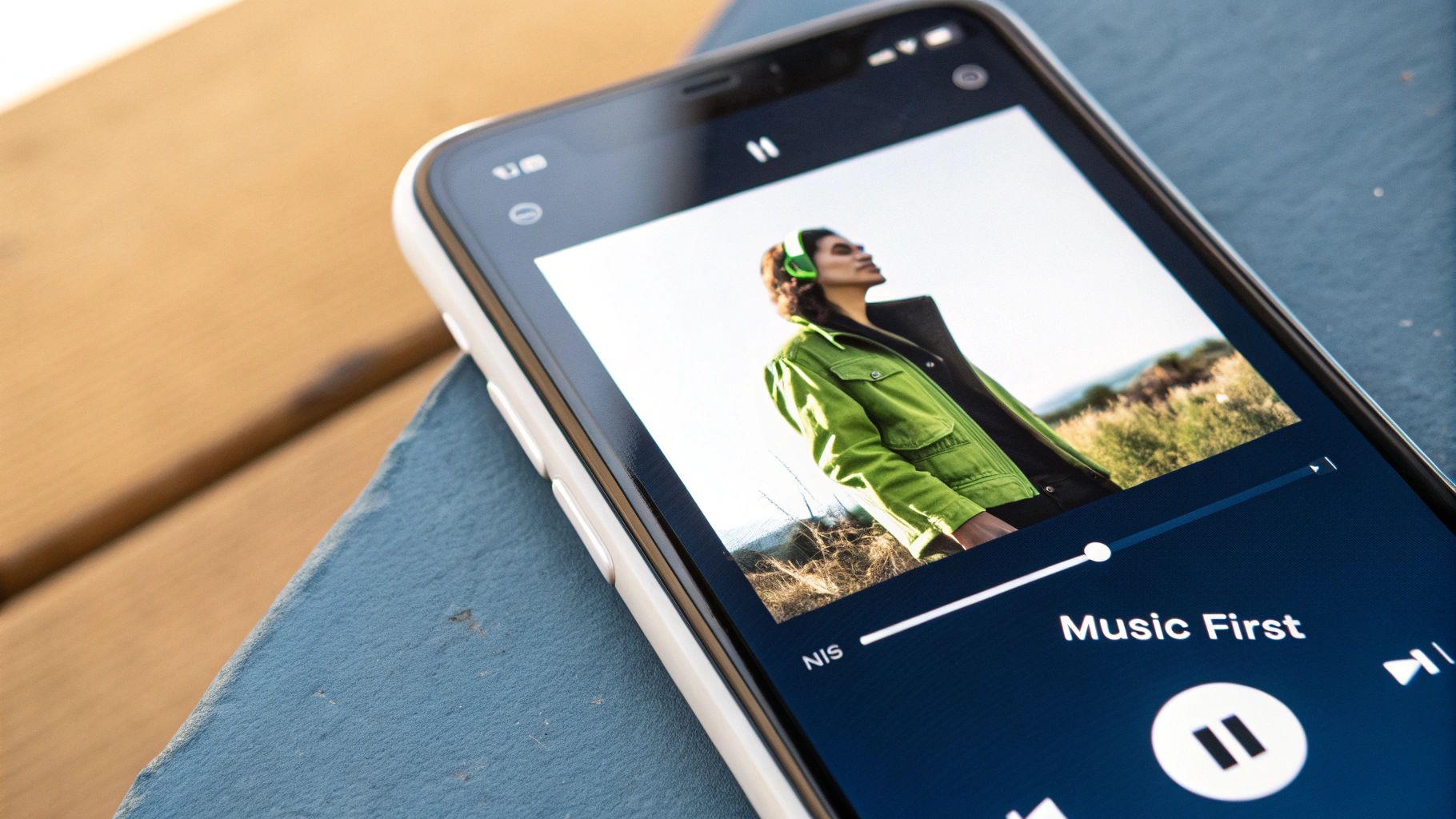
For retailers, Spotify provides one of the most compelling branding guidelines examples for building a system that can handle a vast and varied catalogue. By establishing a core visual language instead of rigid templates, retailers can maintain brand integrity while allowing individual product character to shine through, a crucial element for improving digital shelf performance and avoiding generic supplier content.
Strategic Analysis: Flexibility and Emotional Connection
Spotify's strategy revolves around creating an emotional connection through a flexible visual system. Their duotone image treatment isn’t just a stylistic choice, it's a powerful tool that unifies diverse artist photography under a single brand umbrella. This allows Spotify to celebrate individuality while maintaining a cohesive look and feel, fostering a deep user connection.
Key Insight: A flexible design system, grounded in a few strong core principles, allows a brand to scale its content without losing its identity. This is vital for retailers managing thousands of SKUs who need both consistency and the ability to showcase product uniqueness.
Actionable Takeaways for Retailers
- Develop a Flexible Colour System: Beyond a primary brand colour, create a secondary and tertiary palette. This allows you to categorise products or create campaigns that feel fresh but are still on-brand, enabling effective product data enrichment at scale.
- Establish Dynamic Image Guidelines: Create clear rules for image treatments, like cropping, overlays, or filters. This enables automated content workflows to use AI image recognition and tagging, ensuring every product photo from supplier feeds is transformed into a unique, on-brand asset.
- Prioritise Brand Over Content (Subtly): Your brand elements, like logos and typography, should provide a consistent frame, not overpower the product. This hierarchy ensures customers recognise your store while focusing on what they came to buy. Learn more about creating brand connections with your customer base.
3. Nike: Powering Performance with an Unshakeable Identity
Nike’s brand guidelines are the gold standard for creating an aspirational and globally recognised identity. Built around the iconic Swoosh and the 'Just Do It' philosophy, these guidelines meticulously dictate how to communicate athletic performance, innovation, and motivation. Every element, from the precise angle of the Swoosh on a sneaker to the empowering tone of a digital campaign, is controlled to ensure a consistent, powerful message is delivered across all channels.
This commitment to consistency makes Nike one of the most vital branding guidelines examples for retailers. It demonstrates how a strong visual and verbal identity can be scaled across thousands of products and markets without dilution. For retailers struggling with generic supplier content, Nike’s approach shows how to establish a commanding presence that improves digital shelf performance and prepares your product catalogue for agentic search.
Strategic Analysis: Philosophy and Precision
Nike’s strategy is a perfect blend of a powerful philosophy ('Just Do It') and rigorous execution. The guidelines are not just about logo placement, they are about embodying a mindset of determination and excellence. This philosophy informs everything, from product design to marketing copy, creating an ecosystem where every product and piece of content reinforces the core brand promise.
Key Insight: A memorable brand philosophy, backed by precise visual and verbal guidelines, creates an identity that transcends products. This is the key to building brand equity and ensuring your content stands out in AI-driven search environments.
Actionable Takeaways for Retailers
- Develop an Ownable Philosophy: Go beyond a simple mission statement. Define a core belief system that guides all communication. This philosophy becomes the strategic foundation for your retail content automation, ensuring every automated product description is on-brand.
- Codify Logo and Visual Usage: Create strict rules for your logo, colours, and typography. Detailed guidelines on spacing, placement, and context prevent brand dilution and ensure consistency across every digital touchpoint, a crucial factor for AI image recognition and tagging. For more on this, explore these top tips for maintaining a consistent brand voice.
- Set Photography Standards: Your product imagery should reflect your brand’s values. Define standards for lighting, composition, and model expression to ensure your visual content is unique and aligned with your brand narrative, moving away from generic supplier images. This is essential for optimising the digital shelf at scale.
4. Slack: Humanising Professional Communication
Slack’s brand guidelines are a prime example of how to balance professional credibility with a friendly, approachable personality. Centred on their colourful octothorpe (#) logo, the guidelines champion simplicity and a human touch in workplace communication. This philosophy is evident across their product interface, marketing illustrations, and customisable workspace themes, ensuring every interaction feels both productive and pleasant.
For retailers, Slack provides one of the most compelling branding guidelines examples for translating a brand’s personality directly into its product experience. It shows how a consistent visual and verbal identity can make a functional tool feel intuitive and engaging, a crucial lesson for optimising the digital shelf.
Strategic Analysis: Personality and Simplicity
Slack's strategy focuses on making professional tools feel less corporate and more human. Their guidelines are not just about colours and fonts, they are a blueprint for a user experience that is clear, concise, and friendly. This approach ensures that the brand’s personality is embedded directly into the product’s functionality.
Key Insight: A brand's personality should be an integral part of its product, not just its marketing. By integrating your brand voice and style into the user experience, you create a more memorable and effective digital shelf presence.
Actionable Takeaways for Retailers
- Balance Professionalism with Personality: Define a brand voice that is both authoritative and approachable. This balance is key when enriching supplier product data, allowing you to create unique descriptions that inform customers while reflecting your brand’s character.
- Ensure Consistency from Marketing to Product: Your brand guidelines must translate seamlessly from your marketing campaigns to your product pages. Use a consistent illustration style, typography, and colour palette to create a cohesive journey for shoppers, from discovery to checkout.
- Use AI to Scale Your Brand’s Voice: Train AI agents on your specific brand guidelines to automate the creation of product content. This allows for AI-powered content workflows that ensure every SKU reflects your unique personality, correcting supplier content duplication and boosting your AI SEO performance at scale.
For more on creating a consistent identity, you can learn more about developing a strong brand voice strategy on optidan.com.
5. Mailchimp: Balancing Playful Personality with Professional Precision
Mailchimp’s brand guidelines are a brilliant example of how to inject a distinctive personality into a tech product without sacrificing professionalism. Centred around their friendly mascot, Freddie, and a vibrant yellow colour palette, the guidelines establish a quirky yet approachable voice. This strategy demystifies email marketing, making the platform feel creative and accessible, particularly for small businesses.
For retailers, Mailchimp provides one of the most compelling branding guidelines examples because it demonstrates how to build a memorable brand personality that stands out. By balancing playfulness with function, retailers can differentiate their product data and create a unique presence on the digital shelf, moving beyond the sterile, duplicated content provided by suppliers.
Strategic Analysis: Personality and Usability
Mailchimp's strategy is built on a careful balance between a fun, creative personality and a highly functional, professional tool. Their guidelines are not just about using Freddie the chimp correctly, they are about infusing every user interaction with a sense of encouragement and clarity. This consistent voice and visual identity make the user experience both enjoyable and effective.
Key Insight: A strong brand personality, when applied with precision, can turn a functional tool into a beloved brand. This is vital for retailers looking to create an engaging customer experience and build a loyal following.
Actionable Takeaways for Retailers
- Define Your Brand's Personality: Is your brand witty, sophisticated, or practical? Document this personality and create guidelines for how it should appear in your colours, typography, and especially your product descriptions.
- Balance Fun with Function: Ensure your creative brand elements enhance, not hinder, the user journey. Use your unique voice to enrich supplier product data, making it more engaging and optimised for AI SEO without compromising clarity or accuracy.
- Create Consistent Visual Assets: Develop clear standards for illustrations, icons, and mascot usage. As you scale, this consistency helps AI agents in your automated content workflows correctly interpret and apply your brand’s visual identity across thousands of SKUs. Learn more about overcoming brand voice challenges from multiple supplier content to streamline this process.
Explore the full Mailchimp brand guidelines to see how they expertly balance personality and precision.
6. Google: Building a Cohesive Ecosystem Through Simplicity
Google's brand guidelines are a cornerstone of modern digital design, demonstrating how to maintain a unified identity across a vast and diverse product ecosystem. Their approach is built on simplicity, accessibility, and the scalable principles of Material Design. This framework ensures that whether a user is interacting with Gmail, Android, or Chrome, the experience feels intuitive, clean, and unmistakably Google. The guidelines meticulously detail the use of the iconic multicolour logo, clean typography, and UI components.
For retailers managing large, multi-category catalogues, Google provides one of the best branding guidelines examples for establishing order and consistency. It shows how a well-defined design system can streamline development and create a predictable, user-friendly customer journey, preventing a fragmented brand experience.
Strategic Analysis: Scalability and Universal Design
Google’s strategy prioritises a design system that can scale infinitely without losing its core identity. Material Design isn't just a set of aesthetic rules, it's a comprehensive philosophy for creating logical, accessible, and intuitive digital experiences. This system allows for product-specific flexibility while enforcing universal standards for usability and brand recognition, making every Google product feel like part of a cohesive whole.
Key Insight: A scalable design system is essential for maintaining brand integrity across thousands of digital touchpoints. For retailers, this approach transforms product data enrichment from a chaotic task into a structured, efficient workflow.
Actionable Takeaways for Retailers
- Develop a Scalable Design System: Create a central component library for your brand, defining elements like buttons, typography, and colour usage. This ensures consistency as you expand your product catalogue and digital presence, which is key for efficient retail content automation.
- Prioritise Accessibility: Embed accessibility standards into your brand guidelines from the start. This not only broadens your audience but also improves overall user experience and is a key factor for AI SEO and agentic search readiness.
- Balance Consistency with Flexibility: Your guidelines should be firm enough to create a unified brand but flexible enough to adapt to different product categories and marketing channels. This allows for tailored content that still feels on-brand, avoiding the pitfalls of generic supplier content duplication.
Explore the principles behind Google's Material Design to understand their systematic approach to brand consistency.
7. Apple: Engineering Desire Through Minimalist Perfection
Apple's brand guidelines are legendary for their unwavering commitment to minimalism, precision, and premium quality. The guidelines are less a document and more an embedded philosophy, dictating everything from the exact spacing around the logo to the materials used in product packaging and retail store design. This obsessive attention to detail ensures every brand interaction feels clean, intuitive, and unequivocally premium, reflecting the company’s core focus on user experience and design excellence.
For retailers, especially in electronics or luxury goods, Apple provides one of the most powerful branding guidelines examples. It demonstrates how a rigorously enforced aesthetic can create immense brand value and command a premium price. This approach is vital for standing out on the digital shelf, where premium presentation directly influences customer perception and conversions.
Strategic Analysis: Precision and Perception
Apple’s strategy is built on the principle that less is more. The guidelines strip away anything unnecessary, focusing on clean typography, generous white space, and high-fidelity product photography. This minimalist framework elevates the product as the hero, creating a sense of desire and sophistication that transcends mere technical specifications. The guidelines ensure this premium feel is consistent, from a website banner to the unboxing experience.
Key Insight: A brand's perceived value is a direct result of its presentation. Meticulous control over visual identity, from image quality to typography, builds a perception of quality that justifies a premium price point.
Actionable Takeaways for Retailers
- Invest in Premium Visuals: Prioritise high-quality, consistent product photography and videography. Use your guidelines to define lighting, angles, and background, creating a cohesive and high-end look across your entire product catalogue. AI image recognition can automate tagging and metadata optimisation for these assets at scale.
- Enforce Strict Design Rules: Develop precise rules for logo usage, typography, and colour palettes. This ensures brand integrity across all channels, from your ecommerce site to marketing emails, strengthening brand recall and trust. Learn more about ensuring branding consistency with generative AI solutions to maintain these standards at scale.
- Elevate Product Descriptions: Apply the minimalist principle to your product data. Use a clear, concise, and benefit-driven tone of voice. Train AI agents on this style to rewrite generic supplier content, producing thousands of unique, optimised descriptions that improve digital shelf performance and prepare your content for agentic search.
8. Coca-Cola: Protecting a Global Icon with Timeless Consistency
Coca-Cola's brand guidelines are legendary, demonstrating how to protect a heritage brand while remaining culturally relevant on a global scale. The guidelines are fiercely protective of core assets like the iconic Coca-Cola Red (a specific Pantone shade), the Spencerian script logo, and the central theme of "happiness." This framework ensures that every can, advertisement, and social media post feels instantly recognisable, balancing timeless tradition with modern execution across vastly different markets.
For retailers, Coca-Cola is one of the most vital branding guidelines examples because it teaches the art of consistency at an immense scale. It proves that a disciplined approach to core brand elements creates an unshakeable market presence. This strategy is essential for retailers looking to build a memorable brand and use AI workflow automation to apply these standards across thousands of SKUs without deviation.
Strategic Analysis: Heritage and Flexibility
Coca-Cola’s strategy is a masterclass in balancing strict preservation with controlled flexibility. The guidelines don't just dictate rules, they educate partners on the brand's heritage, ensuring a deep understanding of why consistency matters. This allows for culturally nuanced campaigns, like local holiday promotions, that feel fresh and relevant but are still unmistakably Coca-Cola. The brand's visual and verbal identity is a non-negotiable foundation, creating a powerful, unified global presence.
Key Insight: Protecting core brand assets with rigorous guidelines doesn’t stifle creativity, it channels it. This disciplined approach enables a brand to scale globally while maintaining the equity it has built over decades.
Actionable Takeaways for Retailers
- Codify Your Core Assets: Clearly define your non-negotiable brand elements. Specify exact colours, logo usage, and typography in your guidelines. This is the foundational data needed to train AI agents for future retail content automation.
- Balance Global Consistency with Local Relevance: Create a brand hierarchy. Define which elements must remain identical everywhere (e.g., logo, primary colour) and which can be adapted for local markets. This allows for targeted campaigns without diluting brand integrity.
- Use Guidelines to Automate and Scale: Embed your brand rules into AI-powered content workflows. AI can use these guidelines to enrich supplier product feeds at scale, ensuring every new product listing, from its description to its metadata, perfectly aligns with your brand voice and visual standards.
Discover more about the iconic brand's approach on the Coca-Cola Company website.
Branding Guidelines Comparison of Top 8 Brands
| Brand | Implementation Complexity 🔄 | Resource Requirements ⚡ | Expected Outcomes 📊 | Ideal Use Cases 💡 | Key Advantages ⭐ |
|---|---|---|---|---|---|
| Airbnb | High complexity across global markets | High production costs for authentic photography | Strong emotional connection, consistent experience | Community-driven brands, global presence | Strong community focus, detailed guidelines |
| Spotify | Moderate with flexible logo & colours | Moderate digital-first resource requirements | Recognisable brand, adaptable to diverse content | Music & digital platforms | Flexible system, strong digital focus |
| Nike | High due to athlete endorsements & premium content | High investment in premium content creation | Universal recognition, strong emotional athlete appeal | Sportswear and lifestyle branding | Iconic symbol, strong motivational messaging |
| Slack | Moderate, flexible logo system | Moderate, requires balancing playful/professional | Approachable, consistent cross-platform experience | B2B communication and tech | Flexible logo, approachable brand personality |
| Mailchimp | Moderate, playful mascot and colour use | Moderate, careful with mascot and colour accessibility | Memorable personality, strong connection with SMBs | Small business marketing | Distinctive mascot, clear illustration guidelines |
| High due to large design system complexity | High training and resource demands | Consistency across vast products, strong accessibility | Diverse tech products | Accessibility-first, scalable design system | |
| Apple | Very high, strict and premium controls | Very high, premium production standards | Premium brand perception, timeless minimalist design | Premium consumer electronics | Strong brand recognition, premium quality |
| Coca-Cola | High, heritage and global complexity | High resources for global consistent application | Strong heritage, emotional connection, global reach | Heritage brands with global markets | Long-lasting heritage, flexible cultural adaptation |
Your Blueprint for an AI-Ready Brand: Turning Guidelines into Automated Excellence
The branding guidelines examples from titans like Spotify, Nike, and Apple showcase a powerful truth: a brand book is far more than a PDF of logos and colour palettes. It is a strategic blueprint for consistency, recognition, and, crucially, scalable growth. In today’s competitive ecommerce landscape, this blueprint is the foundational layer for achieving digital shelf performance and preparing your brand for the next wave of search technology.
From Static Document to Dynamic AI Workflow
The real value of these documents in the modern retail era lies in their ability to be translated into machine-readable rules. Think of your brand guidelines not just as a guide for your human team, but as the core logic for your AI workflow automation. The detailed tone of voice instructions from Mailchimp or the clear typographic hierarchies from Slack are not just design choices, they are programmable assets.
This is the bridge from manual SEO to AI SEO. By codifying these rules, you empower AI agents to perform tasks that were once monumental retail content bottlenecks. This includes:
- Correcting Duplicated Supplier Content: AI can systematically rewrite thousands of generic supplier descriptions to align with your unique brand voice, resolving SEO penalties and building brand equity.
- Product Data Enrichment: Your guidelines on voice, terminology, and key features can be used to automatically enrich sparse product data feeds, creating comprehensive, optimised, and on-brand product pages.
- Optimisation at Scale: Imagine applying consistent, high-quality branding and SEO across a 10,000-SKU product catalogue in a matter of days, not months. This is the retail efficiency that AI agents bring when guided by clear brand principles.
Preparing for an Agentic Commerce Future
The future of retail search is moving towards agentic search, where AI assistants like ChatGPT, Perplexity, and Google's AI Overviews interpret user queries and present direct answers. In this new paradigm, brands with structured, consistent, and clearly defined content will be prioritised. Your branding guidelines are the source code for creating this AI-compatible SEO content.
A well-defined brand voice, consistent use of terminology, and structured product attributes make your catalogue more legible and valuable to these AI agents. This is how you secure visibility and preference in the agentic commerce future, ensuring your products are the ones recommended. The principles demonstrated by the leading branding guidelines examples are no longer just best practice, they are a prerequisite for survival and success. If you're looking for more inspiration on how to structure your own document, you can explore these 6 Top Brand Guidelines Examples for a broader perspective on different industry approaches.
Ultimately, mastering your brand guidelines is about transforming a strategic document into an automated engine for excellence. It’s about leveraging human-led AI collaboration at the strategic level and using AI to execute flawlessly at an unprecedented scale, ensuring every product on your digital shelf is a perfect ambassador for your brand.
Ready to turn your brand guidelines into an automated content engine? Optidan AI translates your unique brand strategy into thousands of perfectly optimised, on-brand product pages, solving supplier content duplication and enriching product data at scale. Discover how our AI agents for retail efficiency can transform your digital shelf at Optidan AI.
