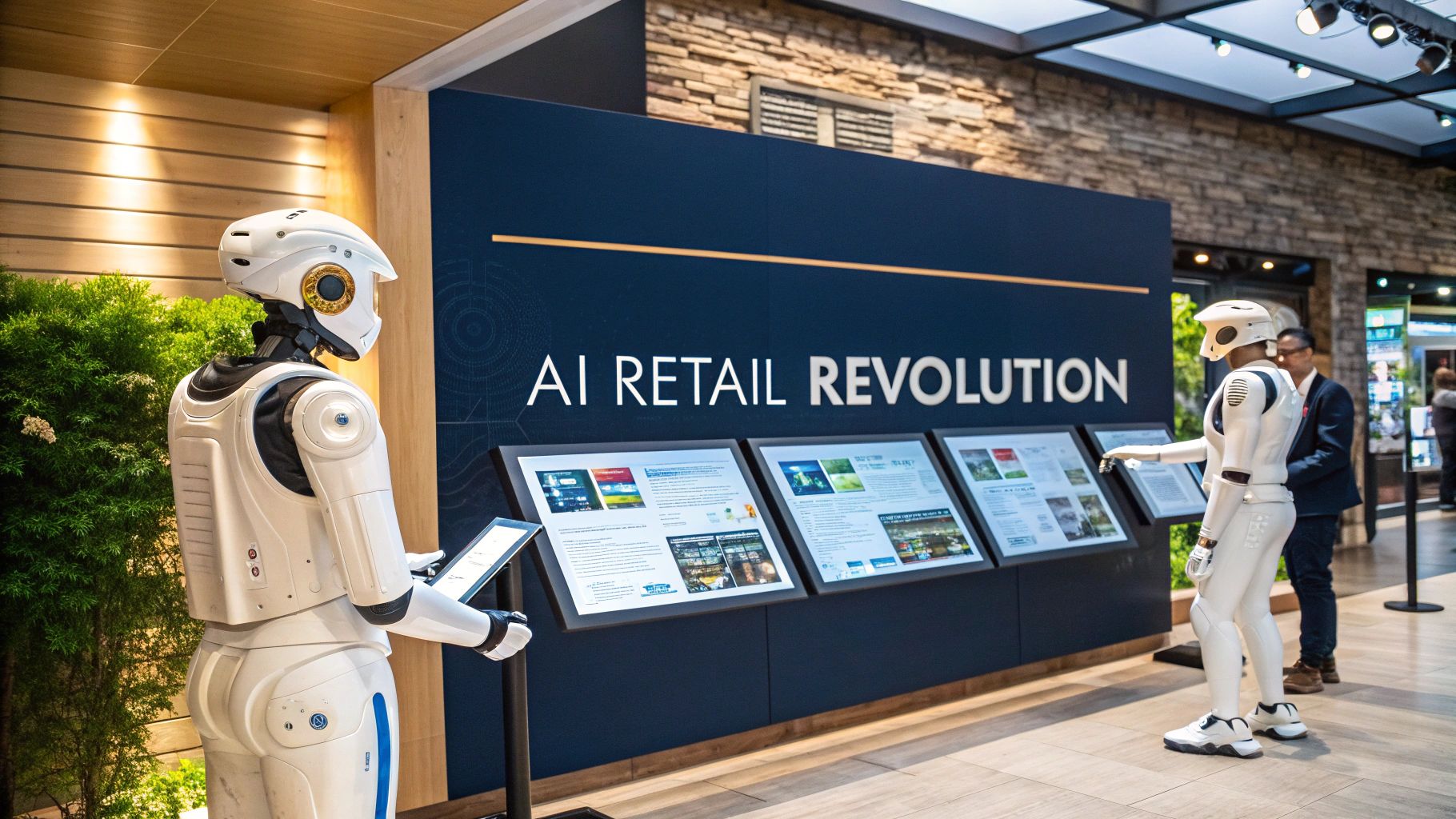

The old strategies of manual SEO and content creation just don't cut it anymore in Australia's e-commerce world. For retail leaders, Agentic AI is the new engine driving online retail, forcing a huge change in thinking, away from optimising for human clicks and towards satisfying the complex queries of AI agents. It’s a shift that’s completely redefining how retailers need to approach their digital shelf performance.
The New Reality of the Digital Shelf
The Australian e-commerce market is in the middle of a massive shake-up, all thanks to autonomous AI agents that act like personal shopping assistants for customers. These agents are rewriting the rules, affecting everything from how you get seen in search to how efficiently you run your business. The traditional retail playbook is quickly becoming obsolete in this new era of agentic commerce.
This isn't happening in a vacuum. It's set against a backdrop of explosive growth. As of 2024, Aussies spent a record-breaking $69 billion online, which is nearly double the figure from 2019. Online shopping now makes up almost 20% of all retail spending. With 9.8 million households now shopping online, the market is perfectly set up for AI to become the key competitive advantage.
For any retail leader or ecommerce manager, this means the very definition of a "customer" has expanded. Your new audience now includes AI agents from platforms like ChatGPT, Perplexity, and Amazon's Rufus. These agents need clean, structured, high-quality product data to make their recommendations. Achieving AI SEO readiness is now critical for future success.
This infographic really drives home the difference between slow manual SEO and the speed of Agentic AI.
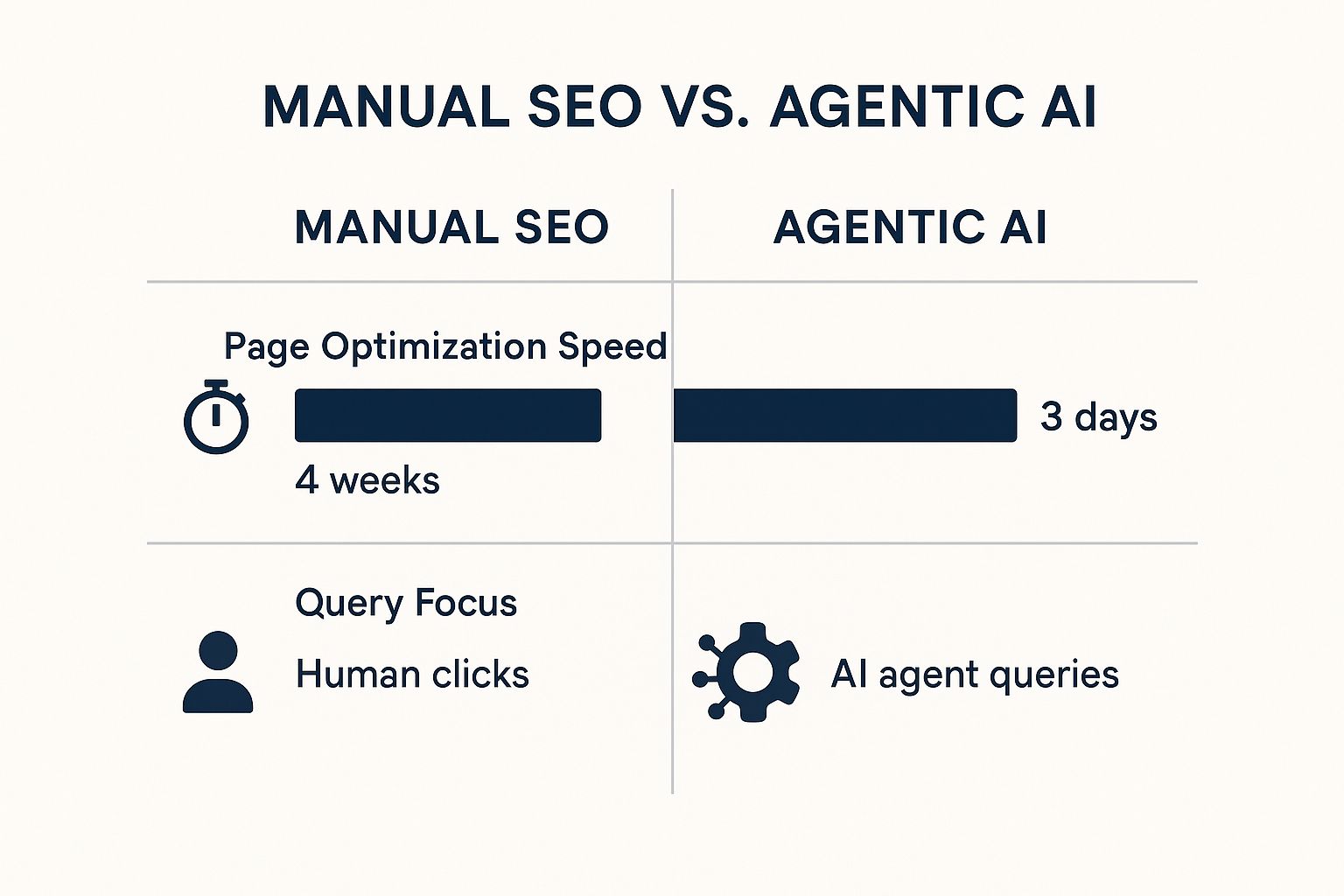
What this shows is a massive operational gap. AI-powered workflows can get done in days what used to take weeks, while also shifting the entire focus from simple keywords to complex, conversational questions. The move from traditional SEO to AI SEO is no longer a choice.
The core challenge for retailers is no longer just being discoverable by humans, but being understood and recommended by machines. This requires a transition from manual, piecemeal SEO to automated, scalable content workflows.
This new reality forces a strategic pivot. Moving forward, your success will hinge on building a foundation of AI-compatible content. That means leveraging AI workflow automation for retail, including product data enrichment, correcting duplicated supplier content at scale, and implementing robust AI-powered optimisation. These aren't just nice-to-haves, they are essential for improving your overall digital shelf performance and securing a competitive edge in the future of retail search. This guide will set the stage for the specific strategies you can build to thrive in the age of Agentic AI.
Winning the New War for AI Search Visibility
The battlefield for online retail has shifted. Search is no longer just about ranking for keywords, it’s about being understood by machines. With the rise of AI shopping agents like Google's AI Overviews and Amazon's Rufus, your products must be structured for machine comprehension, not just human readability.
This new discipline is Agentic Search Optimisation (ASO), and it’s the next-gen SEO for retailers. ASO moves beyond outdated tactics like keyword stuffing, which AI agents easily identify and ignore. Instead, they need structured, unambiguous data and unique product descriptions to deliver confident recommendations. This is where AI-compatible SEO content becomes non-negotiable.
From Keywords to Conversations
Think of traditional SEO as a dictionary. It matches a shopper's keyword to a product page. ASO, on the other hand, is like having a conversation with an expert sales assistant. The AI agent needs to understand context, attributes, and relationships to answer complex, conversational queries.
This is why SKU-level SEO is now so critical. Vague, category-level optimisation just doesn’t cut it anymore. An AI agent needs to know the specific material of a t-shirt, the exact dimensions of a piece of furniture, or the compatibility of an electronic accessory to make a useful recommendation. To compete on the digital shelf, retailers can lean on the best AI SEO tools for content and visibility to get an edge in these new AI-driven search results.
Agentic AI doesn't just find products, it evaluates them. Your product data is no longer static information. It's the evidence an AI agent uses to decide whether your product is the best answer to a shopper's problem.
The Problem with Duplicated Content
A major roadblock to AI visibility is something most retailers are guilty of: supplier content duplication. When hundreds of retailers use the same generic descriptions from a supplier feed, AI agents see a sea of unoriginal, low-value content. This is a significant retail content bottleneck.
They have no real basis to differentiate your product from a competitor's, often leading them to default to the cheapest option or simply ignore your listing altogether.
Fixing this requires a new approach to product data enrichment. By using AI-powered content workflows, you can automatically transform duplicated feeds into unique, descriptive, and optimised product pages. This not only solves old SEO penalties but also gives AI agents the distinct, high-quality information they need to confidently recommend your products over others. This strategic shift is fundamental for anyone interested in the future of ChatGPT and its role in shopping.
Automating Product Content to Compete at Scale
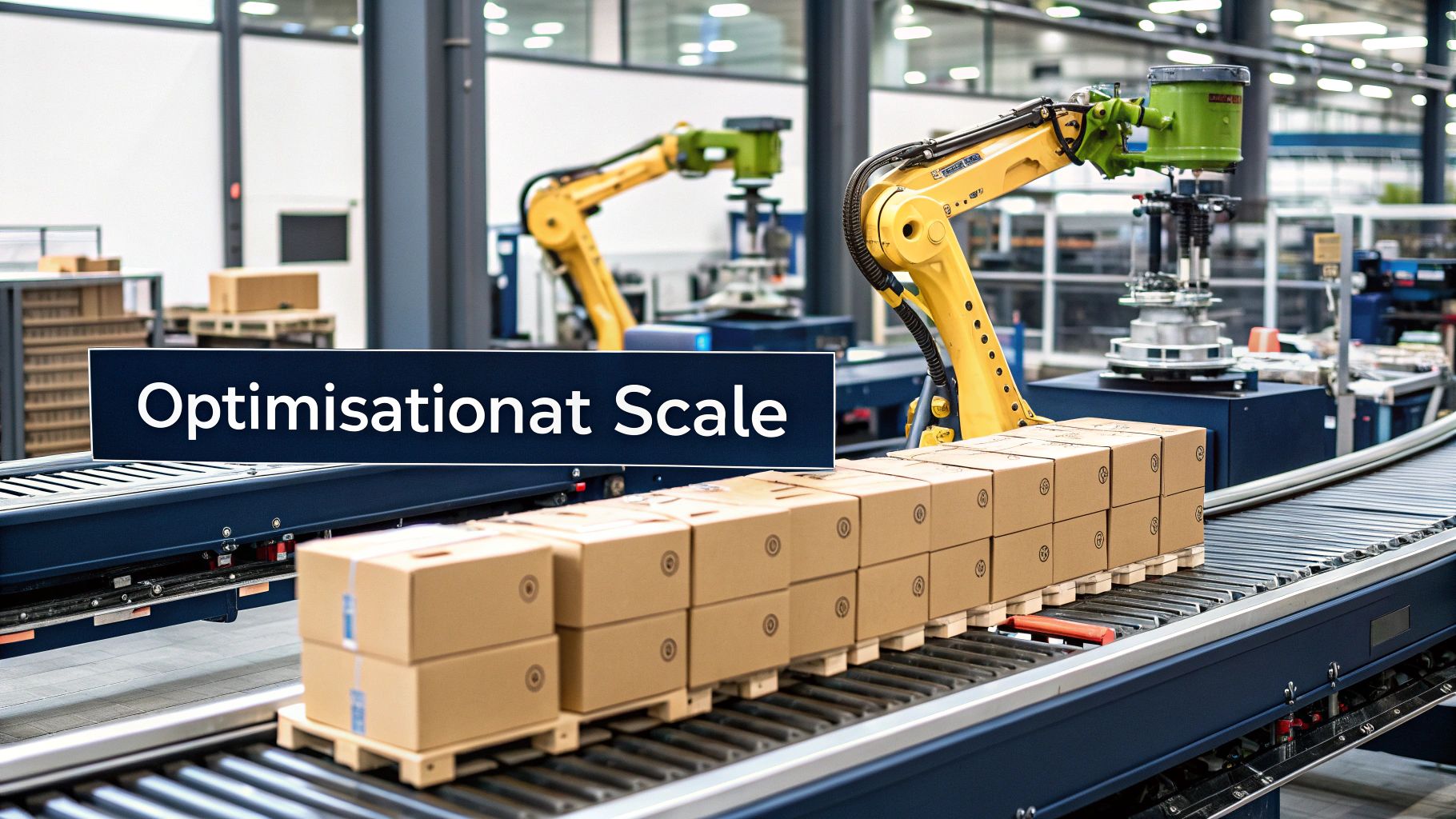
For most large Australian retailers, the single biggest thing holding back growth isn’t strategy or ad spend, it’s the manual slog of content creation. Trying to write unique, optimised descriptions for tens of thousands of products is a massive task. It creates a constant backlog that slows down your speed to market and kills your search performance.
This is exactly where retail content automation completely changes the game.
Agentic AI workflows tear down this barrier, finally letting retailers achieve optimisation at scale. Instead of spending years manually rewriting a huge product catalogue, these systems can process 10,000+ pages in just a few days. This isn't just about moving faster, it's about building scalable SEO solutions that can actually keep up with your business.
This shift is especially critical in the local market. With domestic ecommerce making up around 85.8% of total sales, Australian retailers have a solid home-ground advantage. Adopting AI-driven content automation lets you lock in that position, sharpen your online presence, and prepare for the agentic commerce future. You can get a better sense of how the Australian ecommerce landscape is shifting in this in-depth industry analysis.
From Supplier Feeds to SEO Powerhouses
At the heart of this change is automated product data enrichment. An agentic AI system can take raw, duplicated supplier feeds, often generic and completely uninspiring, and transform them into compelling, SEO-ready assets that actually sell. This is the core of optimising product feeds efficiently.
This automated approach fixes the widespread problem of supplier content duplication. That's a classic SEO own-goal that makes it tough for search engines to tell your product pages apart from your competitors'. By generating unique content, AI agents help you build a consistent brand voice across your entire catalogue.
The goal is no longer just to list products. It's to strategically position every single SKU to rank higher and convert better. You’re turning a static product feed into a dynamic, high-performing sales engine.
These automated content workflows can be dialled in to handle specific jobs, including:
- Generating Unique Narratives: Creating engaging, on-brand product stories that connect with your customers.
- Structuring Technical Specifications: Taking complex data and organising it into clean, machine-readable formats that AI agents can understand.
- Implementing SKU-Level SEO: Making sure every single product variant is properly optimised with the right keywords and attributes.
This is a massive leap forward from basic content tools. We're not just talking about generating some text, it’s about orchestrating a complete content overhaul that transforms your performance on the digital shelf.
If you want to see this in action, understanding how an AI product description generator works is a perfect example of this scalable technology. This move from manual SEO to AI-driven SEO is the key to unlocking real retail efficiency and competing properly online.
Unlocking Visual Search with AI Image Recognition

In retail categories driven by aesthetics, like fashion, furniture, or electronics, the product image is everything. For years, we've known that great photos drive sales. But with Agentic AI, those same images are now becoming powerful, machine-readable assets that create a serious competitive advantage.
This is all thanks to advanced AI image recognition. Instead of seeing just a collection of pixels, AI agents can analyse thousands of your product photos and understand what's actually in them. They can then generate incredibly descriptive alt tags and metadata at a speed that is simply impossible for a human team to ever match.
Making Your Visuals Searchable
This automated process is the secret to boosting your image SEO and getting your products found in the growing world of visual search. When a shopper uses a picture to find what they want, search engines and AI agents are digging through that rich metadata to pull up the most relevant results. Without it, your products are practically invisible.
Here’s what AI image recognition SEO looks like in the real world:
- Fashion SEO Optimisation: An AI agent sees a photo of a dress and automatically tags it with details like "A-line silhouette," "puffed sleeves," "linen fabric," and "floral print."
- Furniture Image Tagging SEO: The agent identifies a sofa as "mid-century modern style," with "tapered wooden legs," "tufted back," and "velvet upholstery."
- Electronics SEO Optimisation: It scans a laptop image and pulls out tags for "brushed aluminium finish," "backlit keyboard," and "thin bezel display."
This level of detail turns a simple product image into a structured data powerhouse. It gives AI shopping agents the exact information they need to understand not just what a product is, but why it's the perfect fit for a specific customer.
This rich visual data is a cornerstone of next-gen SEO for retailers. By automating alt tag optimisation for retail, you make sure every single image is pulling its weight and contributing to your digital shelf performance. It's especially vital for platforms like Shopify, where visual appeal is king. Understanding how AI shopping agents for Shopify use this data can give you a clear competitive edge.
Ultimately, it’s about making your entire visual catalogue work a whole lot harder for your business.
Building the Retail Team of the Future
Bringing Agentic AI into your retail operation isn’t about replacing your team. It's about amplifying what they do best. The future of work in retail is a powerful partnership between human-led strategy and AI-driven execution.
This model lets AI agents take on the massive, repetitive tasks that clog up content pipelines. This frees your team to focus on high-value work that actually moves the needle. Imagine your e-commerce managers no longer drowning in the manual task of supplier feed enrichment. Instead, they’re free to nail the creative direction, map out campaign strategy, and dive deep into performance analysis.
This is the heart of Human + AI collaboration in SEO. It’s a shift that leads to happier teams, higher productivity, and much stronger business outcomes.
Redefining Roles for Greater Impact
This new way of working fundamentally changes how your teams operate. AI agents become the workhorses, executing scalable SEO solutions by optimising thousands of product pages in just days. Your human experts, in turn, become the strategic thinkers and quality controllers.
This division of labour is critical. Just look at the Australian e-commerce landscape. In 2023, desktop transactions made up 55% of sales, while mobile accounted for 45%. To win on both fronts, retailers need to deliver flawless, optimised experiences everywhere. You can dig deeper into these Australian ecommerce trends and what they mean for the future.
AI agents can handle the sheer scale of content and data work required for both channels, while your team fine-tunes the strategic nuances for each platform.
By automating the mechanical aspects of content creation and product feed optimisation, you empower your team to focus on what humans do best: strategy, creativity, and understanding the customer.
This collaborative model prepares your business for the future of retail by making your teams more efficient and adaptable. They’re no longer just reactive content producers, they’re proactive performance drivers.
The table below breaks down how tasks are split in a modern, AI-augmented retail team.
Task Allocation in a Human + AI Retail Team
| Task | AI Agent Responsibility | Human Expert Responsibility |
|---|---|---|
| Product Descriptions | Writing unique, optimised descriptions for thousands of SKUs at scale. | Defining the brand voice, style guidelines, and key messaging pillars. |
| Data Enrichment | Populating technical specifications, attributes, and structured data fields. | Identifying strategic data points that improve the customer experience. |
| Keyword Research | Identifying long-tail opportunities and semantic variations across the catalogue. | Setting the high-level keyword strategy and prioritising target categories. |
| On-Page SEO | Implementing meta titles, descriptions, and internal links consistently. | Analysing performance data to refine on-page strategy and guide AI tasks. |
| Campaign Execution | Rolling out content for seasonal campaigns or new product launches in days. | Developing the creative concept, campaign goals, and promotional strategy. |
| Quality Assurance | Flagging inconsistencies or errors based on predefined rules. | Final review and approval, ensuring content meets brand standards. |
This clear separation of duties ensures that AI handles the volume and velocity, while your human experts provide the critical oversight and strategic direction that drives real growth.
The benefits of this Human + AI partnership are clear:
- Eliminates Content Bottlenecks: AI-powered workflows clear the backlog, getting products and campaigns to market faster.
- Boosts Team Morale: Your specialists get to solve interesting strategic challenges instead of doing mind-numbing data entry.
- Accelerates Growth: Your business can adapt to market changes and scale its online presence without needing to hire an army.
This redesigned structure creates a more agile and intelligent retail team, one that's ready for the era of agentic commerce. To see how specific jobs will adapt, it’s worth exploring the evolution of digital marketing roles in an AI-driven environment. This approach ensures you’re not just keeping up, you’re building a resilient, future-proof team.
Here’s the rewritten section, designed to sound like an experienced human expert while adhering to all your requirements.
Your Framework for Putting Agentic AI to Work
Making the switch from manual, time-consuming operations to a smarter, AI-driven strategy needs a clear game plan. This isn't just about plugging in a new tool, it's about fundamentally rethinking how your business operates so it can become faster, more intelligent, and ready to scale.
The first step, always, is a deep dive into your data with a comprehensive audit. This is where you put numbers to the problems that are holding you back. Focus on pinning down the exact scale of supplier content duplication plaguing your catalogue and get an honest look at the quality of your existing product feeds. This audit isn't just an exercise, it becomes the undeniable business case for making a change.
Building Your Automated Workflows
Once you have a clear picture of your data mess, it’s time to build automated content workflows. This means picking the right retail efficiency tools that are actually built for AI workflow automation, not just text generation. You're looking for systems engineered to handle SKU-level SEO and enrich product data for thousands of items at a time.
Your goal is to set up a seamless process that can:
- Automatically pull in raw, inconsistent supplier feeds.
- Spot and fix duplicated content to give your brand a unique voice.
- Flesh out product data with all the crucial attributes needed for Agentic Search Optimisation.
- Pump out high-quality, optimised content for tens of thousands of pages in a matter of days.
When you're mapping this out, it’s crucial to see the bigger picture and understand the transformative impact of Artificial Intelligence on marketing strategies. This broader context helps drive home just how important it is to automate these core retail tasks.
The real aim here is to elevate your team from content creators to strategic directors. Let the AI agents do the heavy lifting, the repetitive, large-scale work, while your experts focus on guiding the strategy and ensuring everything is top-notch.
Following a structured plan like this delivers real, tangible results. By methodically cleaning up your data and automating content creation, you directly boost your digital shelf performance. This translates into better visibility in retail search, positioning your business not just to keep up, but to lead the charge in the new world of agentic commerce.
Got Questions? We've Got Answers
Here are some of the common questions retail leaders ask us when they're looking to put Agentic AI into action. We’ve broken them down with clear, practical answers.
What’s the Real Difference Between Agentic AI and Standard Generative AI Tools?
Think of it this way: standard Generative AI is like a calculator. You give it one problem, say, "write a product description for this t-shirt", and it gives you one answer. It's a one-and-done interaction that needs a human to kick off every single task.
Agentic AI, on the other hand, is like hiring a project manager. It can handle an entire workflow on its own. You don’t ask it to write one description, you tell it to fix your entire catalogue. An agent can take a raw supplier feed, spot all the duplicate content, enrich the product data, write unique, SEO-friendly descriptions for 10,000 SKUs, and format it all for your platform without you holding its hand.
It’s the difference between automating a single task and automating the whole process.
If AI Is Creating Thousands of Descriptions, How Do We Make Sure the Quality Is Any Good?
This is a great question, and it’s where the Human + AI Collaboration model really shines. The goal isn’t to set the AI loose and hope for the best. Instead, you put your team in the driver's seat.
The AI agents do the heavy lifting, generating content at massive scale based on the rules, brand voice, and SEO goals you've defined. Your team’s role then shifts from being content creators to content strategists. They’re no longer stuck writing endless descriptions. Instead, they’re reviewing batches of AI-generated content, fine-tuning the instructions, and focusing their expert eyes on the most important products or complex categories, like fashion or furniture.
It's a system that gives you the speed of AI with the strategic oversight of your human experts. That's how you get a scalable content machine that still delivers quality.
How Quickly Can We Actually See Results from an AI SEO Strategy?
You’ll see the first wave of results surprisingly fast. Initial fixes, like clearing out widespread duplicate content and enriching thousands of bare-bones product pages, can happen within weeks of getting an AI workflow up and running. From there, you can expect to see improvements in your SEO rankings and organic traffic over the next 2-6 months as search engines crawl and re-index all your newly optimised pages.
But the biggest win here is long-term. An automated content system lets you adapt to new search trends and AI agent behaviours far faster than any competitor stuck with manual processes.
That speed becomes your sustainable edge. It’s not just about a one-off SEO boost, it's about building the agility to keep winning on the digital shelf, now and into the future. It’s a move from a traditional SEO team to a full-blown, AI-powered retail transformation.
Ready to swap manual bottlenecks for scalable, AI-powered SEO? Optidan AI delivers the agentic workflows you need to enrich your product data, eliminate duplicate content, and optimise your entire catalogue in days, not years.
