

In today’s competitive ecommerce landscape, the difference between a market leader and laggard often comes down to efficiency and scale. As a retail leader or ecommerce manager, you’re constantly seeking ways to improve your digital shelf performance, from optimising product data to ensuring every SKU is primed for the future of search. This isn’t just about writing content faster, it’s about a fundamental shift from manual SEO to AI-powered retail transformation. The right AI writing tool can be your engine for growth, helping you correct duplicated supplier content, enrich thousands of product pages, and prepare your catalogue for agentic search.
This guide cuts through the noise to analyse the 12 Best AI Writing Tools specifically for the unique challenges of retail. We focus on tools that deliver scalable SEO solutions and automate content workflows, ultimately reducing retail content bottlenecks and propelling your brand forward. While our focus is on broad text and product description generation, it’s worth noting that for specialised writing tasks, such as generating narratives for video content, you can find dedicated solutions among the Best AI Video Script Generator Tools for 2025. Each platform profiled here includes direct links and detailed analysis to help you make a confident decision.
1. Optidan AI
Optidan AI establishes itself as the best AI for writing in the highly specialised realm of eCommerce, offering a revolutionary platform designed to automate and optimise retail content at an unprecedented scale. It moves beyond generic text generation to provide a complete, performance-led AI SEO framework. This solution empowers retailers to transform raw supplier product data into thousands of unique, conversion-focused product pages, reducing manual content workflows by up to 99%.
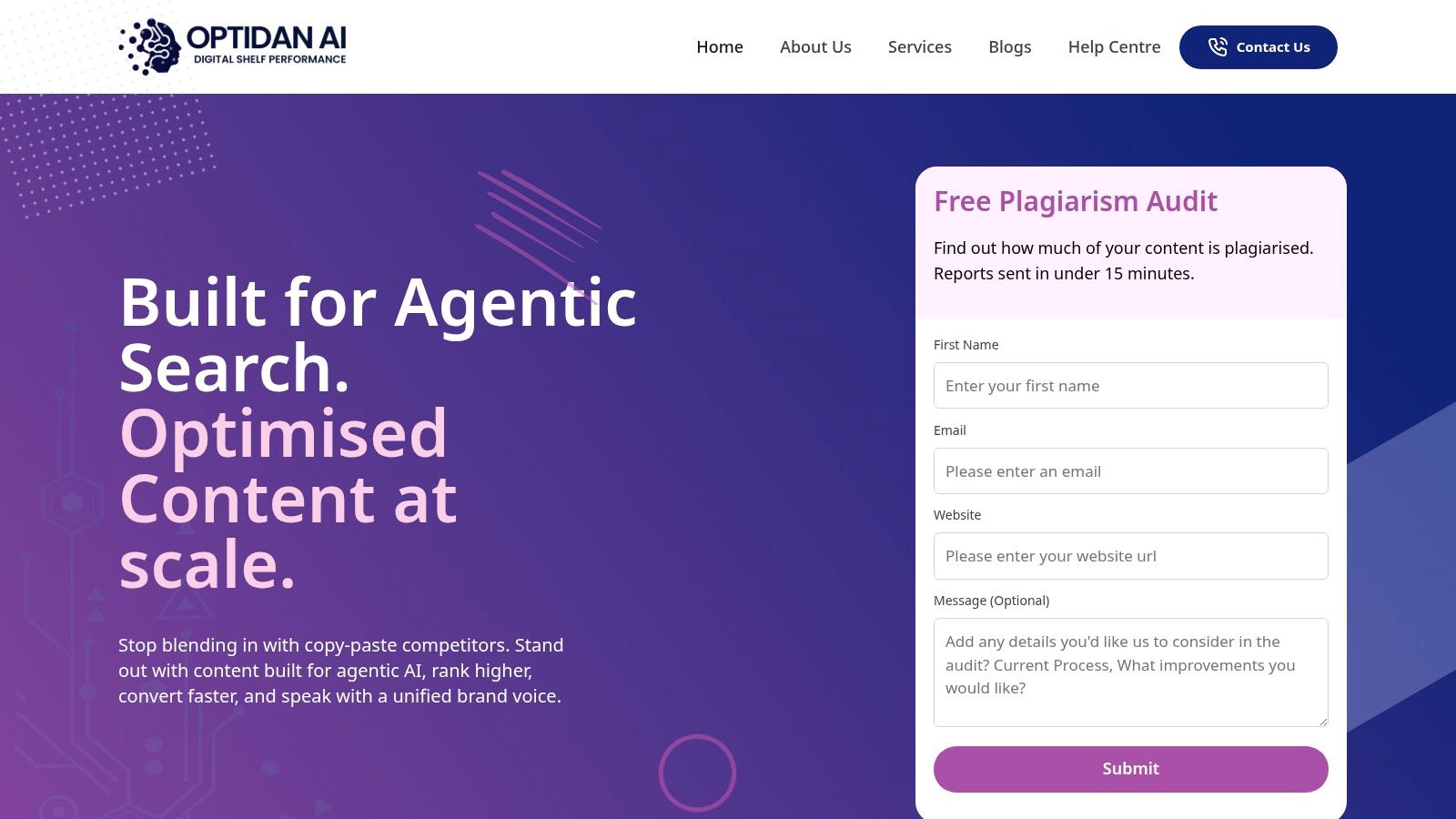
The platform’s core strength lies in its agentic AI technology, which is engineered specifically for large product catalogues. This focus on SEO at scale enables businesses to overcome common retail content bottlenecks, such as duplicate supplier content and inconsistent brand messaging. By automating the creation of SEO-optimised titles, descriptions, and metadata, Optidan ensures every product page is primed for high visibility on both traditional and AI-driven search engines like ChatGPT and Perplexity, ensuring agentic search optimisation.
Key Strengths and Use Cases
Optidan’s strategic advantage is its purpose-built architecture for eCommerce. It is not just a writing tool, it’s an end-to-end retail content automation and optimisation engine.
- Best For: Large eCommerce retailers, digital marketing agencies, and SEO professionals managing extensive product catalogues (1,000+ SKUs) in sectors like fashion, furniture, or electronics.
- Primary Use Case: Automating the entire product page content lifecycle, from product data enrichment and supplier feed optimisation to publishing unique, keyword-rich copy across thousands of SKUs.
- Unique Feature: Its proprietary content intelligence framework ensures every piece of content is unique, plagiarism-free, and aligned with a unified brand voice, a critical factor for building customer trust and improving digital shelf performance. Its advanced capabilities for fixing duplicate content SEO issues go far beyond basic tools. Find out more about how Optidan’s plagiarism correction compares to standard tools in this Optidan vs Grammarly analysis.
Platform Integration and Pricing
Optidan is platform-agnostic, integrating seamlessly with major eCommerce systems including Shopify, WooCommerce, and Magento, which allows for flexible implementation into existing tech stacks.
- Pros:
- Dramatically improves retail efficiency by automating content creation for thousands of product pages.
- Maintains a consistent, powerful brand voice across an entire product catalogue.
- Delivers unique, keyword-rich content specifically optimised for agentic search, boosting rankings and conversions.
- Built to handle enterprise-level scale without compromising on content quality.
- Cons:
- Pricing is not publicly available and requires direct consultation.
- May be overly robust for small retailers with a very limited number of products.
2. OpenAI – ChatGPT
As a foundational large language model, ChatGPT from OpenAI has become a go-to for many professionals seeking the best AI for writing, from initial brainstorming to final drafts. Its versatility makes it an indispensable tool for marketing teams and content creators, enabling rapid content generation, summarisation, and rewriting. For retail and ecommerce managers, it offers a powerful way to kickstart product description optimisation and ideate blog posts that align with AI SEO principles, preparing content for agentic search.
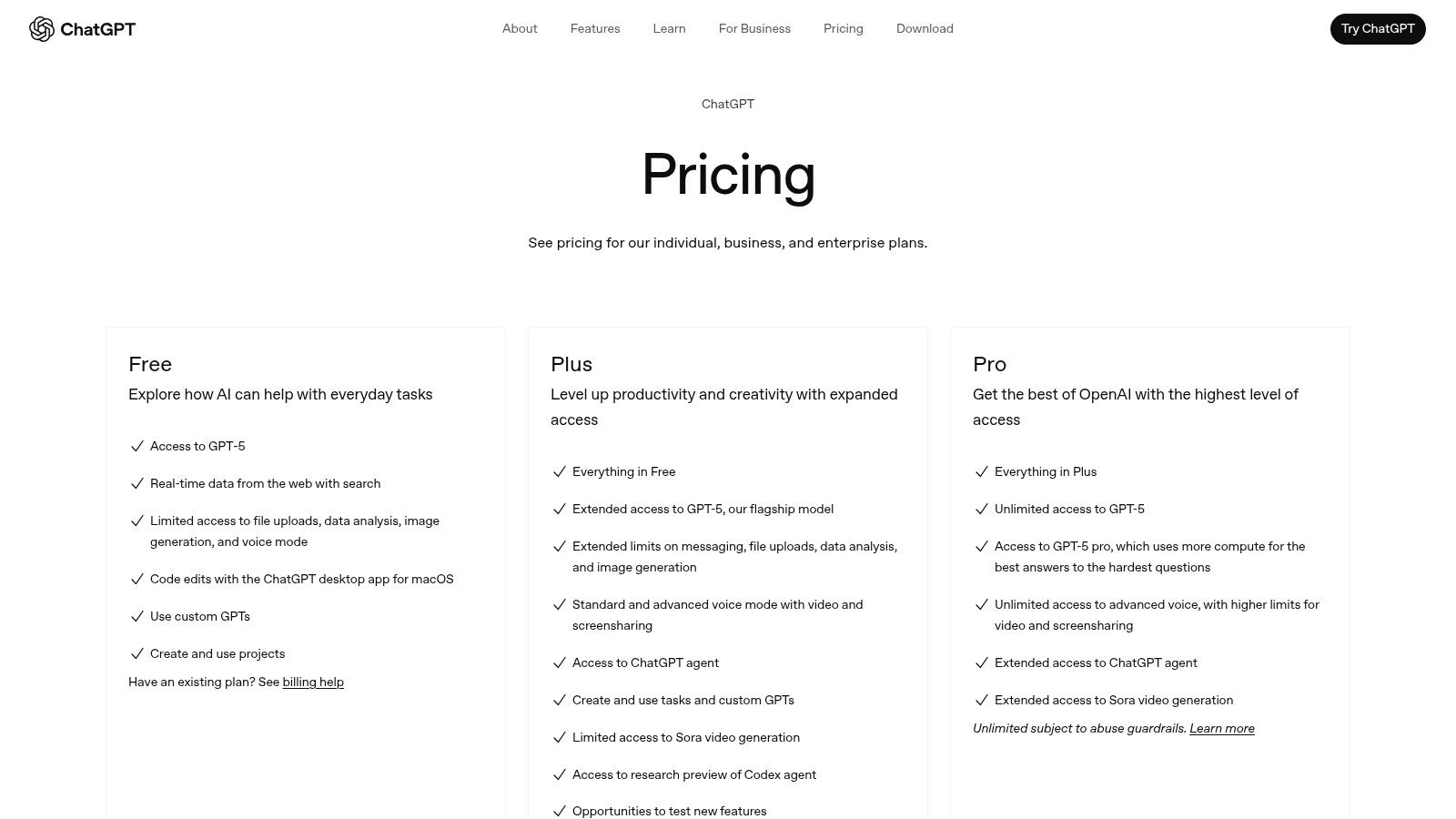
The platform operates on a freemium model. The free tier offers broad access, while paid plans (Plus, Team, Enterprise) unlock advanced models, faster responses, and critical business features. For retailers, the Team and Enterprise plans are essential, providing stronger data privacy controls that ensure your proprietary product data is not used for training. While excellent for creative ideation and drafting, it is less specialised for retail-specific tasks like SKU-level product data enrichment directly from a feed, often requiring significant manual prompting and oversight in an automated content workflow.
- Best For: General-purpose content creation, drafting, brainstorming, and summarisation.
- Pricing: Offers a free version. Paid tiers include Plus (personal use), Team, and Enterprise for business needs.
- Website: https://openai.com/chatgpt/pricing
3. Anthropic – Claude
Anthropic’s Claude has established itself as a strong contender for the best AI for writing, particularly excelling in long-form content generation and structured document creation. Known for its clear and careful writing style, it is well-suited for professionals drafting detailed reports, articles, and comprehensive marketing materials. For ecommerce managers, its long-context reasoning ability is valuable for synthesising large amounts of product information into coherent brand narratives or detailed blog posts, supporting sophisticated AI SEO strategies and preparing for the future of retail search.
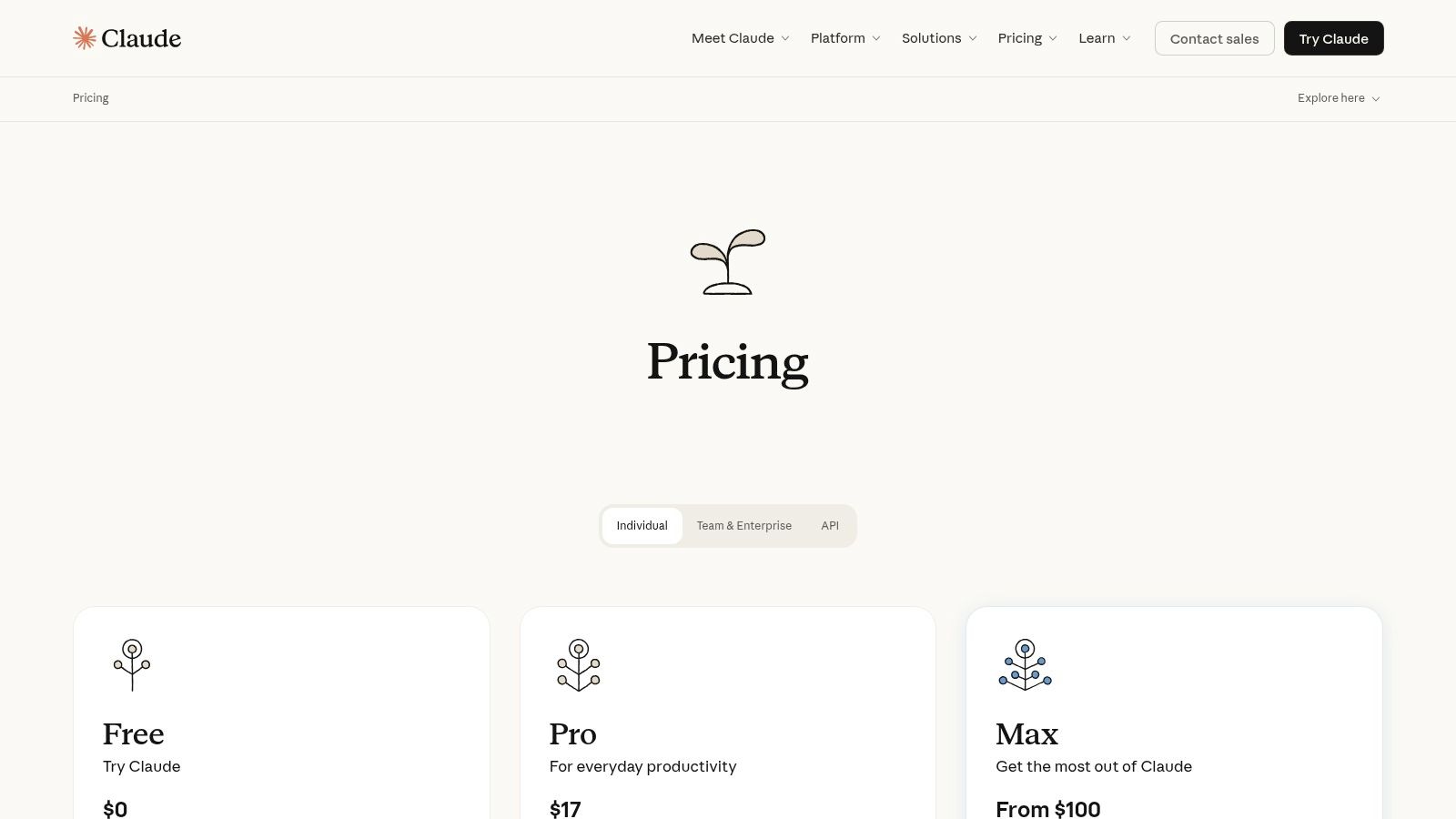
Claude offers a tiered model with a free version, a Pro plan for individuals, and a high-capacity Max option designed for heavy usage, making it scalable for growing teams. The platform includes useful features like Google Workspace integration and mobile apps, enhancing workflow efficiency. The Team plan provides essential administrative and billing controls for businesses. However, its strength lies more in drafting and editing than in specialised retail tasks like automated product data enrichment or fixing supplier content duplication at scale. Developers should note that API pricing is separate from the user interface subscriptions.
- Best For: Long-form drafting, creating structured documents, and high-quality content editing.
- Pricing: Free tier available. Paid plans include Pro (for individuals) and a high-capacity Max plan for heavy writers.
- Website: https://claude.com/pricing
4. Google – Gemini (Google One AI Premium / Gemini Advanced)
For teams deeply embedded in the Google ecosystem, Gemini represents a significant leap in native AI integration, making it a strong contender for the best AI for writing directly within existing workflows. Its primary strength lies in its seamless integration into Google Workspace apps like Docs and Gmail, allowing marketing and content teams to draft, summarise, and rewrite content without leaving their primary tools. This is particularly useful for ecommerce managers looking to quickly generate initial copy for blog posts or marketing emails, laying a foundation for content that aligns with AI SEO principles.

Subscribed through the Google One AI Premium plan, Gemini Advanced offers a more powerful model capable of handling complex reasoning and longer prompts. This is valuable for ideating broader content strategies or analysing competitor messaging. While its native integration is a major advantage for day-to-day productivity and automating content workflows, its capabilities for specialised retail tasks like SKU-level product data enrichment or metadata optimisation at scale are less developed than dedicated platforms. The evolving pricing and feature tiers between personal and Workspace plans can also present a minor hurdle for businesses.
- Best For: Teams already using Google Workspace for content creation and collaboration.
- Pricing: Included in the Google One AI Premium plan, with different tiers for Workspace users.
- Website: https://one.google.com/about/ai-premium/
5. Microsoft – Copilot Pro and Copilot for Microsoft 365
For teams deeply embedded in the Microsoft ecosystem, Copilot represents a significant step towards integrating generative AI into daily content workflows. It functions as an AI assistant directly within applications like Word, Outlook, and PowerPoint, making it one of the best AI for writing tools for those prioritising convenience and existing software integration. This allows retail and marketing teams to draft campaign briefs, rewrite product copy, or summarise meeting notes without leaving their primary applications, streamlining the content creation process.
Microsoft offers distinct consumer (Pro) and business (for Microsoft 365) plans. For any business handling sensitive product data, the Copilot for Microsoft 365 plan is essential, as it provides enterprise-grade data protection, ensuring your proprietary information is not used for training public models. While its deep integration is a major advantage for drafting and internal communications, it is less specialised for scalable, structured retail tasks like product data enrichment from a supplier feed. It excels at augmenting human-led content creation rather than automating entire retail content workflows at scale.
- Best For: Teams heavily invested in the Microsoft 365 ecosystem for integrated content drafting and internal communications.
- Pricing: Copilot Pro requires a Microsoft 365 Personal or Family subscription. Copilot for Microsoft 365 is a paid add-on for business plans.
- Website: https://www.microsoft.com/en-au/store/b/copilotpro
6. Grammarly – Grammarly Pro
While many tools focus on generating content from scratch, Grammarly Pro has carved out its niche as the best AI for writing when it comes to refining, polishing, and ensuring brand consistency. It acts as an AI-powered writing assistant that elevates existing copy. For retail teams, its strength lies in correcting duplicated supplier content by providing sentence rewrites and tone adjustments, ensuring unique product descriptions are created that are on-brand. It integrates seamlessly across browsers and apps, making it an ever-present quality assurance layer for all marketing communications.
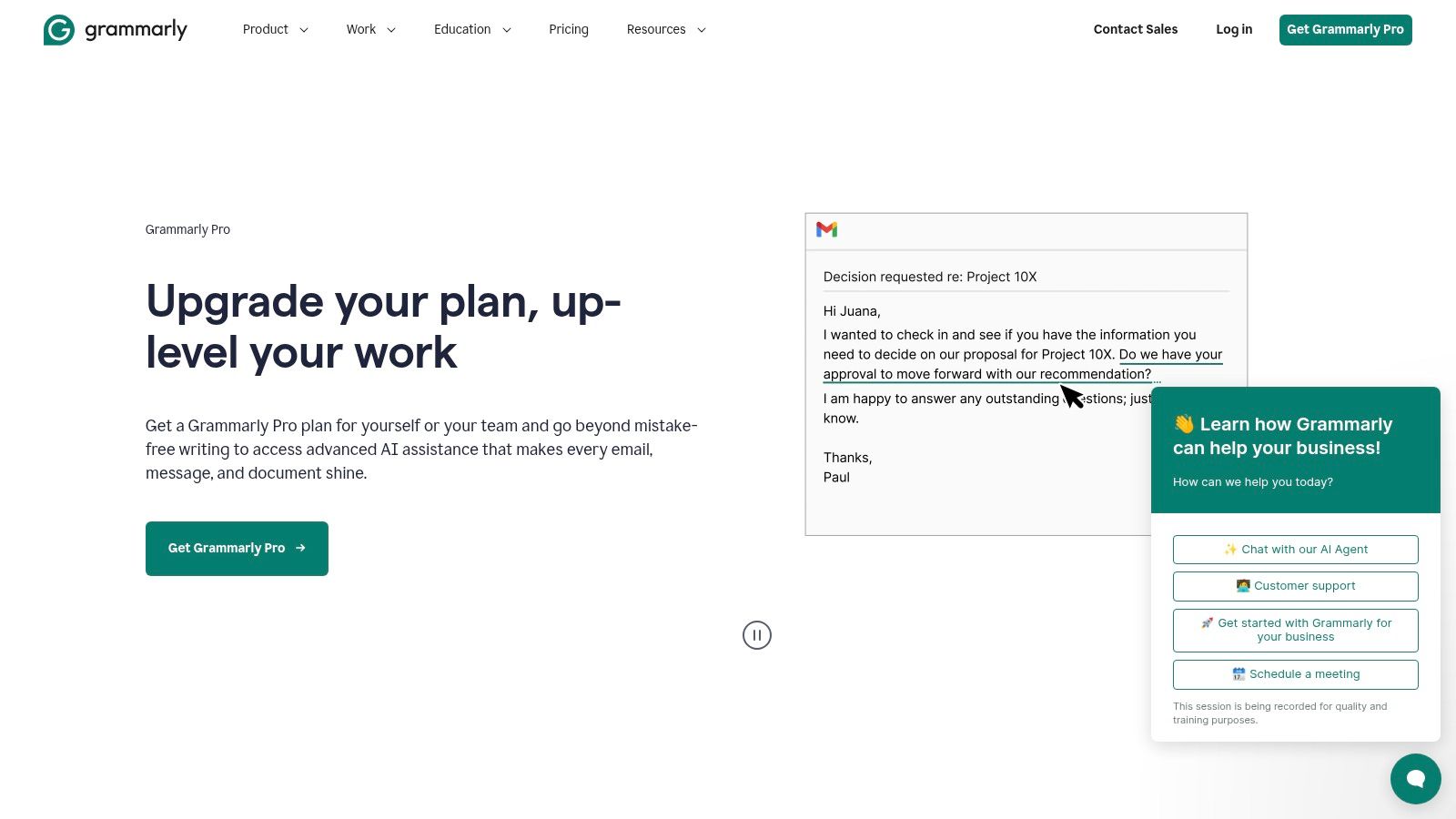
Grammarly offers various tiers, with its Pro and Business plans unlocking its most powerful generative AI features, like sentence rewrites and tone shifts. These features are crucial for ecommerce managers looking to implement human-led AI content QA workflows and improve their digital shelf performance. While exceptionally useful for copy-editing and final revisions, it is less suited for drafting long-form content or performing bulk product data enrichment directly. Its prompt-based generation features are also subject to monthly limits, making it more of a revision tool than a primary generator for automating product descriptions. For those interested in improving their writing process, you can learn more about how to write faster with AI assistance.
- Best For: Copy polishing, tone alignment, grammar correction, and brand consistency.
- Pricing: Offers a free version. Paid tiers include Premium (for individuals) and Business (for teams).
- Website: https://www.grammarly.com/premium
7. Jasper
Jasper is a marketing-focused AI platform purpose-built for creating on-brand copy, making it one of the best AI for writing tools for teams prioritising a consistent voice at scale. Its feature set is designed to streamline campaign workflows and produce SEO-friendly content, enabling marketing teams to move from concept to publication faster. For retail and ecommerce managers, Jasper offers powerful features for campaign ideation and content creation that aligns with AI SEO principles, preparing your digital shelf for the future of agentic search.
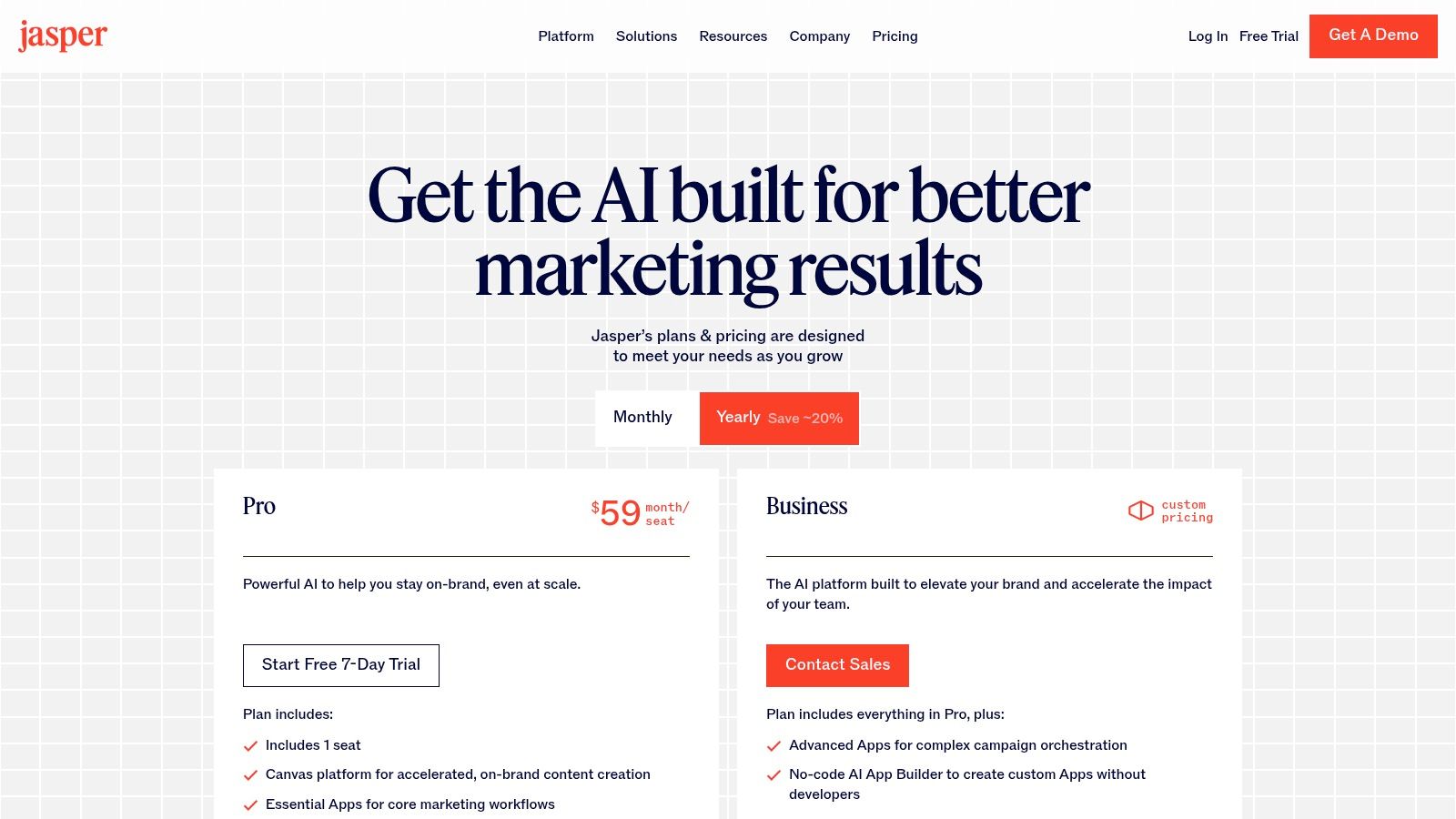
The platform’s strength lies in its Brand Voice and Knowledge Asset features, which allow you to train the AI on your style guides, product catalogues, and company information for highly relevant outputs. While it excels at marketing copy and blog posts, it is less specialised for granular, SKU-level product data enrichment directly from a raw supplier feed. Its higher price point reflects its focus on collaborative team environments and governance, with the Business plan unlocking API access and advanced controls. You can learn more about its role in artificial intelligence copywriting and how it facilitates AI workflow automation for retail.
- Best For: Marketing teams needing on-brand copy, campaign creation, and content governance.
- Pricing: No free version, but a 7-day trial is available on the Pro plan. Paid plans are tiered for individuals, teams, and businesses.
- Website: https://www.jasper.ai/pricing
8. Writesonic
Writesonic positions itself as an all-in-one content and SEO platform, making it a strong contender for the best AI for writing for teams focused on search engine performance. It integrates AI article generation with optimisation, auditing, and even GEO AI search tracking to monitor brand visibility. This combination is particularly useful for content marketers and agencies looking to streamline their AI SEO workflows, from creating unique product descriptions to automating content at scale and avoiding duplicated supplier content issues.
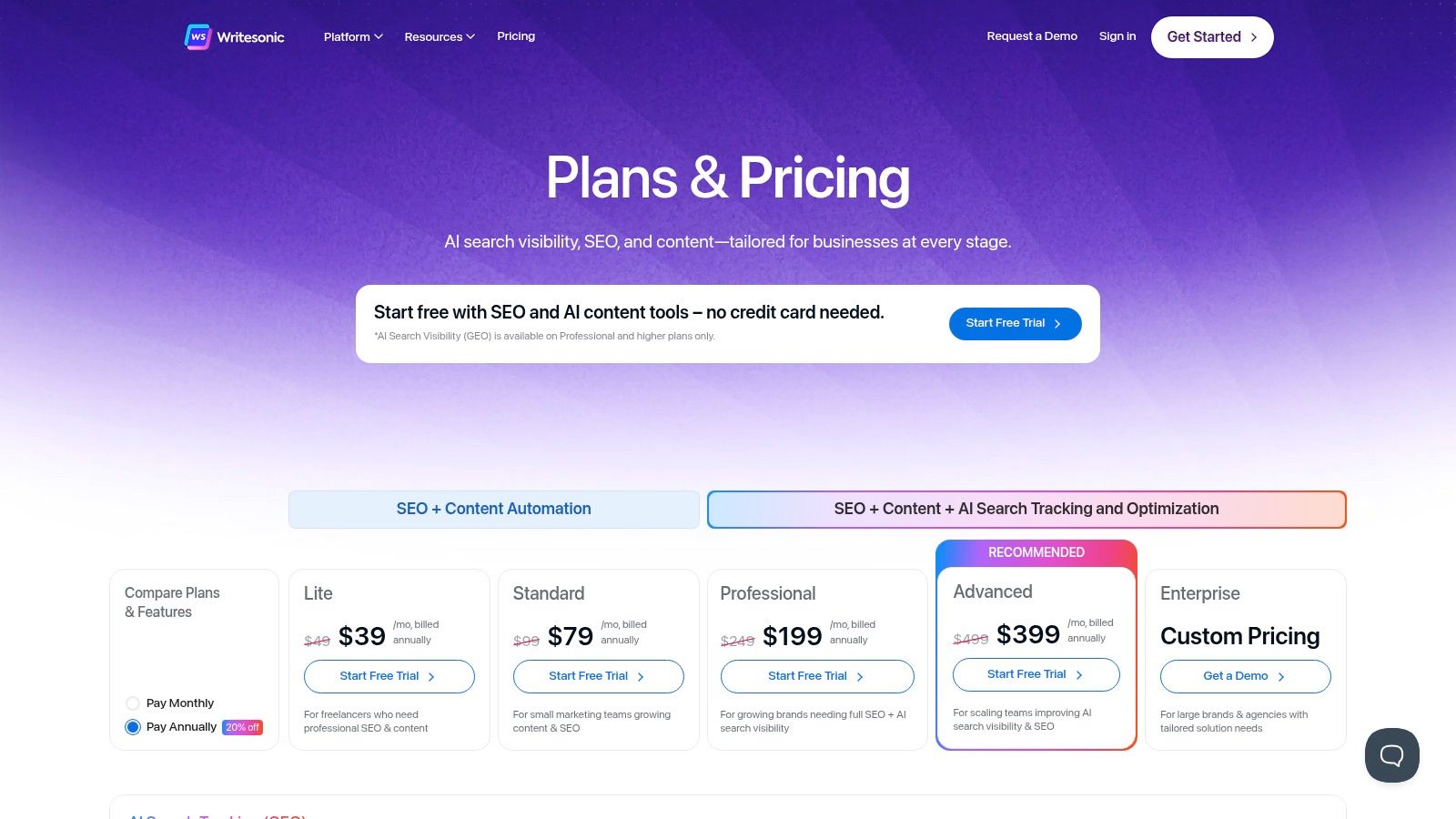
The platform offers access to various models, including GPT-4o and Claude Sonnet, providing flexibility in tone and output quality. Its feature set is designed for scaling, with bulk generation capabilities and integrations with key SEO tools like Ahrefs and Semrush, which is a key part of how generative AI is transforming content creation for ecommerce. However, the interface can feel complex for new users, and the most powerful features, such as advanced audits and higher word counts, are often reserved for more expensive, higher-tier plans.
- Best For: Content marketers and agencies needing a combined AI writing and SEO optimisation tool.
- Pricing: Offers a limited free trial. Paid plans include Small Team, Business, and Enterprise tiers.
- Website: https://writesonic.com/pricing
9. Copy.ai
Copy.ai positions itself as a strong contender for the best AI for writing, particularly for go-to-market teams in marketing and sales. Its platform is designed around scalable content creation, moving beyond single prompts to enable workflow automation for repeatable tasks. For retail and ecommerce managers, this presents an opportunity to streamline processes like generating unique product descriptions or ideating campaign messaging, helping to correct duplicated supplier content and prepare for an agentic search future.
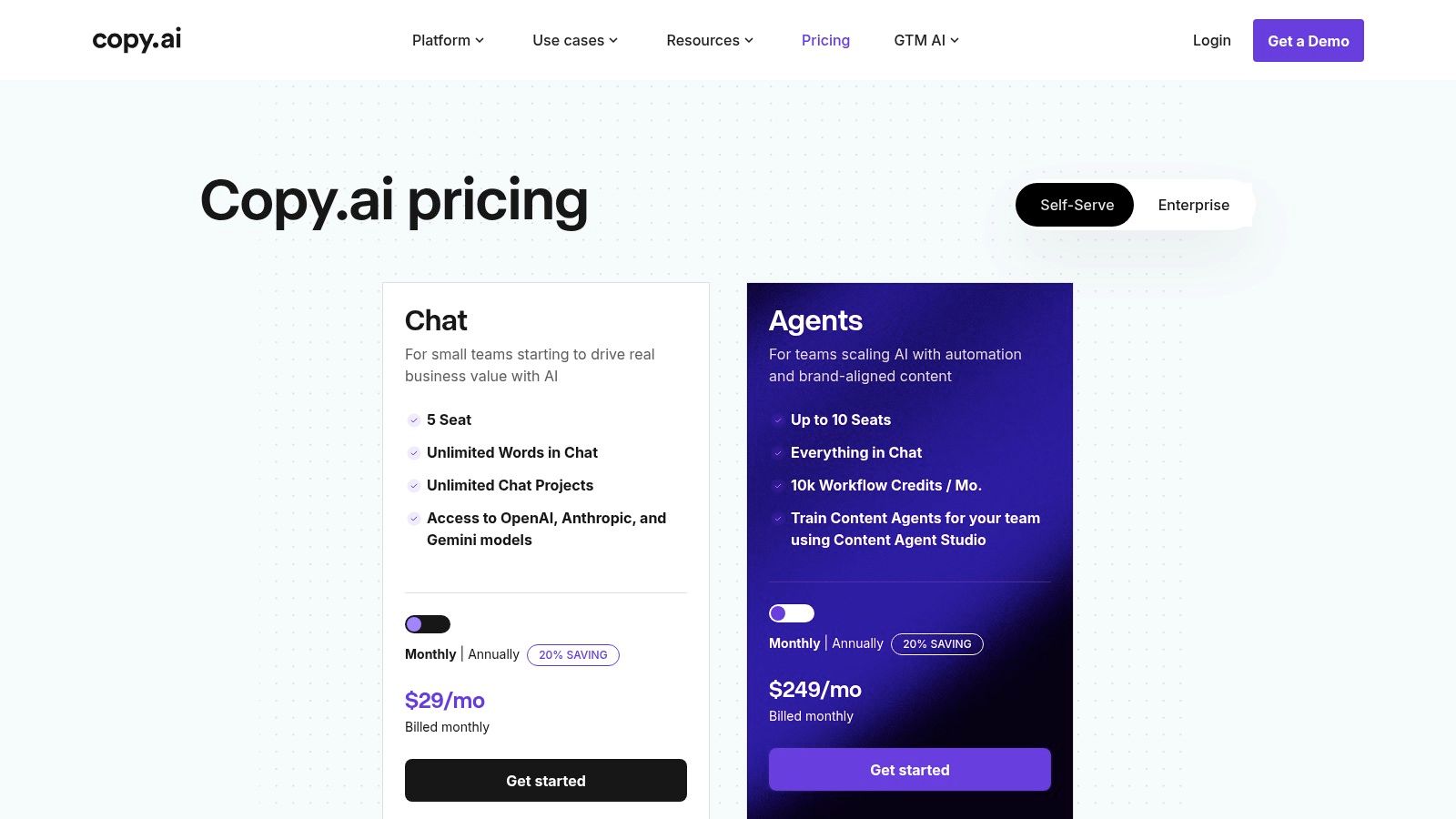
The platform offers a compelling free tier and an affordable entry-level Pro plan for small teams, which includes unlimited words and access to multiple leading AI models. However, its true power for retail efficiency is unlocked in the higher-cost Agents tier, which introduces workflow automation credits. This feature allows businesses to build and run AI agents for repeatable content workflows, such as optimising product feeds efficiently. While the credit system can add a layer of complexity to pricing, the ability to automate content at scale makes it a valuable tool for tackling large product catalogues.
- Best For: Marketing and sales teams, workflow automation for repeatable content tasks.
- Pricing: Free version available. Paid plans include Pro (for teams), and custom-priced Team, and Enterprise tiers with advanced workflow automation.
- Website: https://www.copy.ai/prices
10. QuillBot
QuillBot has established itself as a powerful paraphrasing and rewriting tool, making it a valuable asset for marketing teams needing to quickly refine existing content. While not a generative AI for creating entire articles from scratch, its strength lies in polishing, rephrasing, and correcting duplicated supplier content at speed. For retail and ecommerce managers, it offers an efficient workflow for quickly turning a single product description draft into multiple unique variations for different channels, ensuring brand voice consistency while avoiding SEO penalties.
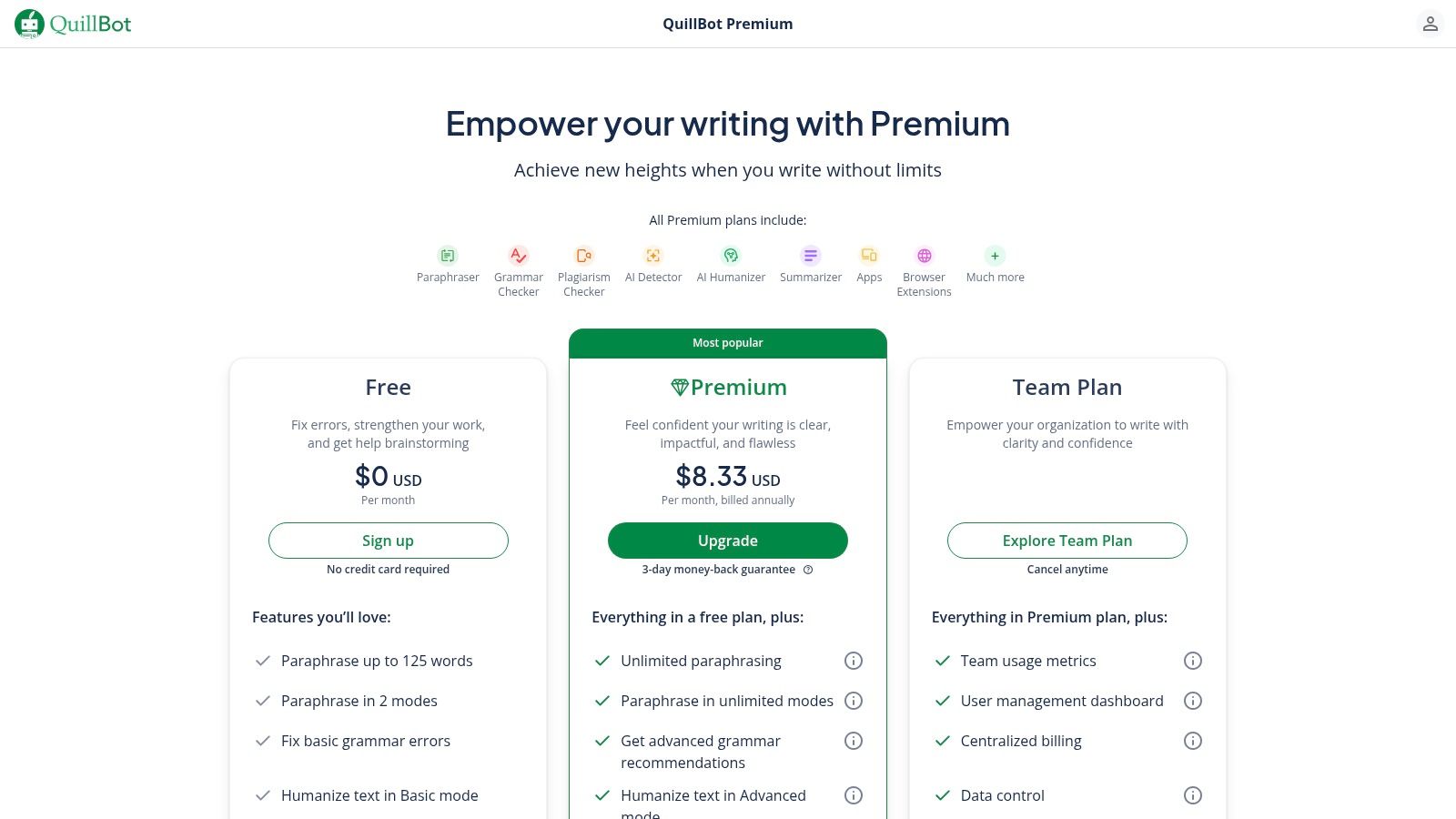
The platform operates on a freemium model, with its Premium plan unlocking unlimited word counts, more rewrite modes, and faster processing. Features like the Summarizer, grammar checker, and plagiarism detector make it a comprehensive suite for final-stage content editing. However, its core function remains focused on sentence-level and paragraph-level rewriting rather than long-form strategic planning or initial drafting. It is an excellent supplementary tool for content teams, particularly those working with non-native English speakers or needing to quickly diversify boilerplate text, which is a common challenge in retail content automation.
- Best For: Paraphrasing, rewriting existing text, and refining content for clarity and uniqueness.
- Pricing: Offers a limited free version. The Premium plan is available with monthly, semi-annual, and annual billing for individuals and teams.
- Website: https://quillbot.com/premium
11. Notion – Notion with AI (Business/Enterprise)
Notion has evolved from a connected workspace into a powerful content creation hub, making it one of the best AI for writing solutions for integrated teams. Its AI features are embedded directly within its documentation and project management ecosystem, allowing marketing and content teams to draft, organise, and refine content collaboratively in one place. For ecommerce managers, this unified approach is ideal for creating and managing content calendars, drafting blog posts, and preparing marketing copy that aligns with AI SEO principles, all within a structured environment.
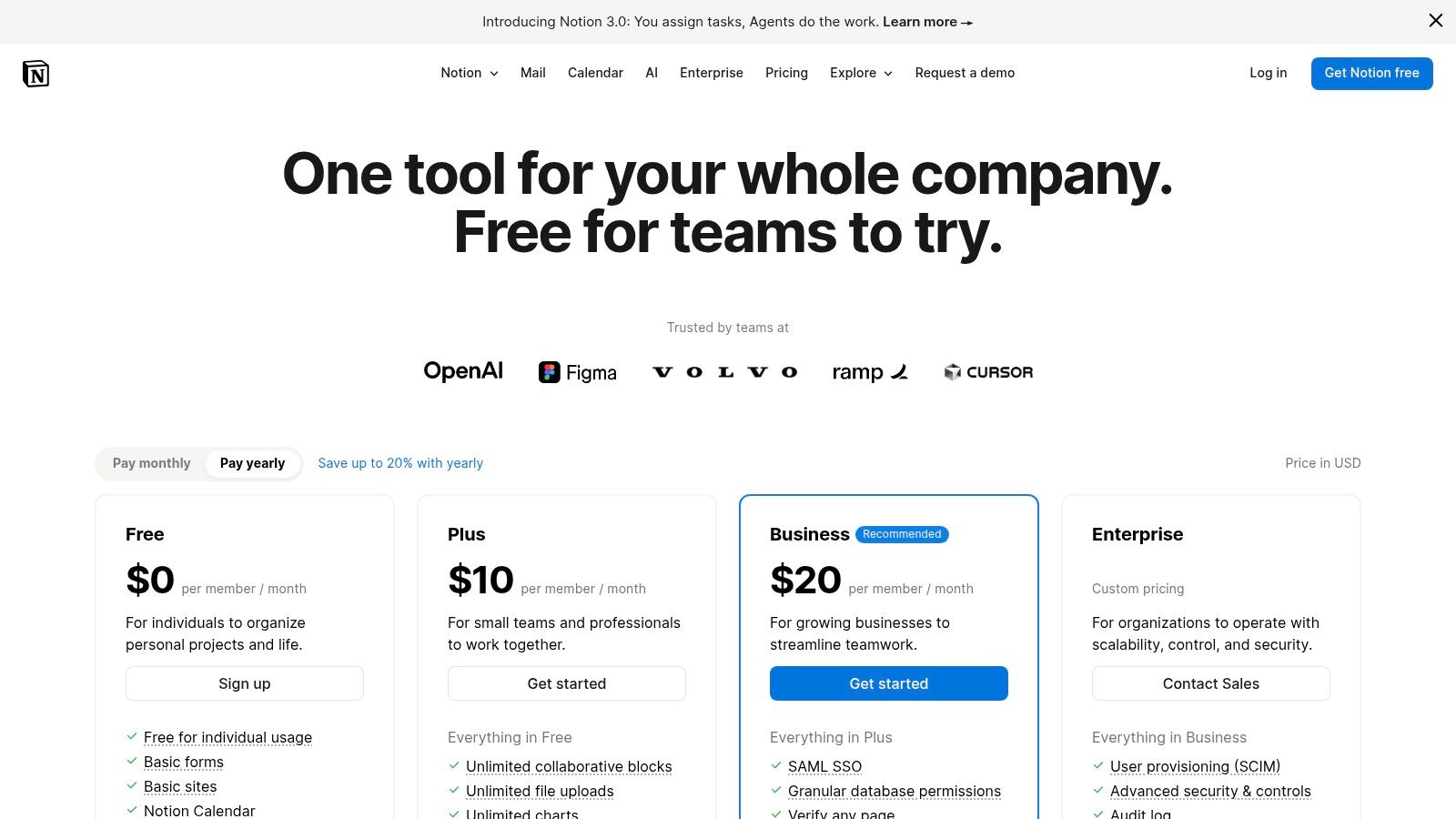
The platform’s AI is available as an add-on to its plans, with full features and admin controls unlocked in the Business and Enterprise tiers. These higher-tier plans provide essential governance, security, and compliance features necessary for retail organisations handling sensitive business data. While exceptional for drafting and organising content within its own ecosystem, Notion isn’t designed for specialised retail tasks like direct product data enrichment from a supplier feed. It excels as a collaborative hub for content strategy and initial drafting, rather than a tool for SKU-level content automation at scale.
- Best For: Collaborative content drafting, knowledge base creation, and integrated project management.
- Pricing: AI features are available as a paid add-on to Free, Plus, Business, and Enterprise plans.
- Website: https://www.notion.com/pricing
12. Sudowrite
While most tools focus on marketing or business copy, Sudowrite carves out a unique niche, establishing itself as one of the best AI for writing tools specifically for creative storytellers. It is designed from the ground up for fiction authors, screenwriters, and hobbyists, providing specialised features to assist with brainstorming, developing characters, and expanding scenes. For creative teams within retail, it can be a novel tool for ideating brand stories or developing engaging narratives for high-value product campaigns, moving beyond simple feature descriptions.
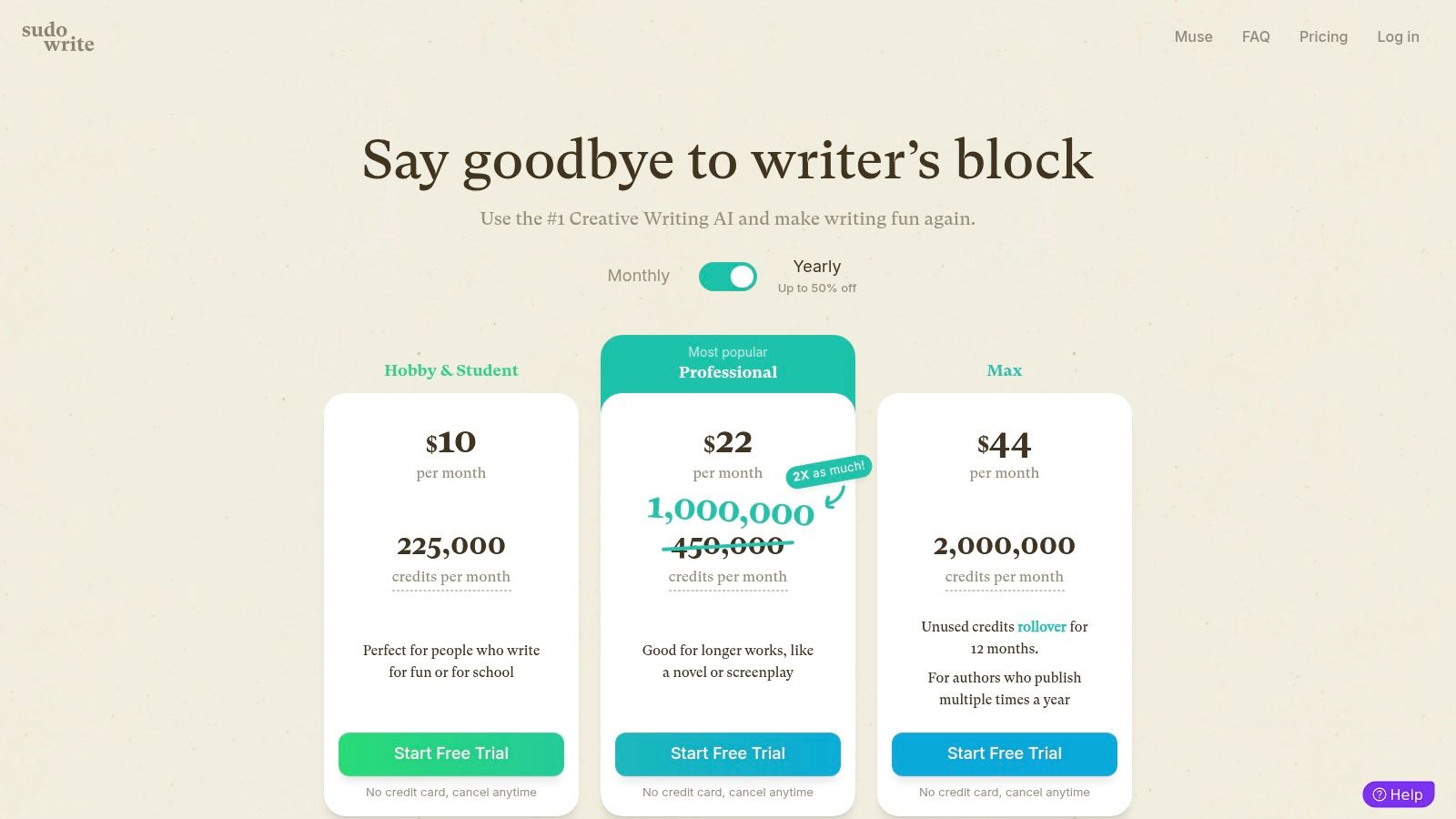
Sudowrite operates on a credit-based system, with different tiers offering a set number of AI-generated words per month. This model encourages mindful usage but requires users to budget their credits, especially on larger projects like novels. Its standout features, such as ‘Describe’ for richer sensory details and ‘Canvas’ for outlining, provide a structured yet creative workflow. While its voice-matching capabilities are impressive for maintaining narrative consistency, it is not built for technical or SEO-driven tasks like product data enrichment or generating optimised content at scale for a retail catalogue.
- Best For: Creative writing, fiction, screenwriting, and narrative brainstorming.
- Pricing: Tiered monthly/annual subscriptions based on word credits (Hobby & Student, Professional, Max).
- Website: https://sudowrite.com/pricing
AI Writing Tools Feature Comparison
| Platform | Core Features & Tech ✨ | User Experience & Quality ★★★★☆ | Value Proposition 💰 | Target Audience 👥 | Unique Selling Points 🏆✨ |
|---|---|---|---|---|---|
| Optidan AI 🏆 | Automated, SEO-rich product pages at scale | Saves 95% content team time, boosts conversions +14% | Specialized for large catalogs; platform-agnostic | Large eCommerce retailers, SEO pros | Proprietary AI content intelligence; scalable & consistent brand voice |
| OpenAI – ChatGPT | General-purpose AI assistant, multi-platform | Excellent ideation to polish drafts ★★★★☆ | Free/Paid tiers; broad ecosystem | Personal, professional, teams | Custom GPTs, strong privacy controls |
| Anthropic – Claude | Long-form drafting, careful writing | Strong long-context quality ★★★★☆ | Tiered plans for individuals & teams | Writers, teams | High-capacity plans; Google Workspace integrated |
| Google – Gemini | Integrated in Google Workspace apps | Native UX for Gmail, Docs ★★★★☆ | Bundled with storage; evolving pricing | Google Workspace users | Multi-language, broad availability |
| Microsoft – Copilot Pro | Embedded in Office apps, enterprise security | Deep Office integration ★★★★☆ | Requires MS365 subscription | Microsoft 365 users, enterprises | Designer tool; enterprise-level control |
| Grammarly – Grammarly Pro | Grammar, tone, clarity AI assistant | Excellent copy polishing ★★★★☆ | Subscription-based | Individuals, teams | Tone alignment; browser & app integration |
| Jasper | Marketing copy, SEO-friendly, brand voice | Strong branding controls ★★★★☆ | Higher price; team-focused | Marketing teams | Brand Voices, image editing, collaboration |
| Writesonic | SEO + content generation with GEO tracking | Powerful but complex ★★★☆☆ | Higher-tier features gated | Content marketers, agencies | Multi-model access; SEO integrations |
| Copy.ai | Marketing & sales content with automation | Affordable entry ★★★☆☆ | Workflow credits add complexity | Small to mid-size teams | Workflow automation; multi-AI model access |
| QuillBot | Paraphrasing, rewriting, summarizing | Fast rewriting ★★★☆☆ | Affordable annual plans | Students, non-native writers | Multiple rewrite modes; browser and app support |
| Notion – Notion with AI | Docs + AI writing in unified workspace | Collaboration & compliance ★★★☆☆ | Business/Enterprise plans | Teams, enterprises | Integrated AI blocks; admin controls |
| Sudowrite | Creative writing, storytelling tools | Great for fiction ★★★☆☆ | Credit-based usage; affordable entry | Writers, hobbyists | Story-focused; tone matching and ideation |
Integrating AI to Build Your Future-Ready Retail Strategy
Navigating the landscape of AI writing tools can feel overwhelming, but as we’ve explored, the key is to align the platform’s capabilities with your specific retail objectives. From general-purpose powerhouses like ChatGPT and Claude to specialised content assistants like Jasper and Writesonic, the right tool depends entirely on your operational needs, team structure, and strategic goals. The journey from manual SEO to AI-powered content workflows is no longer a futuristic concept, it’s a present-day necessity for survival and growth in a competitive ecommerce environment.
For retail leaders, the decision on the best AI for writing transcends simple content creation. It is a strategic move towards building a future-ready operation. The core challenge for many retailers lies in managing vast product catalogues, correcting duplicated supplier content, and achieving SKU-level optimisation at a scale that manual teams simply cannot handle. This is where the distinction between a general AI and a purpose-built retail solution becomes critical. While tools like Gemini and Copilot Pro offer versatility, they require significant prompting and workflow customisation to address the nuances of product data enrichment and digital shelf performance.
Key Considerations for Your AI Implementation
As you move forward, consider these factors to ensure a successful integration:
- Scalability: Can the tool handle the volume of your product catalogue? Look for solutions designed for retail-level scale, capable of optimising thousands of SKUs efficiently.
- Workflow Integration: How will the AI fit into your existing processes? The goal is human + AI collaboration in SEO, where AI agents automate repetitive tasks, freeing your team to focus on high-level strategy and creative oversight.
- Retail Specialisation: Does the platform understand the specifics of ecommerce, like product attributes, AI image recognition for fashion or furniture, and metadata optimisation for multi-channel listings? A generic model may struggle with the structured data requirements of retail.
Ultimately, selecting the right AI is about empowering your team to conquer content bottlenecks and prepare for the future of agentic search. By automating the foundational elements of content, you can focus on innovation and growth. For retail innovators, leveraging AI writing tools can significantly enhance their efforts to implement new top tactics to increase sales on Shopify, turning optimised product listings into a powerful conversion engine. Embracing this AI-powered retail transformation isn’t just about efficiency, it’s about securing your brand’s visibility and relevance for years to come.
Ready to move beyond generic tools and implement an AI solution built specifically for retail? See how Optidan AI automates product data enrichment and creates unique, SEO-optimised content at scale. Discover the future of retail efficiency with Optidan AI today.
